Postpartum Nutrition That Fits Real Life
A few flexible meal basics can help you eat enough while you recover, with extra attention to iodine if you’re breastfeeding.
After birth, aim for regular, satisfying food rather than a special recovery diet. When you can, combine a protein food with a grain or other filling food, add fruit or vegetables, and keep a drink within reach. Breastfeeding raises some nutrient needs, including iodine; significant blood loss or a diet that excludes common iodine sources may call for more individual advice. 12457
Build a meal from what’s already easy
In the early weeks, eating, sleeping, and caring for your baby may take up most of the day. A useful meal plan has to work inside that reality. You don’t need a particular food to recover, and every meal doesn’t have to contain every food group. The goal is enough food and variety across the day, in forms you actually want to eat. 23
Start with something filling, then add a protein food. For example, that could be toast with eggs, rice with beans, or a sandwich with chicken. Add fruit or vegetables when they’re convenient, whether fresh, frozen, or already prepared. Protein helps the body build and maintain tissues; it comes from foods including eggs, dairy, meat, nuts, and beans. A varied eating pattern also supplies carbohydrates, fats, vitamins, minerals, and water. These combinations are meal ideas, not foods shown to speed postpartum healing. 12
If a full plate doesn’t appeal, the same approach works in smaller pieces: yogurt and fruit now, then a bean-and-rice bowl later, for example. A soup can be a meal, too, especially when it includes something substantial such as beans or another protein food. Drinking fluids matters, but drinks alone don’t replace the food that supplies energy and nutrients. 25
Breastfeeding changes the picture, but not the whole menu
If you’re breastfeeding, your body is also supporting milk production. That makes adequate food especially worth protecting when feeding and sleep leave little time to eat. 5 It doesn’t mean you need a rigid menu or that someone who isn’t breastfeeding needs a separate set of “recovery foods.” Research on postpartum nutrition for women’s recovery needs strengthening. For everyday meals, focus on eating enough and choosing a variety of foods rather than expecting specific foods to speed recovery. 26
One concrete difference is iodine. The recommended daily intake for adults rises from 150 micrograms to 290 micrograms during lactation. Iodine is found in foods such as dairy, eggs, fish, and seafood, as well as iodized salt. Not all salt is iodized, and plant-based milk alternatives generally provide relatively little iodine. Some prenatal supplements contain iodine and some don’t, so the label matters if you’re relying on one. These details are especially useful if you eat few or none of the main iodine-containing foods; they aren’t a reason to start a high-dose supplement on your own. 4
If you’re not breastfeeding, you can use the same flexible meal-building approach without assuming you have lactation’s higher iodine requirement. Your own needs still depend on what happened during birth and how recovery is going. 24
Know when food advice isn’t the whole answer
Some bleeding after birth is expected, but significant blood loss is different from an ordinary meal-planning problem. Blood loss can contribute to iron deficiency, and iron-deficiency anemia can cause weakness, fatigue, and difficulty concentrating. Those symptoms alone don’t tell you whether you’re low in iron. If you lost a substantial amount of blood during birth or were told you had anemia, ask your birth-care team whether your iron status or treatment plan needs follow-up. Iron assessment may use more than one blood measure, so choosing iron tablets based only on how tired you feel isn’t a substitute for that review. 378
Food can still be part of the picture. Iron-fortified cereals and breads, for example, can contribute iron. But a grocery change doesn’t replace care for anemia or a complication after birth. Likewise, if food allergies, a vegan diet, or other restrictions leave you with few iodine sources while breastfeeding, ask for advice tailored to what you eat rather than trying to force an unfamiliar menu. 478
For an ordinary day, keep the bar workable: a filling food, a protein option, fruit or vegetables when you can manage them, and something to drink. Then repeat with different foods you enjoy and can get. Preferences, cultural traditions, time, and budget all belong in a healthy eating plan. 12
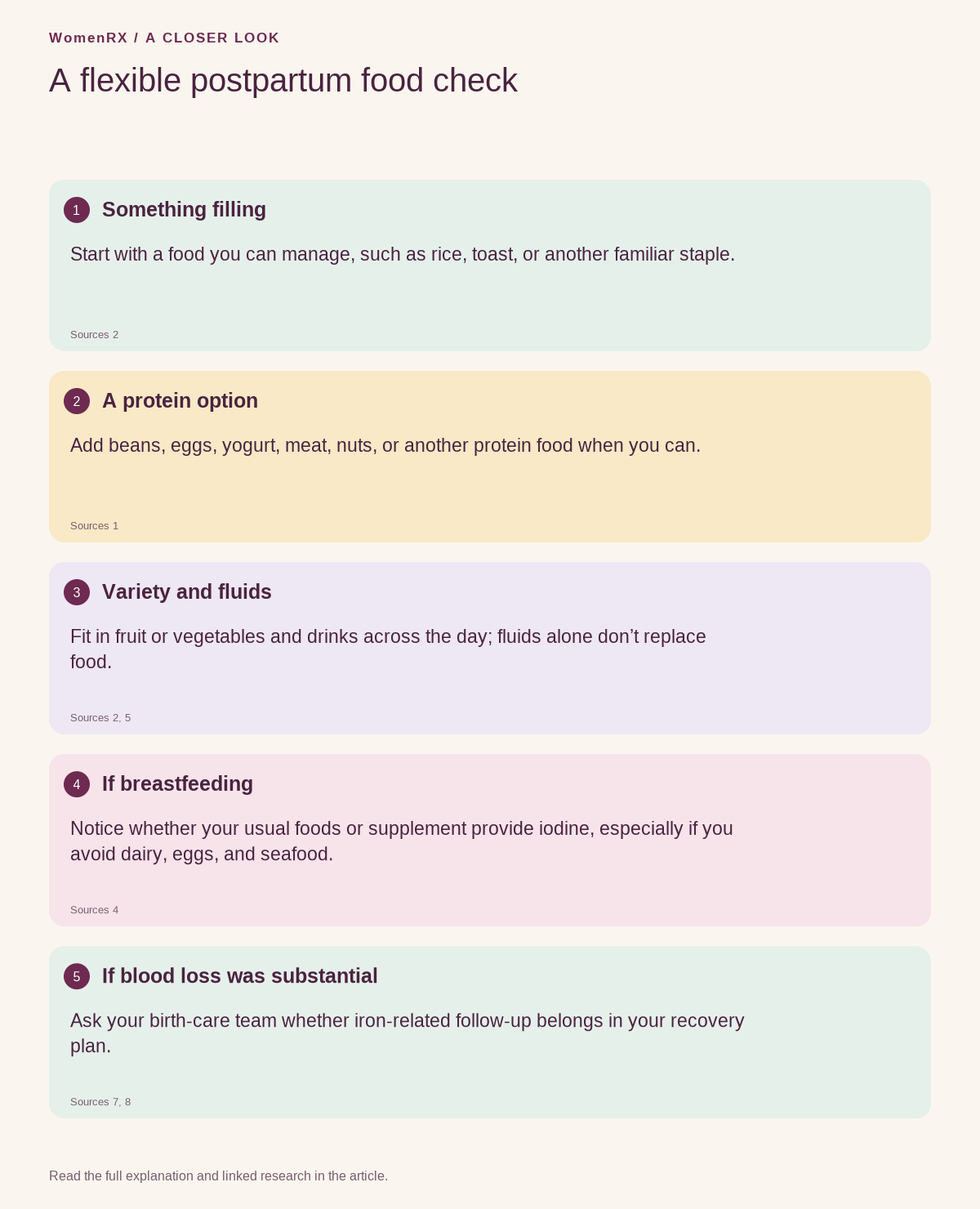
A flexible postpartum food check
Something filling: Start with a food you can manage, such as rice, toast, or another familiar staple.2
A protein option: Add beans, eggs, yogurt, meat, nuts, or another protein food when you can.1
Variety and fluids: Fit in fruit or vegetables and drinks across the day; fluids alone don’t replace food.25
If breastfeeding: Notice whether your usual foods or supplement provide iodine, especially if you avoid dairy, eggs, and seafood.4
If blood loss was substantial: Ask your birth-care team whether iron-related follow-up belongs in your recovery plan.78
Read the figure as text
Use these prompts across the day, not as a rule for every meal or a score of how well you’re recovering.- Something filling: Start with a food you can manage, such as rice, toast, or another familiar staple.2
- A protein option: Add beans, eggs, yogurt, meat, nuts, or another protein food when you can.1
- Variety and fluids: Fit in fruit or vegetables and drinks across the day; fluids alone don’t replace food.25
- If breastfeeding: Notice whether your usual foods or supplement provide iodine, especially if you avoid dairy, eggs, and seafood.4
- If blood loss was substantial: Ask your birth-care team whether iron-related follow-up belongs in your recovery plan.78
More questions, answered
Do I need to keep taking my prenatal supplement while breastfeeding?
Don’t assume every prenatal supplement covers the same nutrients: some contain iodine and some don’t. If you’re breastfeeding, check its label and discuss whether it fits your diet and needs, particularly if you eat little dairy, seafood, or eggs. 4
Sources you can check
- Dietary Proteins: MedlinePlusAccessed 2026-09-25Return to first citation
- Nutrition: MedlinePlusAccessed 2026-09-25Return to first citation
- Postpartum Care: MedlinePlusAccessed 2026-09-25Return to first citation
- Iodine - Health Professional Fact SheetAccessed 2026-09-25Return to first citation
- Correcting the "light-diet default": nutrient density gaps in hospital-based postpartum nutrition services in China and system-level responses.Liu Q, Liu J. · Frontiers in public health · 2026Return to first citation
- Current evidence around key underrepresented women's health topics in pregnancy and postpartum nutrition: a narrative review.Kinshella MLW, Moore S, Elango R. · Applied physiology, nutrition, and metabolism = Physiologie appliquee, nutrition et metabolisme · 2025Return to first citation
- Iron - Health Professional Fact SheetAccessed 2026-09-25Return to first citation
- Iron deficiency anaemia - NHSAccessed 2026-09-25Return to first citation