PMDD Treatment: Comparing the Main Options
SSRIs have direct trial evidence for PMDD; contraception, therapy, and symptom-focused care may also belong in the discussion, depending on what you need help with.
PMDD treatment can include selective serotonin reuptake inhibitors (SSRIs), combined oral contraceptives, cognitive behavioral therapy (CBT), and medicines for physical symptoms such as pain. These options have different roles and risks: SSRIs may cause nausea or sexual side effects, while combined pills require a review of clot risk and other health conditions. Daily symptom notes can help you discuss whether treatment is helping. 1 2 5
PMDD treatment is not one-size-fits-all. A useful discussion starts with what symptoms disrupt your life most, whether you also want contraception, and whether another mental health condition needs care at the same time. SSRIs, combined oral contraceptives, CBT, and symptom-focused medicines are among the treatment options described in clinical guidance. 1 2 Each has a different role, so no single option is right for everyone.
Compare the options by what you need help with
SSRIs: mood symptoms and irritability. Selective serotonin reuptake inhibitors are antidepressants used for PMDD symptoms such as anxiety or depression. A randomized, placebo-controlled trial in women with PMDD found that intermittent escitalopram reduced PMDD symptoms, especially irritability or anger, compared with placebo. The trial tested one SSRI taken intermittently during the premenstrual phase; results may differ with another medicine, schedule, or person. Possible SSRI side effects include nausea, headache, sleepiness, and sexual difficulties. Ask how the proposed schedule fits your cycle and which effects to watch for. 1 2 4
Combined oral contraceptives: hormonal treatment, with contraception as part of the decision. A combined contraceptive pill is one hormonal option listed for PMDD. If you also want birth control, it may be useful to discuss an option that serves both purposes. Combined pills may cause breakthrough bleeding or changes in symptoms around hormone withdrawal; they also carry clotting concerns for some people. They may not be suitable with certain health conditions, including migraine with aura or a history of blood clots. Ask the prescriber which pill, if any, suits your health history and contraceptive needs. Bring up your reproductive plans and any concerns about hormonal contraception. 1 2 5
CBT: coping with emotional and behavioral effects. Cognitive behavioral therapy is a talking therapy that can help you work on ways of managing feelings. It may be considered alongside medication or discussed as a separate part of care. CBT need not replace medication. Its focus on managing feelings differs from medicines used for aches. 1 2
Symptom-focused medicine: physical discomfort. Guidance also lists pain relievers or anti-inflammatory medicines for aches. This is a symptom-targeted approach, rather than a treatment intended to address every emotional and physical feature of PMDD. Ask which symptoms a suggested medicine is meant to help and whether it fits your health history and other medicines. 1
Make cycle tracking useful, not burdensome
PMDD symptoms tend to emerge before a period and improve after it starts. Writing down symptoms as they happen can make that pattern easier to describe than relying on memory. Daily ratings were also used to assess symptoms in the escitalopram trial. 1 4
For example, you could make a brief daily note of your mood symptoms, physical symptoms, bleeding, and how much symptoms affected work, school, sleep, or relationships. If you start treatment, continue noting symptoms and when you take it as directed. That gives you and the prescriber a clearer basis for discussing change across cycles. A diary can inform the conversation, but it doesn’t diagnose PMDD by itself.
Bring your circumstances into the choice
Tell the prescriber if you want to become pregnant, need contraception, or have a mental health condition being treated already. Also mention if your cycles are irregular or your symptoms don’t follow the same pattern each month. If you’re pregnant, postpartum, or in another life stage, ask how that affects the options being considered. In particular, combined hormonal contraception has different safety considerations soon after childbirth; migraine with aura, high blood pressure, and a history of blood clots can also change whether it’s suitable. 5 A review focused on pediatric care notes that coexisting mental health conditions can make evaluation and treatment more challenging in that setting. 3
You can ask: “Which symptoms is this option meant to target?”, “How will we tell whether it’s helping?”, and “What should make us revisit the plan?” If suicidal thoughts or a risk of harming yourself are part of what you’re experiencing, seek urgent mental-health help rather than waiting for a routine treatment discussion. 1
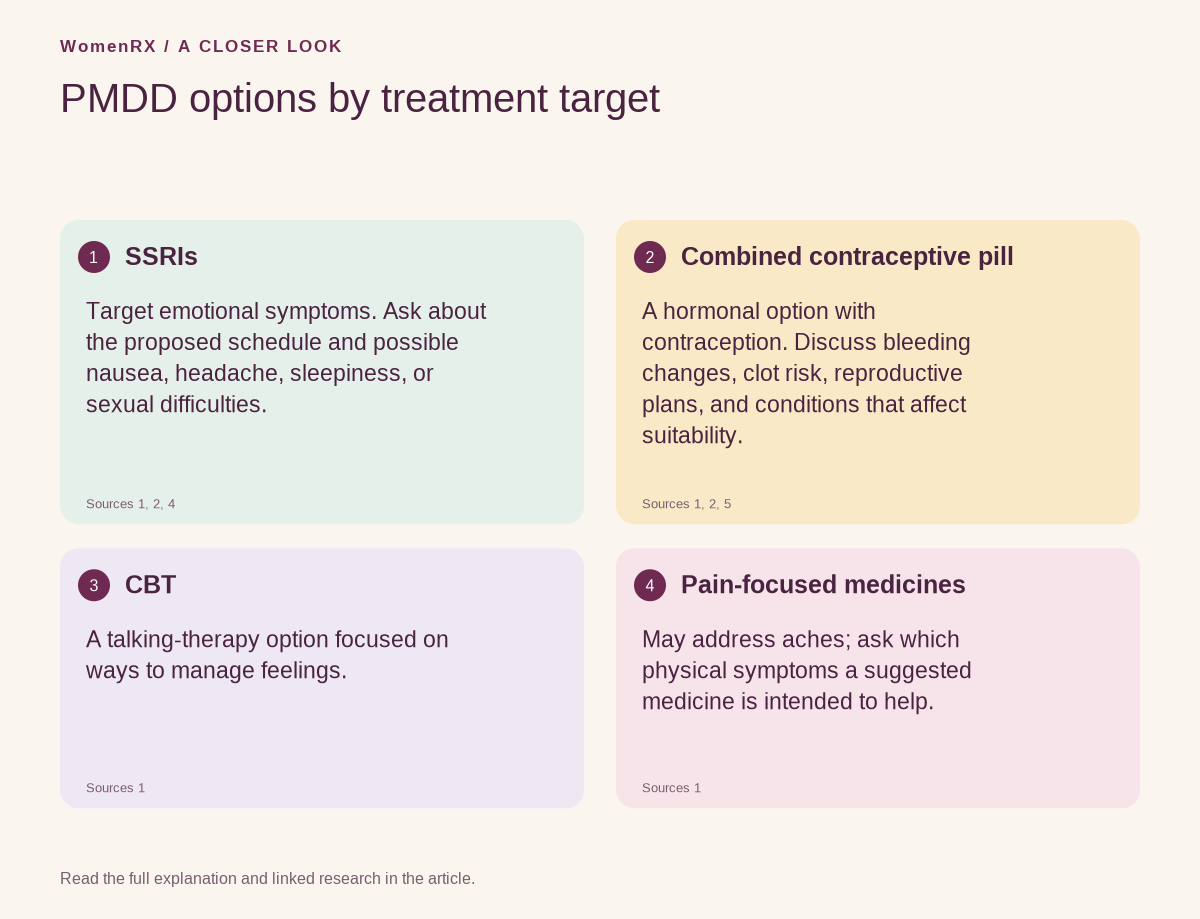
PMDD options by treatment target
SSRIs: Target emotional symptoms. Ask about the proposed schedule and possible nausea, headache, sleepiness, or sexual difficulties.124
Combined contraceptive pill: A hormonal option with contraception. Discuss bleeding changes, clot risk, reproductive plans, and conditions that affect suitability.125
CBT: A talking-therapy option focused on ways to manage feelings.1
Pain-focused medicines: May address aches; ask which physical symptoms a suggested medicine is intended to help.1
Read the figure as text
A quick comparison of the roles of the main treatment categories and the decisions each can bring into a discussion.- SSRIs: Target emotional symptoms. Ask about the proposed schedule and possible nausea, headache, sleepiness, or sexual difficulties.124
- Combined contraceptive pill: A hormonal option with contraception. Discuss bleeding changes, clot risk, reproductive plans, and conditions that affect suitability.125
- CBT: A talking-therapy option focused on ways to manage feelings.1
- Pain-focused medicines: May address aches; ask which physical symptoms a suggested medicine is intended to help.1
More questions, answered
Does a symptom diary replace a PMDD evaluation?
No. Daily notes can help show whether symptoms follow a cycle pattern and how much they affect your life, but they are one aid to a clinical discussion, not a diagnosis on their own. 1 4
Can treatment focus on physical symptoms as well as mood?
Yes. Options described for PMDD include care for emotional symptoms, CBT, hormonal treatment, and pain relievers or anti-inflammatory medicines for aches. Which symptoms an option may address is worth discussing with the prescriber. 1 2
Sources you can check
- PMDD (premenstrual dysphoric disorder) - NHSAccessed 2026-09-25Return to first citation
- Integrative Management of Premenstrual Dysphoric Disorder: The Role of Traditional Chinese Medicine.Xu M, Chen J. · Depression and anxiety · 2026Return to first citation
- Evaluation and management of premenstrual dysphoric disorder.Nagle SA, Murray PJ, Allen EB. · Current opinion in pediatrics · 2026Return to first citation
- Escitalopram and brain reactivity to aggressive stimuli in premenstrual dysphoric disorder.Dubol M, Gröndal M, Schmidt F, Fisher PM, Frokjaer VG, Wikström J, Eriksson E, Sundstrøm I, Comasco E. · The British journal of psychiatry : the journal of mental science · 2026Return to first citation
- Appendix A: Summary of Classifications for U.S. Medical Eligibility Criteria for Contraceptive Use, 2024 | Contraception | CDCAccessed 2026-09-25Return to first citation