Plant-Based Eating After 40: What to Plan For
You can eat more plants without giving up animal foods, but the foods you leave out determine which nutrients need more attention.
Plant-based eating can mean eating less meat, keeping eggs and dairy, or eating no animal foods. Those choices call for different plans, especially for vitamin B12, iron, calcium, and protein. It isn’t a guaranteed weight-loss strategy. After 40, the useful question is whether your meals contain enough substantial food, such as pulses and whole grains, while covering key nutrients and fitting your weight goals. The diet label alone cannot tell you whether you’re eating enough or whether your weight will change. 76
Choose the pattern before judging the diet
“Plant-based” describes a direction, not one set of rules. You might build most meals around vegetables, beans, whole grains, and nuts while still eating some animal foods. A vegetarian pattern generally leaves out meat but may include eggs and dairy. A vegan pattern leaves out animal foods altogether. That last step changes the nutrition planning most: compared with meat-eaters, vegans in a large review had the lowest average intakes of vitamin B12 and calcium. 7
This isn’t a contest to eliminate the most foods. If you enjoy eggs or dairy, keeping them may make a plant-forward pattern simpler. If you want to eat vegan, it’s worth making a deliberate plan for nutrients that animal foods previously supplied.
What changes around menopause, and what doesn’t
If you’re still having periods, particularly heavy ones, iron deserves attention. Heavy periods are a common cause of iron-deficiency anemia; fatigue or low energy shouldn’t automatically be put down to a new diet or perimenopause. A blood test can help establish whether anemia is present, and finding its cause matters. 1
Later in life, protein and bone nutrition remain worth considering. A review of plant-based diets found that average calcium intake and status were generally lower in plant-based groups than in meat-eaters. A separate analysis of short-term muscle protein synthesis studies found small, uncertain differences between plant and animal proteins overall, with a modest advantage for animal proteins in adults 65 and older. That result measures a short-term muscle response, not whether a well-planned vegan diet causes muscle loss. It also doesn’t establish a special protein rule for women in perimenopause. 75
The practical takeaway is to keep substantial protein-containing foods in the meals you enjoy rather than treating vegetables alone as the meal. For example, a bowl built around beans or lentils and whole grains is a different proposition from a plate of vegetables with no clear protein component. That’s a meal-planning example, not a prescribed serving plan. 7
Check what you’re replacing
Vitamin B12 needs the clearest vegan plan. Eggs can provide B12, but an entirely plant-based menu needs reliable fortified foods or a supplement. Some breakfast cereals, yeast extracts, and soy products are fortified; the label tells you whether the product you’re buying contains B12. A vegan diet without supplements or B12-fortified foods can lead to deficiency. 24
For calcium, compare the replacement rather than the name on the carton. If you stop using dairy milk, check whether the plant-based drink you choose contains calcium. The review found lower average calcium intake in plant-based groups, especially vegans, and plant-based alternatives don’t necessarily have the same nutrient profile as the animal foods they replace. 78
For iron, consider both food choices and blood loss. Iron intake and status were generally lower in plant-based groups in the review. If you replace meat with beans, lentils, or a plant-based meat alternative, check any iron information available on its label rather than assuming the replacement supplies the same amount. A substantial plant-based meal is not, by itself, proof that you’re getting enough iron. Heavy periods are another possible cause of deficiency, so changing your menu alone may miss the cause if your periods are heavy or you’re unusually tired. Iron tablets are a treatment for diagnosed iron-deficiency anemia, not an automatic add-on to plant-based eating. 781
One less obvious swap is iodine. In a four-week observational study of UK adults trying a vegan diet, iodine and B12 intakes fell among participants who had previously eaten animal foods. That study doesn’t tell us what will happen to you, but it shows why replacing dairy or seafood with an unfortified alternative is worth checking rather than assuming the nutrients match. 8
Will it help with weight management?
A plant-based label alone doesn’t answer that. Research on plant-based diets and weight-related outcomes includes observational studies using different definitions of “plant-based,” so it cannot promise weight loss from making the switch. Nor does the protein research above test weight loss in women going through menopause. 65
Instead, assess the pattern you’re considering as a whole. Are your meals satisfying, and do they include foods that cover the nutrients you may be giving up? If removing animal foods leaves you with vegetables alone or you regularly finish meals hungry, try building meals around substantial foods such as beans, lentils, whole grains, or nuts, and revisit how much you’re eating. That is a way to check whether the meals work for you, not a calorie target or a prediction of weight change. Can you picture eating this way beyond an initial burst of enthusiasm? 76 You can start with more plant-centered meals without committing to a vegan diet. If you do remove all animal foods, make B12 a firm part of the plan and check the labels of foods meant to replace dairy or meat. If you suspect an iron or B12 deficiency, symptoms and blood tests can help sort out whether food choices, blood loss, or an absorption problem is involved. 124
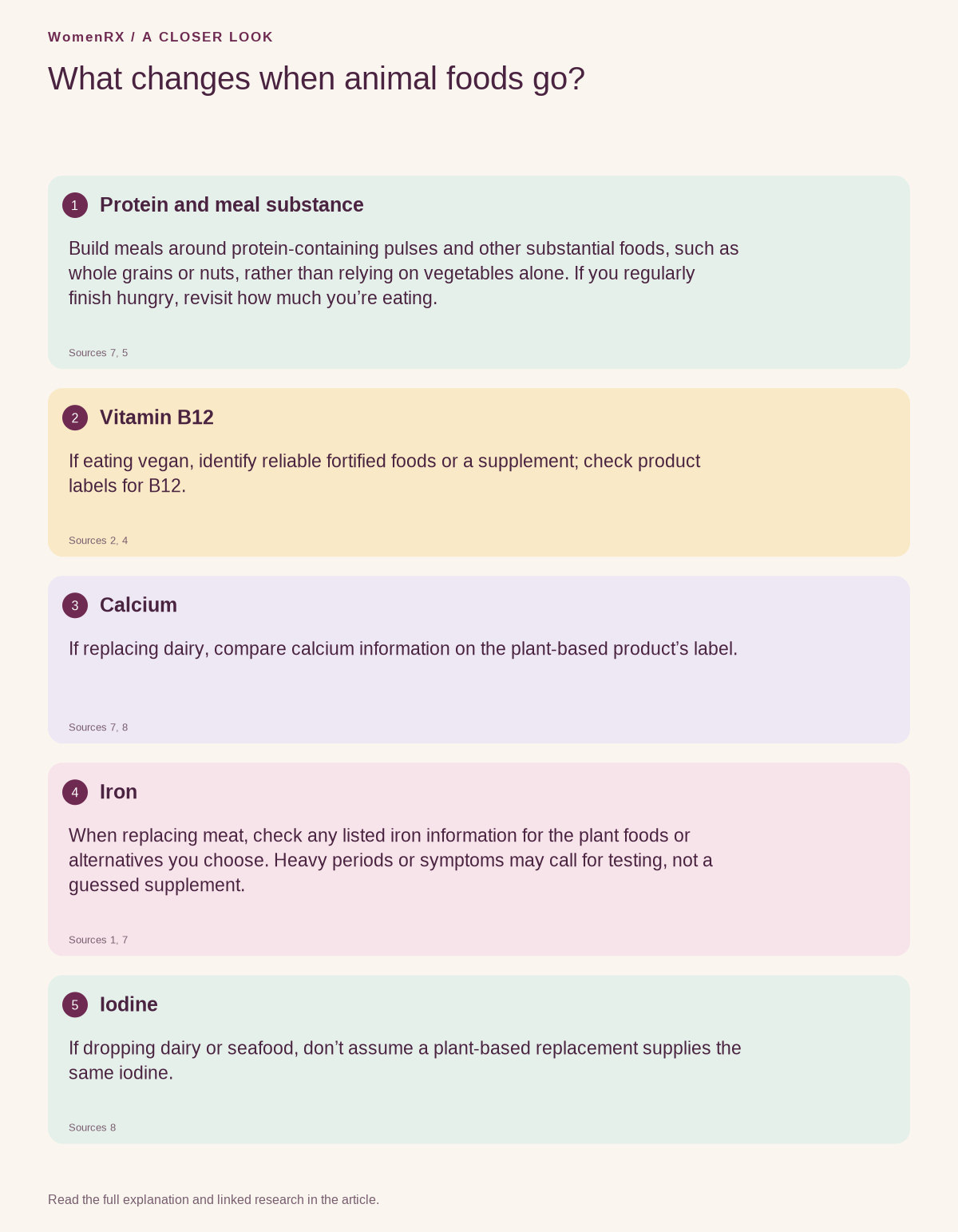
What changes when animal foods go?
Protein and meal substance: Build meals around protein-containing pulses and other substantial foods, such as whole grains or nuts, rather than relying on vegetables alone. If you regularly finish hungry, revisit how much you’re eating.75
Vitamin B12: If eating vegan, identify reliable fortified foods or a supplement; check product labels for B12.24
Calcium: If replacing dairy, compare calcium information on the plant-based product’s label.78
Iron: When replacing meat, check any listed iron information for the plant foods or alternatives you choose. Heavy periods or symptoms may call for testing, not a guessed supplement.17
Iodine: If dropping dairy or seafood, don’t assume a plant-based replacement supplies the same iodine.8
Read the figure as text
Use this meal-planning check for the foods you remove, not as a score for whether your diet is healthy.- Protein and meal substance: Build meals around protein-containing pulses and other substantial foods, such as whole grains or nuts, rather than relying on vegetables alone. If you regularly finish hungry, revisit how much you’re eating.75
- Vitamin B12: If eating vegan, identify reliable fortified foods or a supplement; check product labels for B12.24
- Calcium: If replacing dairy, compare calcium information on the plant-based product’s label.78
- Iron: When replacing meat, check any listed iron information for the plant foods or alternatives you choose. Heavy periods or symptoms may call for testing, not a guessed supplement.17
- Iodine: If dropping dairy or seafood, don’t assume a plant-based replacement supplies the same iodine.8
More questions, answered
Is tiredness after switching diets a sign I need iron?
Not necessarily. Tiredness can occur with iron-deficiency anemia and with B12 or folate deficiency, among other causes. Heavy periods can also contribute to iron deficiency. A blood test and a look at the possible cause are more useful than guessing which supplement to take. 13
Can fortified foods cover vitamin B12 on a vegan diet?
Fortified foods are a possible B12 source, but fortification varies by product. Check the label rather than assuming a plant-based cereal, drink, or meat alternative contains it. If you’re relying on fortified foods instead of a supplement, discuss whether your usual choices provide a reliable plan. 24
Sources you can check
- Iron deficiency anaemia - NHSAccessed 2026-09-25Return to first citation
- Vitamin B12 or folate deficiency anaemia - NHSAccessed 2026-09-25Return to first citation
- Vitamin B12 or folate deficiency anaemia - Symptoms - NHSAccessed 2026-09-25Return to first citation
- Vitamin B12 or folate deficiency anaemia - Treatment - NHSAccessed 2026-09-25Return to first citation
- Effects of Plant- vs Animal-Based Proteins on Muscle Protein Synthesis: A Systematic Review With Meta-Analysis.Mendes BR, Correia JM, Dos Santos IR, Schoenfeld BJ, Swinton PA, de Mendonca GV. · Journal of the Academy of Nutrition and Dietetics · 2026Return to first citation
- Plant-based diets and health outcomes in Australia and New Zealand.Goode JP, Marchese LE, Smith KJ. · The Proceedings of the Nutrition Society · 2025Return to first citation
- Nutrient Intake and Status in Adults Consuming Plant-Based Diets Compared to Meat-Eaters: A Systematic Review.Neufingerl N, Eilander A. · Nutrients · 2021Return to first citation
- Adoption of a Short-Term (4-Week) Vegan Diet as Part of 'Veganuary' Significantly Reduces Saturated Fatty Acid (SFA), Cholesterol, B12, and Iodine Intake in Omnivorous Individuals-An Observational Study.Eveleigh E, Coneyworth L, Craigon J, Welham S. · Nutrients · 2023Return to first citation