Planning Pregnancy With Interstitial Cystitis
A diagnosis alone doesn’t answer what conception may look like, so plan a conversation about bladder symptoms and medicines before pregnancy.
Interstitial cystitis, also called bladder pain syndrome, isn’t a reason to assume you’ll have trouble conceiving. Its relationship with pregnancy is poorly understood, so focus your planning conversation on your symptoms, how changes will be assessed, and each medicine you take. 4 Review medicines before trying or early in pregnancy, and don’t stop a prescription on your own. 1
Keep conception and symptom care separate
A 2023 review focused on bladder pain syndrome (BPS), also called interstitial cystitis (IC), describes the effects of BPS on pregnancy, and of pregnancy on BPS, as poorly understood. It doesn’t establish that IC reduces the chance of conceiving. 4
One retrospective study from a single clinic reported that pregnancy did not affect IC/BPS. The 2023 review, however, says limited data suggest significant negative effects on the woman and pregnancy. Neither finding can predict what will happen for you, and the review does not establish a particular risk or symptom pattern. 3 4
A useful first question is: “Is there anything about my symptoms or overall health that changes my pregnancy plan, or is the main task planning symptom care and reviewing medicines?” This keeps a question about conception separate from planning symptom management.
Make a plan for symptoms that may overlap
Urinary frequency and discomfort can be difficult to interpret during pregnancy because lower urinary tract symptoms and pain are common then, too. The BPS review says the condition is often not considered or investigated in pregnancy, even though there are options for evaluation and management. Ask how your care team would distinguish a familiar IC flare from a new or changed symptom, and who should coordinate that assessment. 4
You might ask:
- “If my bladder pain or frequency changes, how will we assess it during pregnancy?”
- “Which nonmedicine approaches or evaluations might be appropriate for me?”
- “Who should I contact if my usual symptom pattern changes?”
These questions are more useful than assuming every increase in frequency is IC, or assuming pregnancy means your symptoms can’t be addressed. Investigation and management are possible during pregnancy, though the right approach depends on your situation. 4
Review medicines before you try
Bring a complete list of prescriptions, over-the-counter medicines, supplements, and other products you use for bladder symptoms. Ask about each one separately: whether to continue, change, or avoid it while trying to conceive, during pregnancy, and after delivery if you plan to breastfeed. The answer can depend on the particular medicine and when it’s used. Don’t start or stop a medicine on your own; MedlinePlus advises discussing medicine changes with your provider because untreated health problems can also carry risks. 1
If you take pentosan polysulfate, ask specifically about pregnancy plans. A 2022 systematic review of pentosan polysulfate in BPS/IC patients with Hunner’s lesions excluded people who were pregnant or breastfeeding. Its treatment findings therefore don’t answer whether the medicine is safe or effective in pregnancy. That exclusion is not proof of harm, but it is a reason to request an individualized review rather than rely on the usual treatment evidence. 2
If you take amitriptyline, include it in the same review. Ask the clinician who prescribed it and the clinician managing pregnancy care to weigh the benefits and risks for your circumstances rather than making a change on your own. 1
Leave with a shared plan, not a blanket rule
Before trying to conceive, aim to leave the conversation with three clear points: which medicines have been reviewed and by whom; what to do if symptoms change; and how your bladder care and pregnancy care will stay coordinated. If you’re already pregnant, ask the same questions now. Pregnancy doesn’t mean you have to abandon symptom care, but the best plan may need to be revisited as your symptoms and circumstances change. 1 4
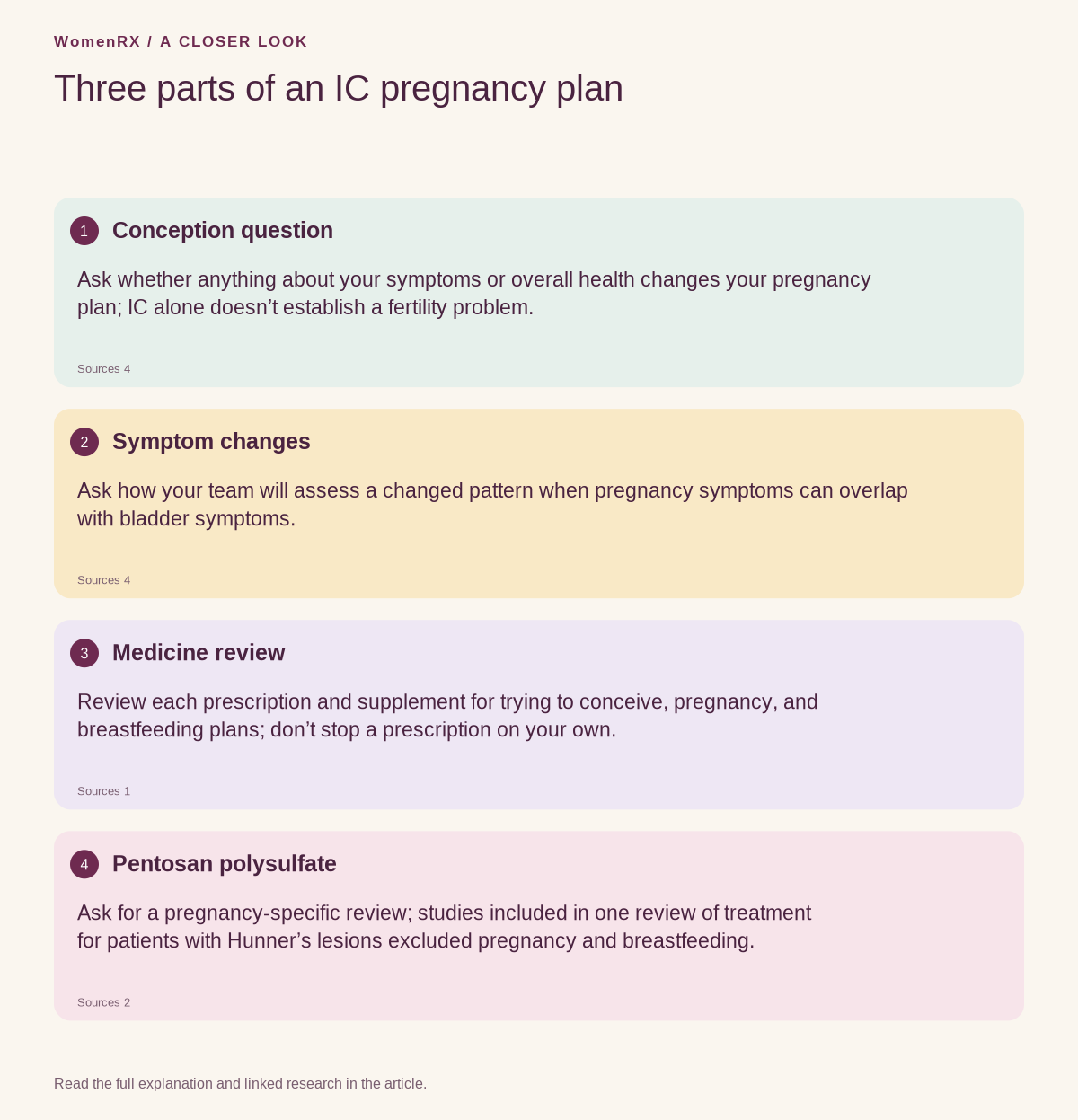
Three parts of an IC pregnancy plan
Conception question: Ask whether anything about your symptoms or overall health changes your pregnancy plan; IC alone doesn’t establish a fertility problem.4
Symptom changes: Ask how your team will assess a changed pattern when pregnancy symptoms can overlap with bladder symptoms.4
Medicine review: Review each prescription and supplement for trying to conceive, pregnancy, and breastfeeding plans; don’t stop a prescription on your own.1
Pentosan polysulfate: Ask for a pregnancy-specific review; studies included in one review of treatment for patients with Hunner’s lesions excluded pregnancy and breastfeeding.2
Read the figure as text
Use these distinct topics to keep questions about conception, symptom changes, and medicines from getting conflated.- Conception question: Ask whether anything about your symptoms or overall health changes your pregnancy plan; IC alone doesn’t establish a fertility problem.4
- Symptom changes: Ask how your team will assess a changed pattern when pregnancy symptoms can overlap with bladder symptoms.4
- Medicine review: Review each prescription and supplement for trying to conceive, pregnancy, and breastfeeding plans; don’t stop a prescription on your own.1
- Pentosan polysulfate: Ask for a pregnancy-specific review; studies included in one review of treatment for patients with Hunner’s lesions excluded pregnancy and breastfeeding.2
More questions, answered
Should I stop my IC medicine before trying to conceive?
Don’t stop it without discussing the change with your prescriber. Review each medicine’s benefits and risks for your plans, including whether you’re already pregnant or may breastfeed. 1
Does pregnancy always make IC worse?
No predictable pattern has been established. A single-center retrospective study reported no effect of pregnancy on IC/BPS, while a 2023 review says limited data suggest significant negative effects on the woman and pregnancy. These findings don’t tell you how your own symptoms will change. 3 4
Sources you can check
- Pregnancy and Medicines | MedlinePlusAccessed 2026-09-25Return to first citation
- Pentosan polysulfate in patients with bladder pain syndrome/interstitial cystitis with Hunner's lesions or glomerulations: systematic review and meta-analysis.Grigoryan B, Kasyan G, Pivazyan L, Pushkar D. · Therapeutic advances in urology · 2022Return to first citation
- Interstitial cystitis/bladder pain syndrome (IC/BPS): Single-center 20 year experience and treatment results in India.Mishra NN. · Neurourology and urodynamics · 2022Return to first citation
- Bladder pain syndrome and pregnancy.Ivare AM, Obloza A, Goddard JC. · European journal of obstetrics, gynecology, and reproductive biology · 2023Return to first citation