Period Blood Color and When to Get Bleeding Checked
Red, pink, and brown can all appear during a period. Amount, duration, pain, and timing can also signal when to seek care.
Period blood is often red when bleeding is heaviest and may look pink or brown on lighter days. Color can vary with flow. How much you bleed, how long it lasts, severe pain, and bleeding outside your period are also reasons to consider assessment. Any bleeding after menopause needs to be checked. 421
What a change in shade may mean
You might see red blood on a heavy day and brown spotting as your period gets lighter. That change can fit an ordinary period pattern: menstrual bleeding tends to be heaviest in its first two days, with red blood during heavier flow and sometimes pink or brown blood on lighter days. 4
Brown blood can appear on a lighter period day. Timing also matters: brown discharge after menopause needs to be checked, even if there’s very little of it. 41
Look at the pattern, not just the pad
Start with amount and duration. A period can last two to seven days. If you’re changing a pad or tampon every one to two hours, bleeding through clothes or bedding, or bleeding for more than seven days, those are signs of heavy periods worth discussing with a clinician. So are large clots, frequent tiredness or shortness of breath, or bleeding that makes you miss work or other activities. Heavy periods can have different causes, and help is available when they’re affecting your life. 42
Pain changes the picture too. Severe period pain deserves attention, especially alongside heavy bleeding. Heavy periods can have several possible causes, including fibroids, endometriosis, and adenomyosis. You don’t need to work out the cause yourself to get severe pain or troublesome bleeding checked. 2
Timing outside your period is another distinction. Bleeding between periods or after sex should be checked, whatever color it looks. Possible causes include hormonal contraception, polyps, and infections for bleeding between periods; bleeding after sex can also have causes such as vaginal dryness or changes to the cervix. An assessment can sort out which, if any, applies to you. 3
When your life stage changes the meaning
Periods can become heavier at different times, including when they first start, after pregnancy, and as menopause approaches. As you approach menopause, periods may also become less frequent before they stop. A change isn’t automatically a sign of a problem, but a new, persistent, or disruptive bleeding pattern is worth discussing. 24
After menopause, the rule is different. If you’ve gone more than a year without a period, any vaginal bleeding needs to be checked. That includes a small amount of spotting or pink or brown discharge, even when you feel well otherwise. 1
One combination calls for faster action: if you’ve recently missed a period and have unusual vaginal bleeding with abdominal or pelvic pain, seek urgent medical assessment. It can be a sign of an ectopic pregnancy. 3
If you’re trying to describe a change, note whether it happened during your usual period or at another time, how many days it lasted, how often you needed to change your period product, and whether pain or other symptoms came with it. These details cover several of the bleeding patterns that may need evaluation. 423
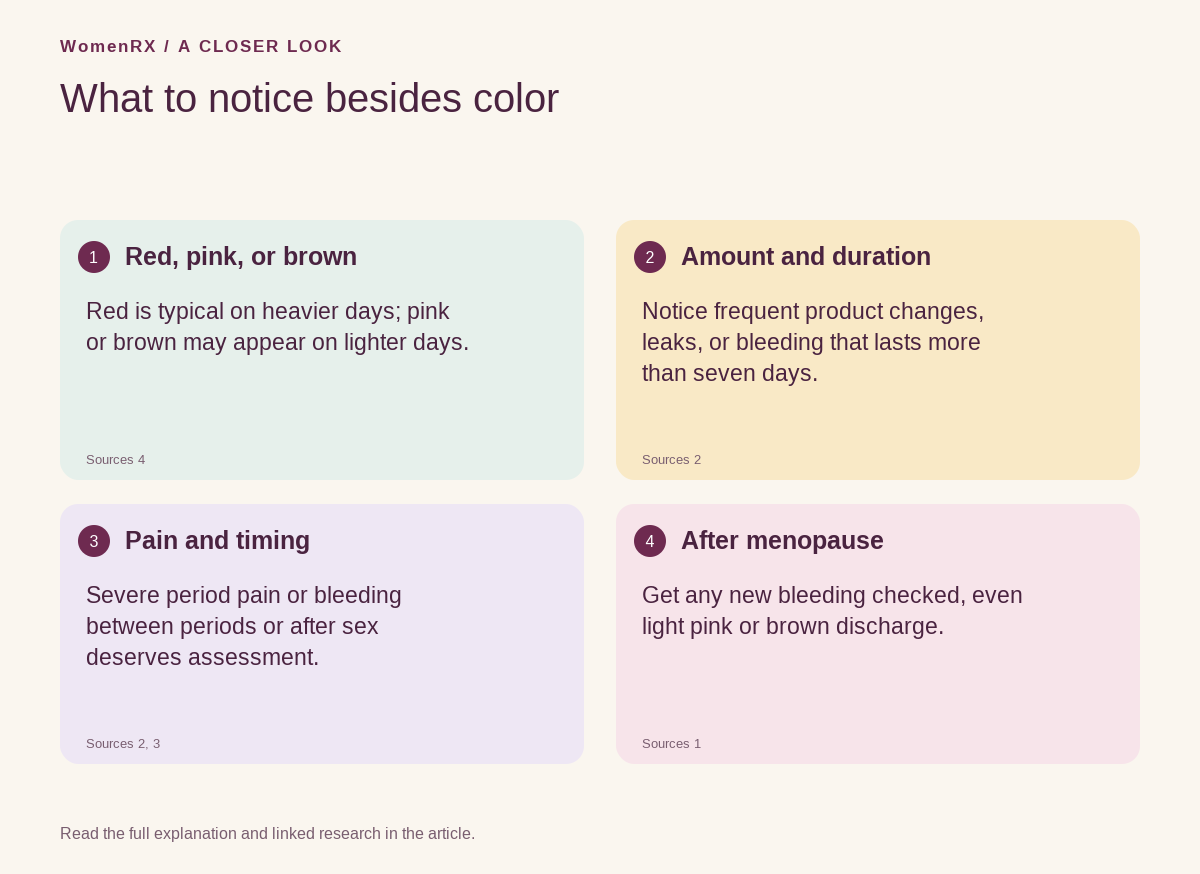
What to notice besides color
Red, pink, or brown: Red is typical on heavier days; pink or brown may appear on lighter days.4
Amount and duration: Notice frequent product changes, leaks, or bleeding that lasts more than seven days.2
Pain and timing: Severe period pain or bleeding between periods or after sex deserves assessment.23
After menopause: Get any new bleeding checked, even light pink or brown discharge.1
Read the figure as text
A period’s shade can vary with flow. Amount, timing, and accompanying symptoms are also worth noticing.- Red, pink, or brown: Red is typical on heavier days; pink or brown may appear on lighter days.4
- Amount and duration: Notice frequent product changes, leaks, or bleeding that lasts more than seven days.2
- Pain and timing: Severe period pain or bleeding between periods or after sex deserves assessment.23
- After menopause: Get any new bleeding checked, even light pink or brown discharge.1
Sources you can check
- Postmenopausal bleeding - NHSAccessed 2026-09-25Return to first citation
- Heavy periods - NHSAccessed 2026-09-25Return to first citation
- Vaginal bleeding between periods or after sex - NHSAccessed 2026-09-25Return to first citation
- Periods - NHSAccessed 2026-09-25Return to first citation