Heavy Periods With Clots After 40: What Needs Evaluation?
Cycle timing can change in perimenopause, but new heavy flow, large clots, or bleeding between periods deserve a closer look.
If your periods have become much heavier after 40, especially if you’re passing large clots, bleeding for more than seven days, or changing a pad or tampon every one to two hours, arrange an assessment. Perimenopause can change your cycle, but it doesn’t establish the cause of heavy flow. Bleeding between periods or after sex also needs checking. 136
A changing cycle isn’t the same as an explained heavy period
In your 40s, periods may arrive closer together, farther apart, or last a different number of days as ovarian function becomes less predictable. That can be part of the menopause transition. But a suddenly heavier flow shouldn’t automatically be put down to hormones. In a study that followed 804 women ages 42 to 52, changes in cycle timing were associated with cycles without ovulation. Heavy bleeding, in contrast, was less likely in those cycles and was associated with self-reported fibroids. The study shows why timing and flow are worth describing separately; it can’t tell you what’s causing your particular period. 34
Clots are one way to describe how much you’re bleeding, not a diagnosis on their own. A practical sign of heavy bleeding is passing clots larger than about 2.5 cm (roughly an inch). Other signs include needing to change a pad or tampon every one to two hours, bleeding through clothes or bedding, or having a period that lasts longer than seven days. You don’t need to meet a precise measurement to take a change seriously: bleeding that disrupts work, exercise, sleep, or ordinary plans is also worth discussing. 1
What else could be behind the bleeding?
Several causes can overlap with perimenopause. Fibroids and uterine polyps become more common with age and can contribute to abnormal bleeding. Adenomyosis can cause heavy, painful periods. Some medicines, including anticoagulants, can make menstrual bleeding heavier. Less commonly, abnormal bleeding can reflect a precancerous or cancerous condition. None of these possibilities can be identified from clot size alone. 123
The pattern helps narrow the questions. For example, a period that’s consistently much heavier than it used to be raises a different set of possibilities from spotting between otherwise regular periods. Bleeding between periods or after sex needs assessment too; possible causes include polyps, hormonal contraception, infections, and changes at the cervix. 36
When to arrange care, and when to seek it urgently
Arrange an appointment if heavy bleeding has persisted, affects your daily life, comes with severe period pain, or is a marked change for you. Mention frequent tiredness or shortness of breath: heavy periods can be associated with iron-deficiency anemia, and blood tests may be used to check for it. Bleeding between periods or after sex should also be checked, even if the bleeding is light. 16
Two combinations call for more urgent assessment. If you’ve missed a period and have unusual vaginal bleeding with abdominal or pelvic pain, seek urgent care because an ectopic pregnancy is possible. If pelvic or period pain is severe or worse than usual and painkillers haven’t helped, seek urgent care for the pain. These are different situations from arranging an appointment for a heavier-than-usual period. 62
If you’ve gone more than a year without a period, don’t treat new bleeding as a returning perimenopausal period. Even light vaginal bleeding after menopause needs checking. 5
What an evaluation may involve
A useful account of the change includes when your last periods began, how long they lasted, how often you changed period products, whether clots appeared and about how large they were, and whether bleeding happened between periods or after sex. Mention pain, tiredness or shortness of breath, any chance of pregnancy, and medicines that may affect bleeding. These details help distinguish a change in cycle timing from a change in blood loss and guide what needs investigating. 136
Depending on your history and symptoms, evaluation may include a pregnancy test, a blood count or iron testing, an examination of the vagina and cervix, and pelvic ultrasound. Ultrasound can help look for causes such as fibroids or polyps. Findings and individual risk then help determine whether sampling the uterine lining or looking inside the uterus with a small camera is appropriate. Being in your 40s alone doesn’t tell you which test you need. 36
Treatment depends on what’s found and how much the bleeding affects you. Options may include medicines that reduce bleeding, hormonal treatment, or a procedure for a polyp or fibroid. If heavy bleeding has caused anemia, treating the blood loss and its effects becomes a priority. The first useful move is to describe what changed and have the cause assessed, rather than assuming the clots mean one particular condition. 13
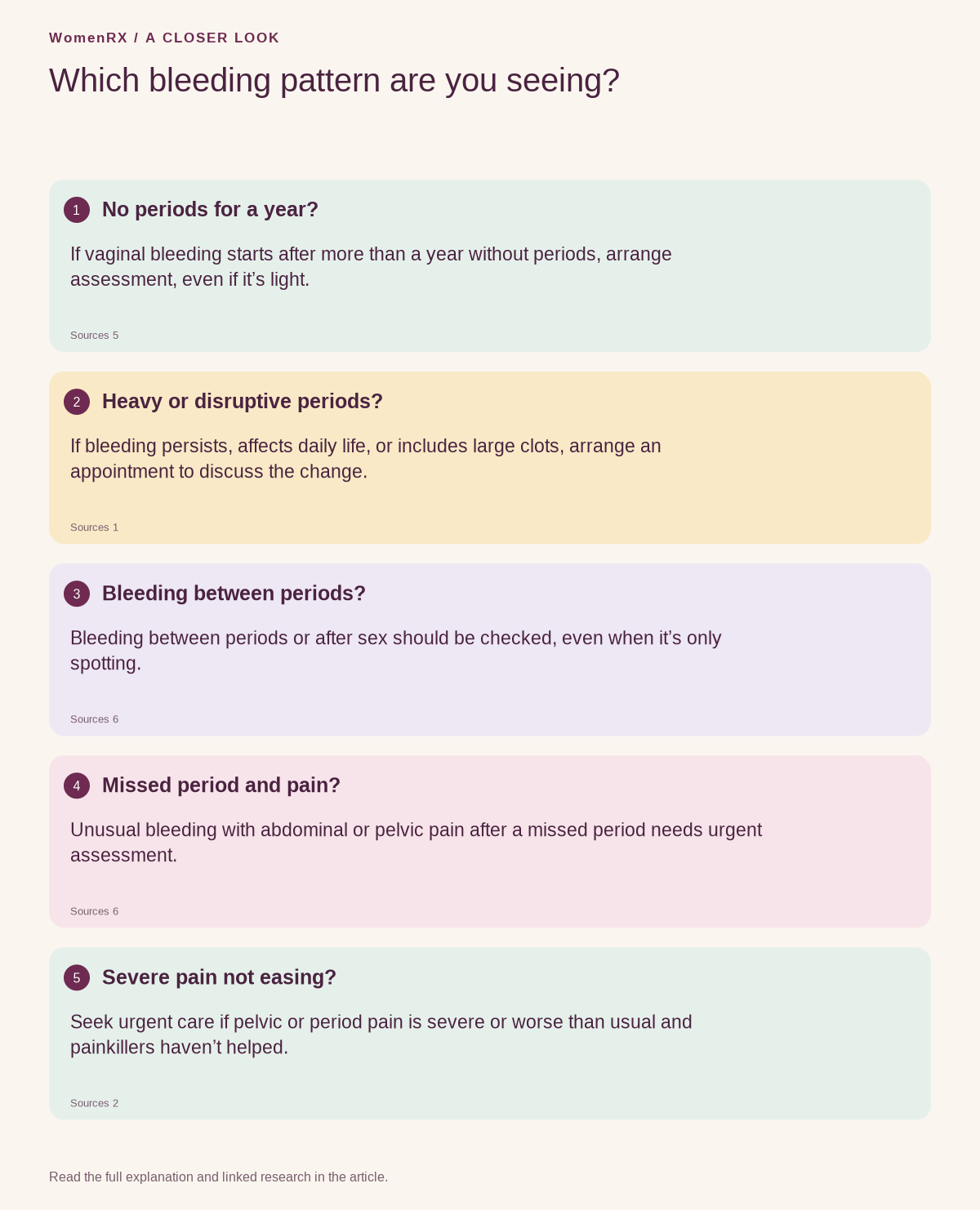
Which bleeding pattern are you seeing?
No periods for a year?: If vaginal bleeding starts after more than a year without periods, arrange assessment, even if it’s light.5
Heavy or disruptive periods?: If bleeding persists, affects daily life, or includes large clots, arrange an appointment to discuss the change.1
Bleeding between periods?: Bleeding between periods or after sex should be checked, even when it’s only spotting.6
Missed period and pain?: Unusual bleeding with abdominal or pelvic pain after a missed period needs urgent assessment.6
Severe pain not easing?: Seek urgent care if pelvic or period pain is severe or worse than usual and painkillers haven’t helped.2
Read the figure as text
Start with whether periods are still occurring, then match the bleeding and any accompanying symptoms to the next step.- No periods for a year?: If vaginal bleeding starts after more than a year without periods, arrange assessment, even if it’s light.5
- Heavy or disruptive periods?: If bleeding persists, affects daily life, or includes large clots, arrange an appointment to discuss the change.1
- Bleeding between periods?: Bleeding between periods or after sex should be checked, even when it’s only spotting.6
- Missed period and pain?: Unusual bleeding with abdominal or pelvic pain after a missed period needs urgent assessment.6
- Severe pain not easing?: Seek urgent care if pelvic or period pain is severe or worse than usual and painkillers haven’t helped.2
Sources you can check
- Heavy periods - NHSAccessed 2026-09-25Return to first citation
- Period pain - NHSAccessed 2026-09-25Return to first citation
- Perimenopausal abnormal uterine bleeding.Dreisler E, Frandsen CS, Ulrich L. · Maturitas · 2024Return to first citation
- The relationship of bleeding patterns to daily reproductive hormones in women approaching menopause.Van Voorhis BJ, Santoro N, Harlow S, Crawford SL, Randolph J. · Obstetrics and gynecology · 2008Return to first citation
- Postmenopausal bleeding - NHSAccessed 2026-09-25Return to first citation
- Vaginal bleeding between periods or after sex - NHSAccessed 2026-09-25Return to first citation