Are Large Period Clots a Sign of Heavy Bleeding?
Clots can be one clue, but the pattern of bleeding and how it affects you matter more than clot presence alone.
Large clots can occur with heavy menstrual bleeding, but a clot by itself can’t tell you how severe your bleeding is or what’s causing it. Look at the whole pattern: how often you change menstrual products, how long bleeding lasts, whether blood leaks through, and whether you feel unusually tired or short of breath. If bleeding affects daily life, it’s worth getting assessed. 1
A clot can catch your attention, especially if it looks larger than what you usually see. But clot presence alone isn’t a severity test. It’s more useful to consider clots alongside how quickly you’re soaking menstrual products, how many days you bleed, leakage, and symptoms such as fatigue or shortness of breath. 1
Look at the whole bleeding pattern
Heavy bleeding may be worth discussing if you need to change a pad or tampon every one to two hours, empty a menstrual cup more often than its instructions recommend, bleed for more than seven days, or regularly leak through clothing or bedding. Feeling tired or short of breath can also be a sign that bleeding is taking a toll. These are practical clues, not a diagnosis, and you don’t need to meet every one before asking for help. 1
The NHS lists clots larger than about 2.5 cm as one possible sign of heavy periods. That size is a prompt to consider the rest of your bleeding pattern, not a test that proves a condition. A smaller clot doesn’t rule out heavy bleeding, either. 1
A useful way to notice the pattern is to jot down, for a cycle or two if you can, the days you bleed, how often you change or empty products, any leaks, whether clots are occasional or frequent, and symptoms that interfere with your day. This isn’t a validated score; it’s a practical record you can use to describe what’s happening.
When bleeding deserves an assessment
Consider making an appointment if heavy bleeding is affecting work, school, sleep, exercise, or other parts of daily life; if it has been a persistent pattern; or if you have severe period pain, bleeding between periods or after sex, or other symptoms such as pain when you pee, have a bowel movement, or have sex. 1
Heavy bleeding has different possible causes, including conditions such as fibroids, endometriosis, and adenomyosis, as well as some medicines. The pattern alone can’t identify the cause. An assessment can help work out whether testing or treatment makes sense. 1
In adolescents with heavy periods, iron deficiency may occur with or without anemia; a clinical review recommends checking both hemoglobin and ferritin when evaluating them. 2
What may differ by life stage
Heavier periods can happen when periods first begin and as someone approaches menopause, according to NHS guidance. That context doesn’t make disruptive bleeding something you have to put up with: the same practical signs, such as prolonged bleeding, frequent product changes, leaks, or fatigue, still matter. 1
For adolescents, periods lasting more than seven days, soaking more than five menstrual products in a day, needing to change products overnight, or passing large clots are clues that may raise concern for a bleeding disorder, especially alongside a personal or family history of other bleeding. These clues call for evaluation; they don’t establish a diagnosis. 23
For adults in the reproductive years, and for people nearing menopause, don’t use clot size alone to decide whether bleeding is “normal.” How much it disrupts your life and the other bleeding signs provide a more useful picture. Heavy bleeding can have several causes. 1
A simple record to bring
If you decide to seek an assessment, bring a brief description rather than relying on memory: how many days you bleed, how often you change products on your heaviest days, whether you leak, how often you notice clots, and whether you feel tired or short of breath. Include any bleeding between periods or after sex, and whether pain is severe. This makes the overall pattern clearer than clot size on its own.
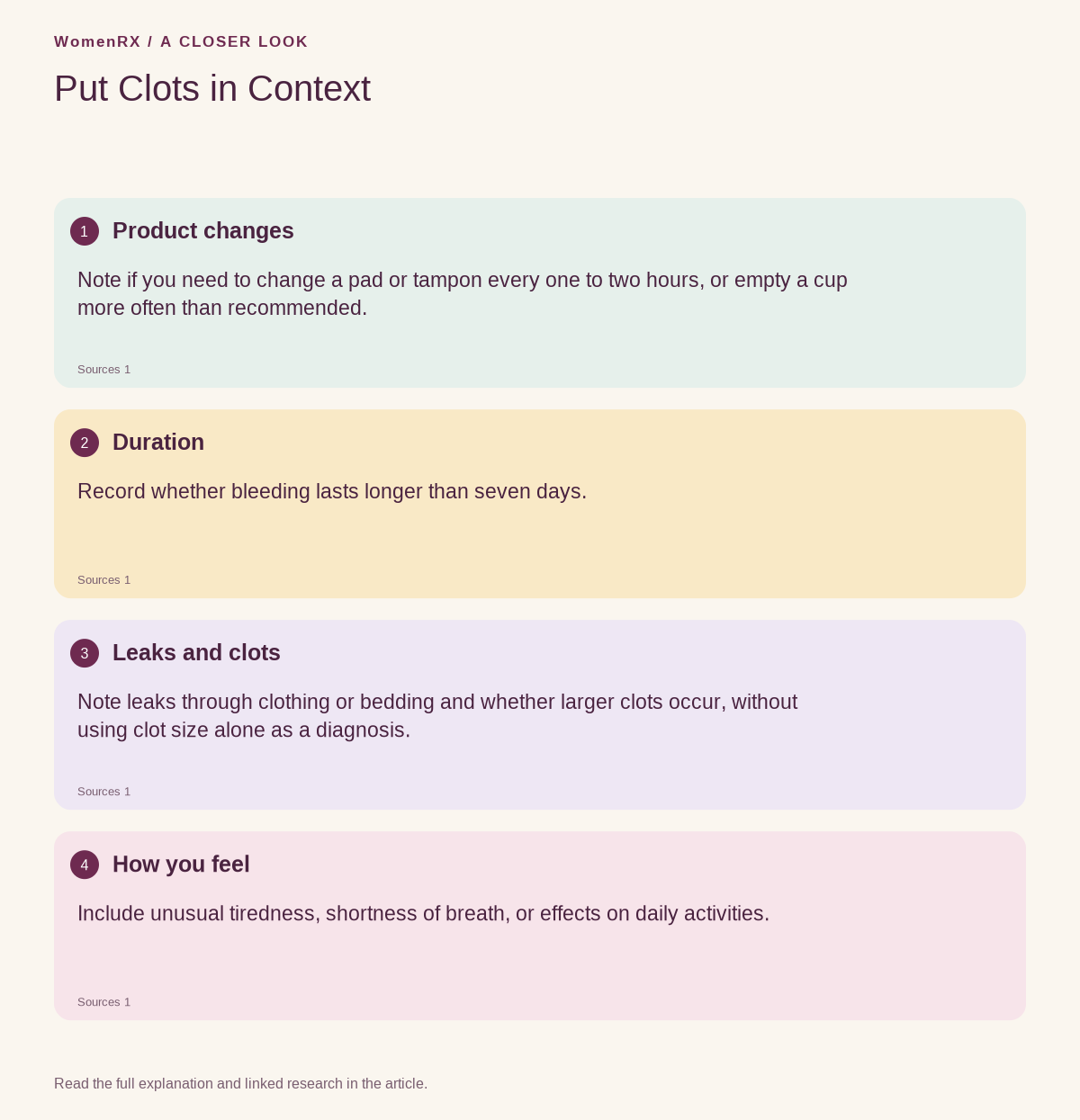
Put Clots in Context
Product changes: Note if you need to change a pad or tampon every one to two hours, or empty a cup more often than recommended.1
Duration: Record whether bleeding lasts longer than seven days.1
Leaks and clots: Note leaks through clothing or bedding and whether larger clots occur, without using clot size alone as a diagnosis.1
How you feel: Include unusual tiredness, shortness of breath, or effects on daily activities.1
Read the figure as text
Use these observations together to describe a bleeding pattern; they are not a diagnostic score.- Product changes: Note if you need to change a pad or tampon every one to two hours, or empty a cup more often than recommended.1
- Duration: Record whether bleeding lasts longer than seven days.1
- Leaks and clots: Note leaks through clothing or bedding and whether larger clots occur, without using clot size alone as a diagnosis.1
- How you feel: Include unusual tiredness, shortness of breath, or effects on daily activities.1
More questions, answered
Does a large clot mean I have a specific condition?
No. Clots can be one sign of heavy bleeding, but they don’t identify its cause. Heavy periods can be associated with several conditions, including fibroids, endometriosis, and adenomyosis, so the wider bleeding pattern and symptoms matter. 1
What should I note besides clots?
Record how long bleeding lasts, how often you change or empty menstrual products, any leaks, and symptoms such as fatigue or shortness of breath. Note whether bleeding affects daily activities, too. 1
Sources you can check
- Heavy periods - NHSAccessed 2026-09-25Return to first citation
- Evaluation and management of heavy menstrual bleeding in adolescents: the role of the hematologist.O'Brien SH. · Blood · 2018Return to first citation
- Evaluation and management of heavy menstrual bleeding in adolescents: the role of the hematologist.O'Brien SH. · Hematology. American Society of Hematology. Education Program · 2018Return to first citation