Pelvic Inflammatory Disease: Symptoms, Testing, and Care
PID can cause mild or no symptoms, and a negative chlamydia or gonorrhea test does not rule it out.
Pelvic inflammatory disease (PID) is an infection of the upper reproductive tract. Lower abdominal or pelvic pain deserves prompt assessment, especially after a possible STI exposure, but some people have few or no symptoms. There’s no single test for PID: an exam, STI testing, a pregnancy test, and sometimes other tests help guide the diagnosis. Treatment uses antibiotics, with follow-up to check that it’s working. 12
When to seek care
PID affects the uterus, fallopian tubes, ovaries, or nearby pelvic tissue. It can be associated with chlamydia or gonorrhea, but other bacteria can also be involved. Symptoms vary: some people have mild symptoms or none, while others have lower abdominal or pelvic pain. 145
If you have pelvic or lower abdominal pain, or think you may have been exposed to an STI, arrange prompt medical assessment rather than waiting for symptoms to become severe. Severe or worsening pain, or pain that hurts when you move or touch the area, needs emergency assessment. If pregnancy is possible, mention it when you seek care; a pregnancy test may be part of the evaluation. 12
Discharge or other vaginal symptoms can have several causes, so they don’t confirm PID on their own. Vaginal infections and infection of the cervix can resemble or overlap with symptoms of an upper-tract infection. An examination helps distinguish these possibilities. 4
How testing helps, and what it can’t settle
There isn’t one test that confirms or rules out PID. A clinician may ask about symptoms and sexual exposure, examine the abdomen and pelvis, and take a vaginal sample. Depending on the situation, testing may also include blood or urine tests, a pregnancy test, or imaging such as an ultrasound. 12
Chlamydia and gonorrhea tests can help identify common causes, but a negative result for either one doesn’t rule out PID. PID can involve other bacteria, and diagnosis is based on the overall findings rather than one lab result. 145
A pelvic exam may feel uncomfortable. You can ask what each part involves, request a chaperone, and ask the clinician to pause or stop. The NHS describes these as options during an examination; the practical details of arranging them can differ between US care settings. 2
What treatment and follow-up may involve
PID is treated with antibiotics. Because the infection may involve several types of bacteria, treatment is intended to cover more than chlamydia and gonorrhea alone. The clinician chooses the antibiotic plan based on the assessment. Take the prescribed course as directed, and ask what to do if you have a reaction or cannot keep the medicine down. 15
Follow-up matters. Ask when you should expect to hear whether tests found an STI, how to take the antibiotics, and when you should be reassessed. A follow-up helps check whether treatment is working; persistent or worsening symptoms warrant getting back in touch rather than assuming the infection has cleared. 1
Partner questions to ask
If an STI may be involved, ask which recent partners should be tested or treated, and whether the clinic can help with partner notification. Partner testing and follow-up can help address possible exposure, but the specific plan depends on the diagnosis and local services. 23
You can also ask: “Should I avoid sex while treatment is underway, and what needs to be true before it’s okay to resume?” Guidance can depend on which infection is found and what treatment is used. If your partner has symptoms or a positive test, share that with the clinician so it can inform your care.
Early treatment can reduce the chance of lasting problems, but PID can still be associated with chronic pelvic pain, infertility, and ectopic pregnancy. That’s why timely assessment is useful even when symptoms seem mild. 15
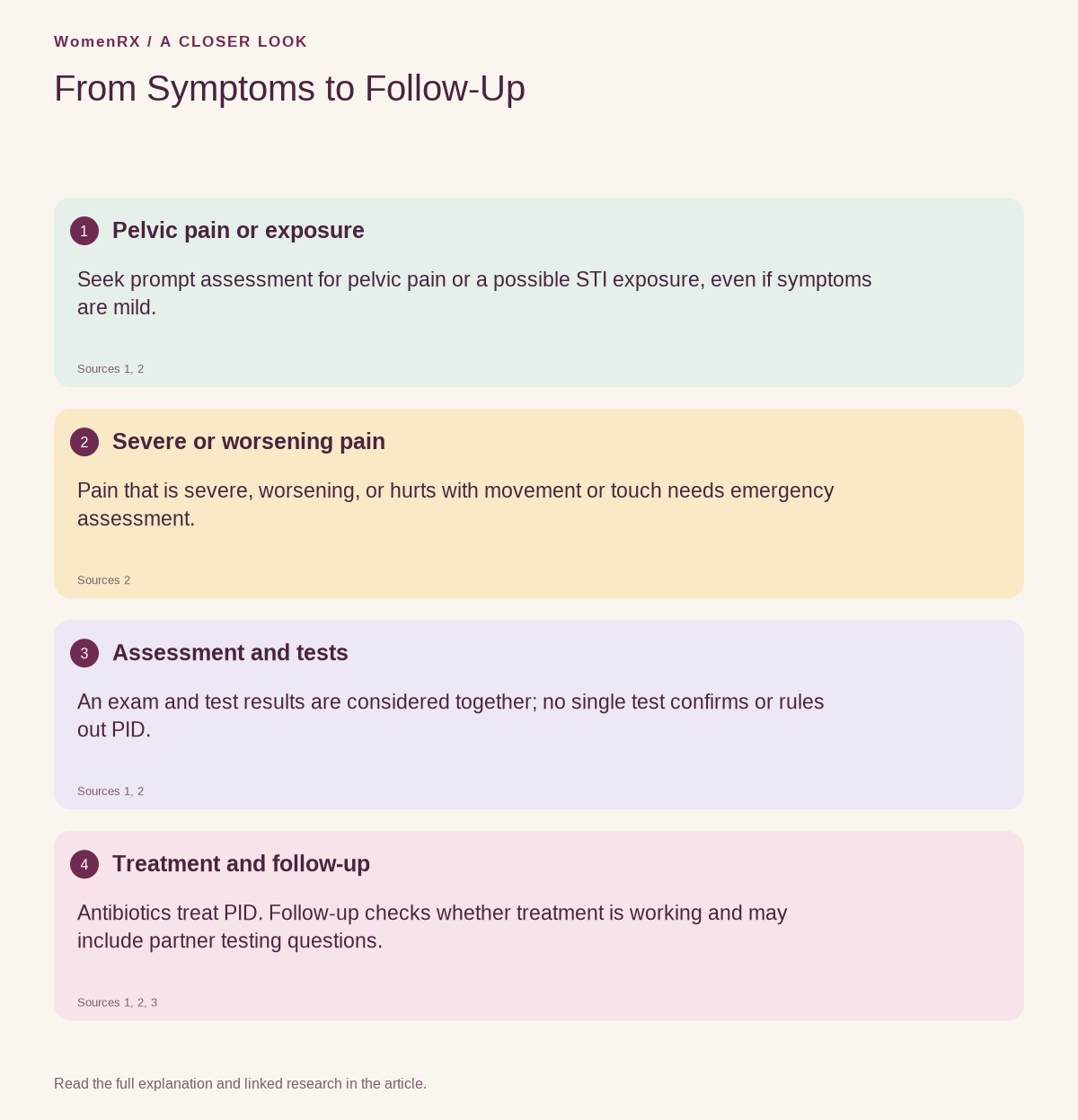
From Symptoms to Follow-Up
Pelvic pain or exposure: Seek prompt assessment for pelvic pain or a possible STI exposure, even if symptoms are mild.12
Severe or worsening pain: Pain that is severe, worsening, or hurts with movement or touch needs emergency assessment.2
Assessment and tests: An exam and test results are considered together; no single test confirms or rules out PID.12
Treatment and follow-up: Antibiotics treat PID. Follow-up checks whether treatment is working and may include partner testing questions.123
Read the figure as text
A practical overview of how symptoms can lead to assessment, treatment, and partner questions.- Pelvic pain or exposure: Seek prompt assessment for pelvic pain or a possible STI exposure, even if symptoms are mild.12
- Severe or worsening pain: Pain that is severe, worsening, or hurts with movement or touch needs emergency assessment.2
- Assessment and tests: An exam and test results are considered together; no single test confirms or rules out PID.12
- Treatment and follow-up: Antibiotics treat PID. Follow-up checks whether treatment is working and may include partner testing questions.123
More questions, answered
Can PID happen without chlamydia or gonorrhea?
Yes. Those infections are common causes, but other bacteria can also cause PID. A negative result for chlamydia or gonorrhea alone doesn’t rule it out. 145
Does a pelvic exam prove that I have PID?
No single test establishes or excludes PID. An exam is one part of the assessment, considered alongside symptoms, test results, and sometimes imaging. 12
Sources you can check
- Pelvic Inflammatory Disease | PID | MedlinePlusAccessed 2026-09-25Return to first citation
- Pelvic inflammatory disease - NHSAccessed 2026-09-25Return to first citation
- Chlamydia - NHSAccessed 2026-09-25Return to first citation
- Infectious Vaginitis, Cervicitis, and Pelvic Inflammatory Disease.Shroff S. · The Medical clinics of North America · 2023Return to first citation
- Identification and Treatment of Acute Pelvic Inflammatory Disease and Associated Sequelae.Frock-Welnak DN, Tam J. · Obstetrics and gynecology clinics of North America · 2022Return to first citation