Chlamydia Testing, Treatment, and the Follow-Up That Matters
Chlamydia can be present without symptoms, so testing, partner care, and follow-up each serve a different purpose.
Chlamydia often has no symptoms. A urine or swab test can diagnose it, and antibiotics can cure it. Current and recent partners need testing, and you and your partners must complete treatment before having sex again. The CDC recommends testing again about three months after treatment to look for reinfection, even if partners were treated. During pregnancy, an earlier test checks that the infection cleared. 12
A test answers the question symptoms can’t
Feeling fine doesn’t rule out chlamydia. You don’t need to wait for symptoms to request a test. Testing may involve a urine sample or a swab; a clinician may also take a swab from your throat, anus, or eyes if those areas are affected. You may be able to collect a vaginal swab yourself. Tests for other sexually transmitted infections may be offered at the same time. 1
When symptoms do show up, they may not appear until several weeks after sex with a partner who has chlamydia. Possible signs include a smelly discharge, burning when you pee, or bleeding between periods. Symptoms alone can’t tell you whether you have chlamydia, which is why testing matters. 2
Tell the person arranging your test if you’re pregnant or think you might be. Pregnancy changes the follow-up plan, and untreated chlamydia can be passed to a baby during birth. 1
Treatment is one part of the plan
Chlamydia is treated with antibiotics. Treatment may be a single dose or tablets taken for 7 to 14 days. Sometimes treatment starts before test results return. The treatment discussion should cover the result, whether pregnancy affects the plan, and what to do if a partner may also have been exposed. Finish the treatment you’re given, even if you feel well: symptoms aren’t a reliable way to tell whether chlamydia is present. 1
Treatment addresses the current infection, but it doesn’t prevent a new one. 2 That’s why partner care matters alongside your own medication. Current and recent sexual partners need to be told and tested; a sexual health service may be able to help with notification if having that conversation yourself is difficult or unsafe. 1 The CDC advises waiting to have sex until you and your partners complete treatment. If you receive a single-dose treatment, wait seven days after taking it; if you receive a seven-day course, finish every dose. Your partners need to complete their treatment too. 2
Put the right follow-up test on the calendar
“Get tested again” can mean two different things. A test soon after treatment may be used to check that an infection has cleared. A later test looks for reinfection, including an infection passed back by a partner or acquired after treatment. Those are different questions: a later reinfection test is not a check that treatment cleared the original infection. 12
If you’re pregnant: repeat testing about four weeks after treatment is advised to check that the infection is gone. Tell your pregnancy care team about a positive result so that testing and treatment can be coordinated with your prenatal care. 1
About three months after treatment: the CDC recommends testing again for reinfection, even if your partners received treatment. This later test matters even when you feel well. 2
For example, if you receive treatment and your partner has not yet been evaluated, ask how partner testing and treatment will be handled before assuming the infection is behind you. If you later think you’ve had a new exposure, ask about testing rather than waiting for a planned retest. You can be tested without symptoms. 1
The practical next move is to leave your visit with three things clear: how you’ll receive your result, how partners can get care, and which follow-up test you need and when. That makes a positive result easier to act on, rather than leaving partner care or retesting to chance. 12
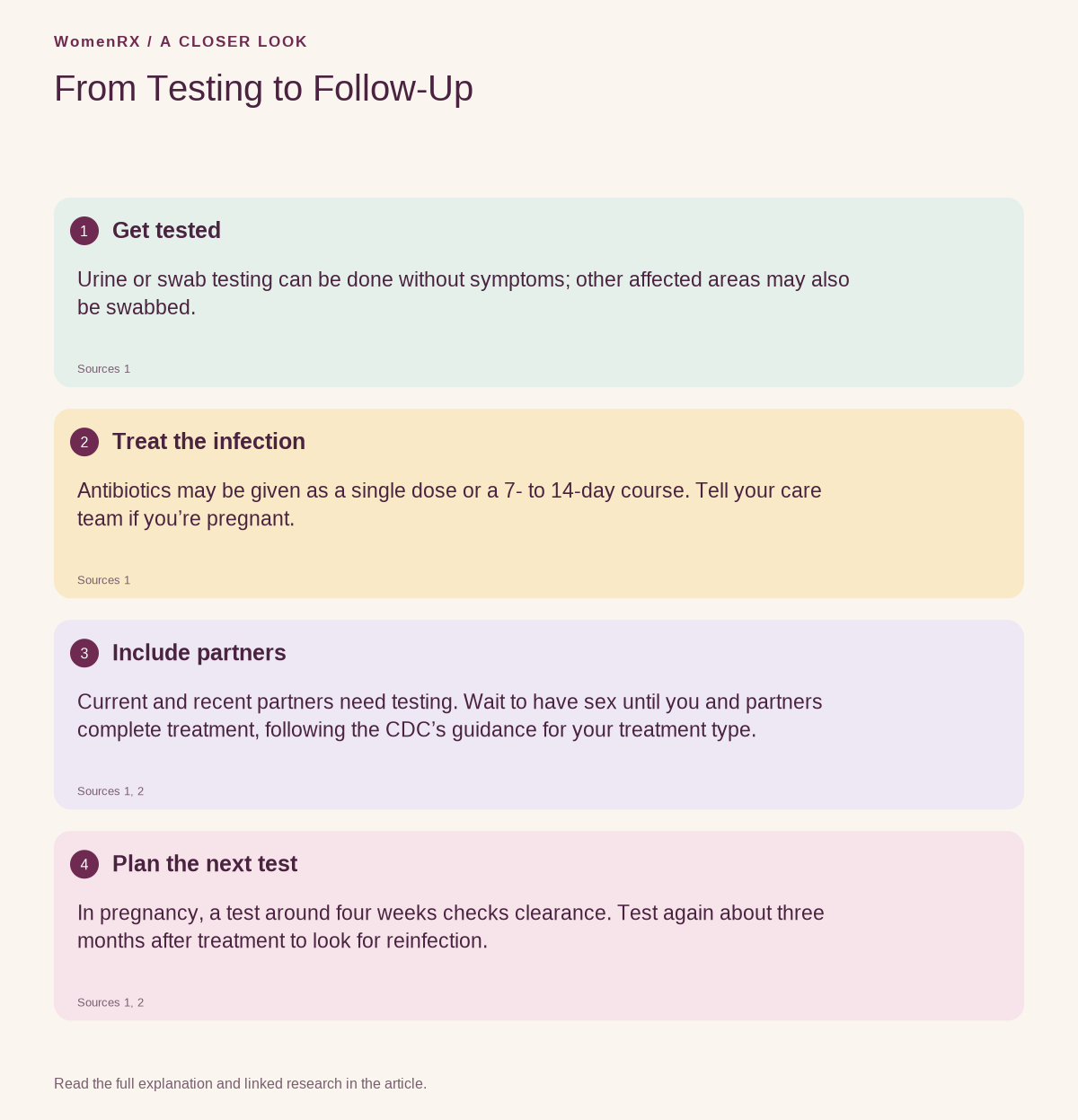
From Testing to Follow-Up
Get tested: Urine or swab testing can be done without symptoms; other affected areas may also be swabbed.1
Treat the infection: Antibiotics may be given as a single dose or a 7- to 14-day course. Tell your care team if you’re pregnant.1
Include partners: Current and recent partners need testing. Wait to have sex until you and partners complete treatment, following the CDC’s guidance for your treatment type.12
Plan the next test: In pregnancy, a test around four weeks checks clearance. Test again about three months after treatment to look for reinfection.12
Read the figure as text
A positive result begins a sequence of decisions, not just a course of antibiotics.- Get tested: Urine or swab testing can be done without symptoms; other affected areas may also be swabbed.1
- Treat the infection: Antibiotics may be given as a single dose or a 7- to 14-day course. Tell your care team if you’re pregnant.1
- Include partners: Current and recent partners need testing. Wait to have sex until you and partners complete treatment, following the CDC’s guidance for your treatment type.12
- Plan the next test: In pregnancy, a test around four weeks checks clearance. Test again about three months after treatment to look for reinfection.12
More questions, answered
Can I test for chlamydia if I have no symptoms?
Yes. You can be tested without symptoms, and testing may use a urine sample or swab. Swabs may also be taken from your throat, anus, or eyes if those areas are affected. 1
Why test again if I’ve finished antibiotics?
Finishing treatment doesn’t protect you from a new infection. During pregnancy, testing about four weeks after treatment checks that the infection has cleared. The CDC recommends another test about three months after treatment to look for reinfection, even if your partners were treated. 12
Sources you can check
- Chlamydia - NHSAccessed 2026-09-25Return to first citation
- About Chlamydia | Chlamydia | CDCAccessed 2026-09-25Return to first citation