Peas: Protein, Fiber, and Where They Fit
Cooked green peas bring both protein and fiber to a meal, while cooked split peas provide more of each at the same weight.
Yes, green peas make a meaningful contribution: one-half cup (80 g) of boiled, drained green peas provides about 4.3 g of protein and 4.4 g of fiber. Cooked split peas provide more of both per 100 g, but they’re a different food, not a direct substitute in every meal. Think of green peas as a vegetable that adds protein, not as your whole protein plan. 562
What green peas add to your plate
For a concrete example, one-half cup (80 g) of green peas, boiled and drained without salt, has about 4.3 g of protein, 4.4 g of fiber, 12.5 g of carbohydrate, and 67 calories. That’s enough protein and fiber to count as a contribution to lunch or dinner, even if the peas are a side rather than the meal’s main protein food. These are reference values for that specific preparation, not a promise about every pea product. 5
Fiber helps add bulk to food and supports digestion. If you’re increasing your fiber intake, going gradually can help you avoid gas, bloating, and cramps. 1 For example, you could add green peas to a grain bowl that already contains another protein food. The peas contribute fiber and some additional protein; they don’t have to do every job on the plate.
Green peas and split peas aren’t interchangeable
Green peas are grouped with starchy vegetables in U.S. dietary-pattern discussions. Dried peas, such as split peas, are pulses. Cooking a dried split pea gives you a different reference food from cooking a green pea, even though both have “pea” in the name. 436
An equal-weight comparison makes the difference easier to see. Per 100 g, boiled, drained green peas without salt contain about 5.4 g of protein and 5.5 g of fiber. Boiled split peas without salt contain about 8.3 g of protein and 8.3 g of fiber per 100 g. The split peas also have more carbohydrate and calories at that weight: about 21 g and 118 calories, versus about 16 g and 84 calories for the green peas. These figures compare two cooked reference foods, not equal household scoops or a change caused solely by drying. 6
That distinction helps when you’re planning a meal. Green peas can add substance to a vegetable side, pasta, or bowl. If peas are meant to be a more substantial part of a plant-forward main dish, cooked split peas bring more protein and fiber at the same weight. Neither comparison means you need to choose one over the other every time.
Does pea protein make it a complete meal?
Protein needs vary with age, health, and activity, so a food’s protein count can’t tell you whether one serving meets your needs. MedlinePlus advises eating a variety of plant protein foods across the day to obtain the amino acids your body needs. You don’t have to treat a serving of green peas as a stand-alone “complete protein” source to make good use of it. 2
Whole peas and products made with extracted pea protein also serve different purposes. A concentrated pea-protein ingredient may help raise a product’s protein content, but extracting protein can reduce components found in whole legumes, including fiber. A product labeled “pea protein” therefore isn’t automatically equivalent to a serving of cooked peas. 3
There’s no separate pea portion established here for pregnancy or another life stage. If you’re pregnant and using fresh produce, ordinary food-safety care still matters: wash fruits and vegetables, and follow clean, separate, cook, and chill practices. That’s a food-safety consideration, not a special benefit or restriction attached to peas. 7
Which pea is on your plate?
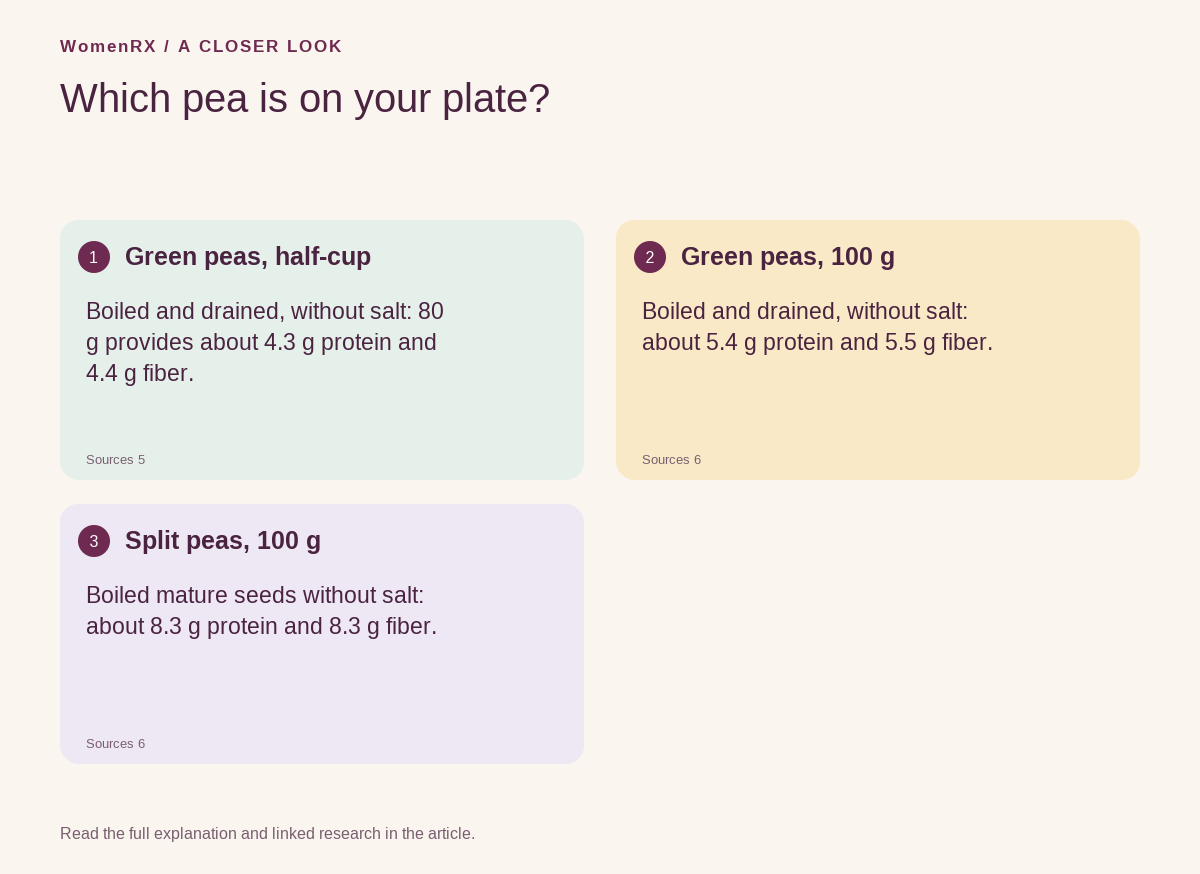
Green peas, half-cup: Boiled and drained, without salt: 80 g provides about 4.3 g protein and 4.4 g fiber.5
Green peas, 100 g: Boiled and drained, without salt: about 5.4 g protein and 5.5 g fiber.6
Split peas, 100 g: Boiled mature seeds without salt: about 8.3 g protein and 8.3 g fiber.6
Read the figure as text
The cooked-food comparison uses equal 100 g weights; the half-cup example shows a recognizable green-pea portion.More questions, answered
Are green peas a vegetable or a legume?
Green peas appear with starchy vegetables in U.S. dietary-pattern discussions; dried peas such as split peas are pulses. The names are related, but their cooked nutrition profiles differ, so use the form you’re actually eating when comparing meals. 436
Sources you can check
- Dietary Fiber: MedlinePlusAccessed 2026-09-25Return to first citation
- Dietary Proteins: MedlinePlusAccessed 2026-09-25Return to first citation
- Dietary guidance on plant-based meat alternatives for individuals wanting to increase plant protein intake.Messina V, Guest NS, Duncan AM, Mangels AR, Norris J, Ruscigno M, Glenn AJ, Wolfram T, Marinangeli CPF, Messina M. · Frontiers in nutrition · 2025Return to first citation
- Assessment of the unique nutrient contribution of white potatoes in the diet and the nutrient implications of replacing Refined and Whole Grains with Starchy Vegetables.Richter C, Fulgoni K, Fulgoni VL, Johnson B, Kijek M, Maniscalco S, Psota T. · Frontiers in nutrition · 2025Return to first citation
- USDA SR Legacy: Peas, green, cooked, boiled, drained, without salt (FDC 170420)Accessed 2026-09-25Return to first citation
- USDA SR Legacy: peas reference food comparisonAccessed 2026-09-25Return to first citation
- Safer Food Choices for Pregnant Women | Food Safety | CDCAccessed 2026-09-25Return to first citation