Peanut Butter: Protein, Calories, and What to Check
Two tablespoons contribute about 7 grams of protein, but the serving size, added sugar, sodium, and allergy information matter when you choose a jar.
Two tablespoons (32 grams) of smooth, unsalted peanut butter provide about 7 grams of protein and 191 calories in a USDA reference profile. That’s a useful protein contribution, not a whole meal’s worth for everyone. Check your jar’s serving size before comparing numbers. You can also compare any added sugar and sodium amounts reported for the same serving size. If you have a peanut allergy, peanut butter isn’t a suitable choice, and you should check ingredients on other packaged foods.62714
What two tablespoons contribute
Peanut butter can make a snack more substantial, but it helps to know what’s in the spoonful. In a USDA reference profile for smooth peanut butter without salt, two tablespoons (32 grams) provide about 7.1 grams of protein, 191 calories, 16.4 grams of fat, and 1.6 grams of fiber. Those are reference-food estimates, not a promise about every jar.6
That puts the protein in perspective. Peanut butter contributes protein, but it also brings considerably more fat by weight than protein. If you spread it on toast or add it to oatmeal, count the peanut butter as one part of the meal rather than assuming it supplies all the protein you want from that meal. Protein needs vary with factors such as age, health, and activity.63
Compare jars from the serving size down
Start with serving size on the Nutrition Facts panel. The calories and nutrients shown are for that amount, which may differ from what you actually spread or scoop. If you’re comparing two jars, put their figures on the same serving-size footing first. Otherwise, a lower number may simply reflect a smaller listed serving.2
Next, read the protein and calories together. The USDA figure gives you a useful reference point, while your jar tells you what its maker reports per serving. If the jars report added sugar or sodium amounts, compare them for the same serving size. An unsalted reference peanut butter has about 5 milligrams of sodium per two tablespoons; it cannot tell you the sodium in a salted product. Nutrition guidance recommends limiting added sugars and salt across the overall diet, so one spoonful does not determine your health.627
Finally, read the jar’s ingredients as well as its per-serving nutrition figures. If you have a peanut allergy, check ingredients on packaged foods before eating, including foods where peanut butter might not be obvious.24
When peanut allergy changes the decision
For someone with a peanut allergy, protein and sugar comparisons come second: avoiding the food you’re allergic to is what prevents a reaction. Check ingredients on packaged foods, including foods in which peanut butter might be less obvious. Food-allergy symptoms can begin within minutes to two hours after eating, and reactions can be serious. If you think you may have a peanut allergy, get it evaluated rather than testing it by eating peanut butter again.14
A “may contain peanuts” statement is a different issue from peanuts appearing as an ingredient. It signals a possible exposure that can matter to an allergic person; it isn’t a way to judge a food’s protein content. A paper focused on peanut-allergic children describes variable peanut contamination in foods with precautionary labels and differing reaction thresholds. Those findings do not establish an individual adult’s risk, and “may contain” does not mean peanut-free.5
Using the label during pregnancy or breastfeeding
If you’re pregnant or breastfeeding, the same per-serving label comparison can tell you what a jar contributes in protein and calories. It cannot tell you how much protein or energy you personally need, and the USDA reference profile does not establish a special benefit or a different serving for either period. If you have a peanut allergy, avoid peanut butter.261
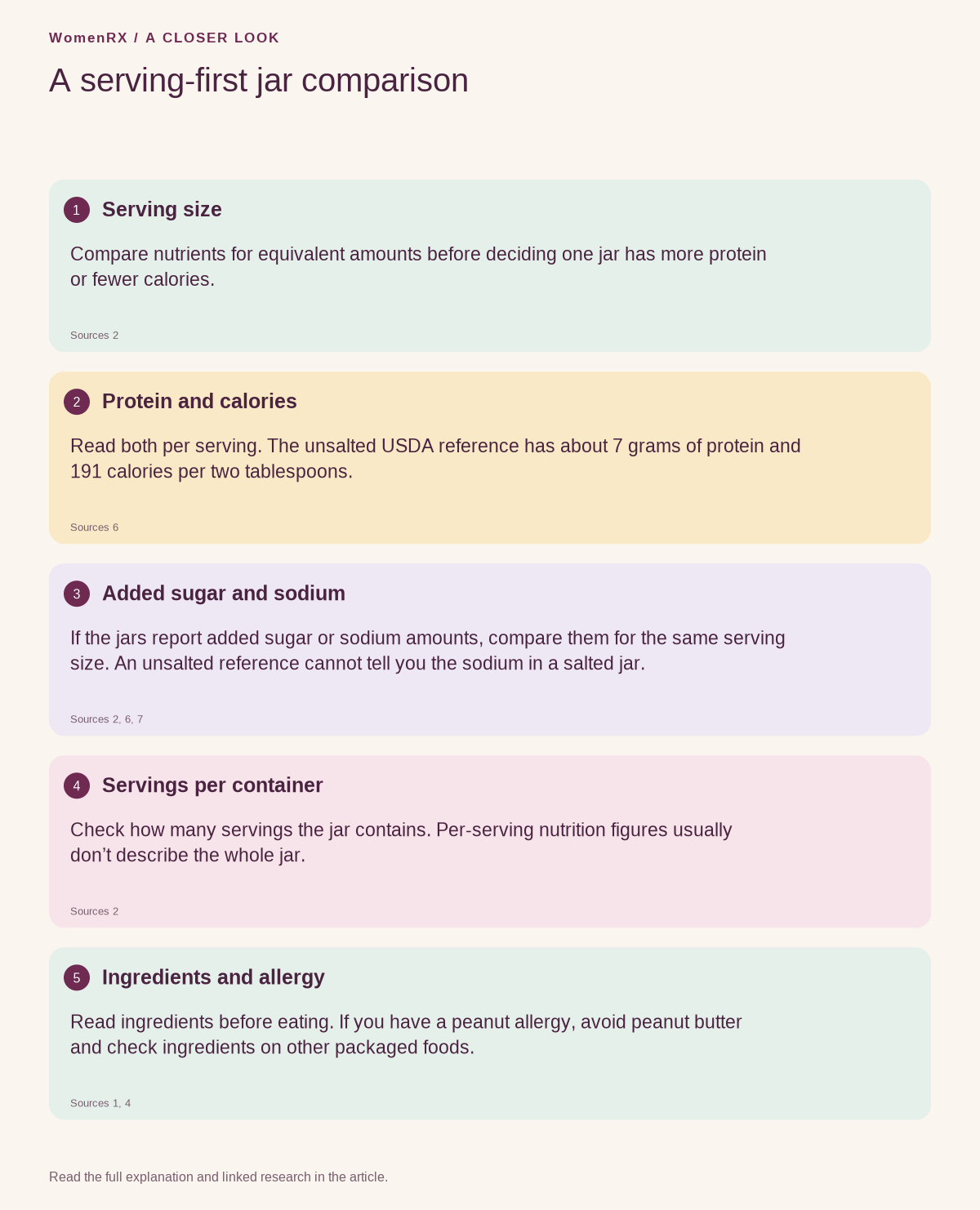
A serving-first jar comparison
Serving size: Compare nutrients for equivalent amounts before deciding one jar has more protein or fewer calories.2
Protein and calories: Read both per serving. The unsalted USDA reference has about 7 grams of protein and 191 calories per two tablespoons.6
Added sugar and sodium: If the jars report added sugar or sodium amounts, compare them for the same serving size. An unsalted reference cannot tell you the sodium in a salted jar.267
Servings per container: Check how many servings the jar contains. Per-serving nutrition figures usually don’t describe the whole jar.2
Ingredients and allergy: Read ingredients before eating. If you have a peanut allergy, avoid peanut butter and check ingredients on other packaged foods.14
Read the figure as text
Use these checks in order when comparing two peanut-butter labels; this is a shopping aid, not a nutrition score.- Serving size: Compare nutrients for equivalent amounts before deciding one jar has more protein or fewer calories.2
- Protein and calories: Read both per serving. The unsalted USDA reference has about 7 grams of protein and 191 calories per two tablespoons.6
- Added sugar and sodium: If the jars report added sugar or sodium amounts, compare them for the same serving size. An unsalted reference cannot tell you the sodium in a salted jar.267
- Servings per container: Check how many servings the jar contains. Per-serving nutrition figures usually don’t describe the whole jar.2
- Ingredients and allergy: Read ingredients before eating. If you have a peanut allergy, avoid peanut butter and check ingredients on other packaged foods.14
More questions, answered
Is peanut butter a high-protein snack on its own?
It contributes protein: about 7.1 grams per two tablespoons in the USDA unsalted reference profile. That same amount provides about 191 calories, so look at both figures when deciding how it fits into your snack or meal.6
Sources you can check
- Food Allergy | Anaphylaxis | Food Allergies | MedlinePlusAccessed 2026-09-25Return to first citation
- Food Labeling: MedlinePlusAccessed 2026-09-25Return to first citation
- Dietary Proteins: MedlinePlusAccessed 2026-09-25Return to first citation
- Food allergy - NHSAccessed 2026-09-25Return to first citation
- Can my child with IgE-mediated peanut allergy introduce foods labeled with "may contain traces"?Graham F, Caubet JC, Eigenmann PA. · Pediatric allergy and immunology : official publication of the European Society of Pediatric Allergy and Immunology · 2020Return to first citation
- USDA SR Legacy: Peanut butter, smooth style, without salt (FDC 172470)Accessed 2026-09-25Return to first citation
- Nutrition: MedlinePlusAccessed 2026-09-25Return to first citation