Kimchi Nutrition: Protein, Sodium, and Fermentation
Kimchi can add tangy vegetables to a meal, but its sodium matters more than its protein.
Kimchi works well as a flavorful vegetable side or topping, not as the protein source in a meal. A USDA reference for cabbage kimchi estimates about 0.8 grams of protein and 374 milligrams of sodium per half cup; your jar may differ. Fermentation can bring lactic acid bacteria into the food, but that alone doesn’t establish a health benefit from eating it. 54
What kimchi adds to your plate
If you like kimchi with a rice bowl or alongside dinner, think of it as a flavorful vegetable addition. The USDA’s reference entry for cabbage kimchi estimates that a half cup, or 75 grams, contains about 11 calories, 1.2 grams of fiber, and 0.8 grams of protein. That’s a useful way to put its role in perspective: kimchi can add vegetables and flavor, but it won’t do the job of the main protein food in a meal. These figures describe a reference food, not every recipe or brand. 5
The number more likely to affect how much you use is sodium. That same reference half cup has about 374 milligrams. Sodium is necessary for normal body function, but eating too much can contribute to high blood pressure. Most adults are advised to stay below 2,300 milligrams a day, and some people, including those with high blood pressure or kidney problems, may need to pay closer attention to their intake. 52
Compare the amount you’ll actually eat
For packaged kimchi, start with the serving size on the Nutrition Facts label, then look at sodium and protein for that serving. If two jars use different serving sizes, compare them based on an amount you would actually put on your plate. A smaller number on the front of a jar isn’t very helpful if it represents a much smaller portion. Food labels are a practical way to check sodium in prepared foods; the USDA reference value can’t tell you what’s in your particular jar. 25
For example, you might use kimchi as a topping on a meal that already includes a protein food, rather than build the meal around kimchi for protein. If you’re watching sodium, consider how that topping fits with the other salty foods in the same meal. You don’t need to treat one food as the whole story of your day’s eating. 125
Fermented doesn’t automatically mean clinically proven
Kimchi is a fermented vegetable food, and researchers have identified several kinds of lactic acid bacteria in kimchi used in a study of fermented vegetables. That tells us something about the food’s microbial makeup. It doesn’t tell us that every jar contains the same organisms or that eating it will reliably improve your gut health. 4
The distinction matters when you see claims about “kimchi probiotics.” In one randomized trial, 40 people with impaired glucose tolerance received either a capsule containing a bacterial strain isolated from kimchi or a placebo for eight weeks. The capsule group had improvements in two glucose measures compared with the placebo group, but the researchers did not find a significant change in measured gut microbiota composition. Participants ate a supplement, not kimchi, so the result can’t be transferred to a serving of the food. 3
A separate study followed people eating fermented vegetables, including kimchi, fermented carrots, and kohlrabi. Among the 55 who completed it, researchers reported changes in gut microbiota during the three-week period. Because the intervention included several foods, it can’t tell you which changes, if any, came from kimchi specifically. Food diaries also showed a change in sugar intake, another reason not to credit every observed change to fermentation. 4
Those studies offer reasons to keep studying fermented foods, not a promise about weight, hormones, or digestion from a particular jar. The reported results don’t establish benefits specific to pregnancy, menstrual cycles, or menopause. You can choose kimchi because you enjoy eating it while judging protein and sodium by the product and portion in front of you. 345
Three different kinds of kimchi evidence
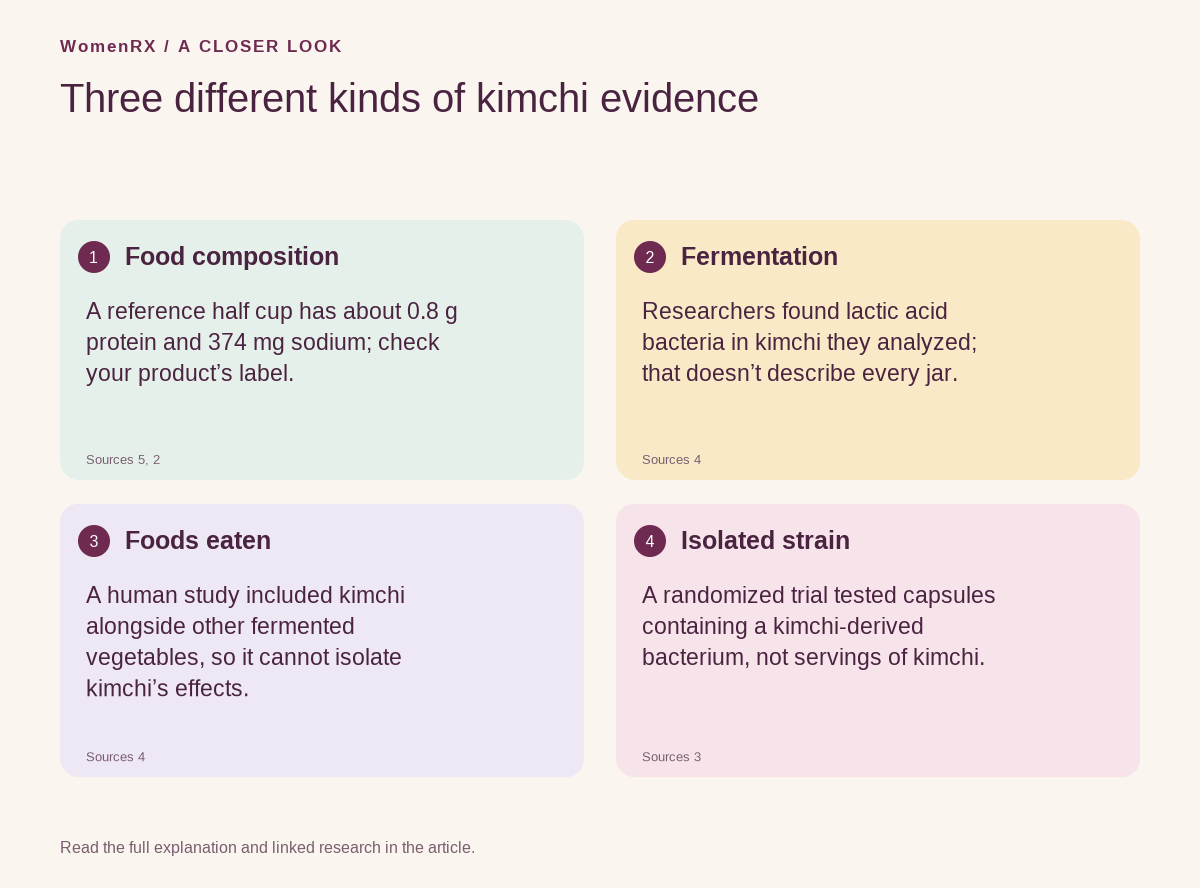
Food composition: A reference half cup has about 0.8 g protein and 374 mg sodium; check your product’s label.52
Fermentation: Researchers found lactic acid bacteria in kimchi they analyzed; that doesn’t describe every jar.4
Foods eaten: A human study included kimchi alongside other fermented vegetables, so it cannot isolate kimchi’s effects.4
Isolated strain: A randomized trial tested capsules containing a kimchi-derived bacterium, not servings of kimchi.3
Read the figure as text
What a food reference, a microbial analysis, and human interventions can each tell you.- Food composition: A reference half cup has about 0.8 g protein and 374 mg sodium; check your product’s label.52
- Fermentation: Researchers found lactic acid bacteria in kimchi they analyzed; that doesn’t describe every jar.4
- Foods eaten: A human study included kimchi alongside other fermented vegetables, so it cannot isolate kimchi’s effects.4
- Isolated strain: A randomized trial tested capsules containing a kimchi-derived bacterium, not servings of kimchi.3
Sources you can check
- Nutrition: MedlinePlusAccessed 2026-09-25Return to first citation
- Sodium: MedlinePlusAccessed 2026-09-25Return to first citation
- Lactobacillus plantarum HAC01 Supplementation Improves Glycemic Control in Prediabetic Subjects: A Randomized, Double-Blind, Placebo-Controlled Trial.Oh MR, Jang HY, Lee SY, Jung SJ, Chae SW, Lee SO, Park BH. · Nutrients · 2021Return to first citation
- Impact of fresh and fermented vegetable consumption on gut microbiota and body composition: insights from diverse data analysis approaches.Pihelgas S, Ehala-Aleksejev K, Kutti ML, Kuldjärv R, Kazantseva J. · Frontiers in nutrition · 2025Return to first citation
- USDA SR Legacy: Cabbage, kimchi (FDC 170392)Accessed 2026-09-25Return to first citation