PCOS, Ovulation, and Your Chances of Pregnancy
PCOS can make ovulation unpredictable, but many people with PCOS become pregnant, and an evaluation can show what kind of help may fit.
PCOS can make ovulation irregular or stop it for a time, leaving fewer opportunities to conceive and making fertile days harder to predict. It doesn’t make pregnancy impossible. If your periods are irregular or absent while you’re trying, you can ask about a fertility evaluation now. That evaluation can look at ovulation and other possible factors, including sperm, fallopian tubes, and the uterus. 1 2 5
What your cycle can tell you
Ovulation is the release of an egg. With PCOS, an egg may not develop as expected or may not be released. Periods may come unpredictably or stop, which can mean fewer opportunities to conceive over time. Many people with PCOS do still become pregnant. 1
For example, if one period arrives much later than the last, counting forward from the start of that period may not reliably tell you when an egg will be released. Irregular periods can make pregnancy harder to time because ovulation may not happen regularly. Your cycle pattern is a useful clue, but it can’t tell you your personal chance of pregnancy. 1 5
That distinction changes the next question. Rather than trying to find a perfect day on an unpredictable calendar, ask whether you’re ovulating regularly and whether something else could also be affecting conception. 1 2
When to seek fertility help
MedlinePlus defines infertility as not becoming pregnant after a year of frequent, unprotected sex, or after six months if you’re 35 or older. Those timeframes help define infertility; they aren’t a requirement to wait before raising a known concern. 2 If you’re trying to conceive and your periods are irregular or absent, it’s reasonable to ask about an assessment sooner. Guidance on irregular periods specifically recommends seeking care when they’re making pregnancy difficult. 1 5
You don’t need to establish on your own which cycles included ovulation before asking. You can describe whether your periods are absent, far apart, or variable, along with how long you’ve been trying. If your cycles have changed, mention that too: PCOS isn’t the only possible cause of irregular periods. Thyroid problems, for example, can also affect them. 5
Why an evaluation looks beyond PCOS
PCOS may explain an ovulation problem without explaining every fertility difficulty. Sperm-related factors, blocked or damaged fallopian tubes, and conditions affecting the uterus can also matter. Sometimes more than one factor contributes. Depending on the situation, an evaluation may include blood tests, imaging, and a semen test. 2
This matters before choosing treatment. A medicine that helps an egg be released addresses ovulation; it won’t, by itself, resolve a blocked tube or a sperm-related problem. The useful goal is to find out which questions need answering before deciding what to try. 2 3
If ovulation needs support
When irregular or absent ovulation is the main concern, fertility care may include a medicine to encourage egg release. A 2026 review describes letrozole as increasingly recommended as a first-line option for people with PCOS who aren’t ovulating; clomiphene citrate is another ovulation-induction medicine. Metformin may also come up in PCOS care, but these medicines don’t all serve the same role, and the choice depends on the findings from your evaluation. 4 3 2
It’s worth being clear that you’re trying to conceive, not simply looking for more regular bleeding. Hormonal birth control can make periods more predictable in PCOS, but it isn’t an option for achieving pregnancy while you’re using it. 1
An initial conversation can stay focused: Is my cycle pattern suggesting an ovulation problem? What other fertility factors should we check? If treatment is proposed, which finding is it meant to address? Those answers make a more useful plan than assuming the PCOS diagnosis tells the whole story. 1 2
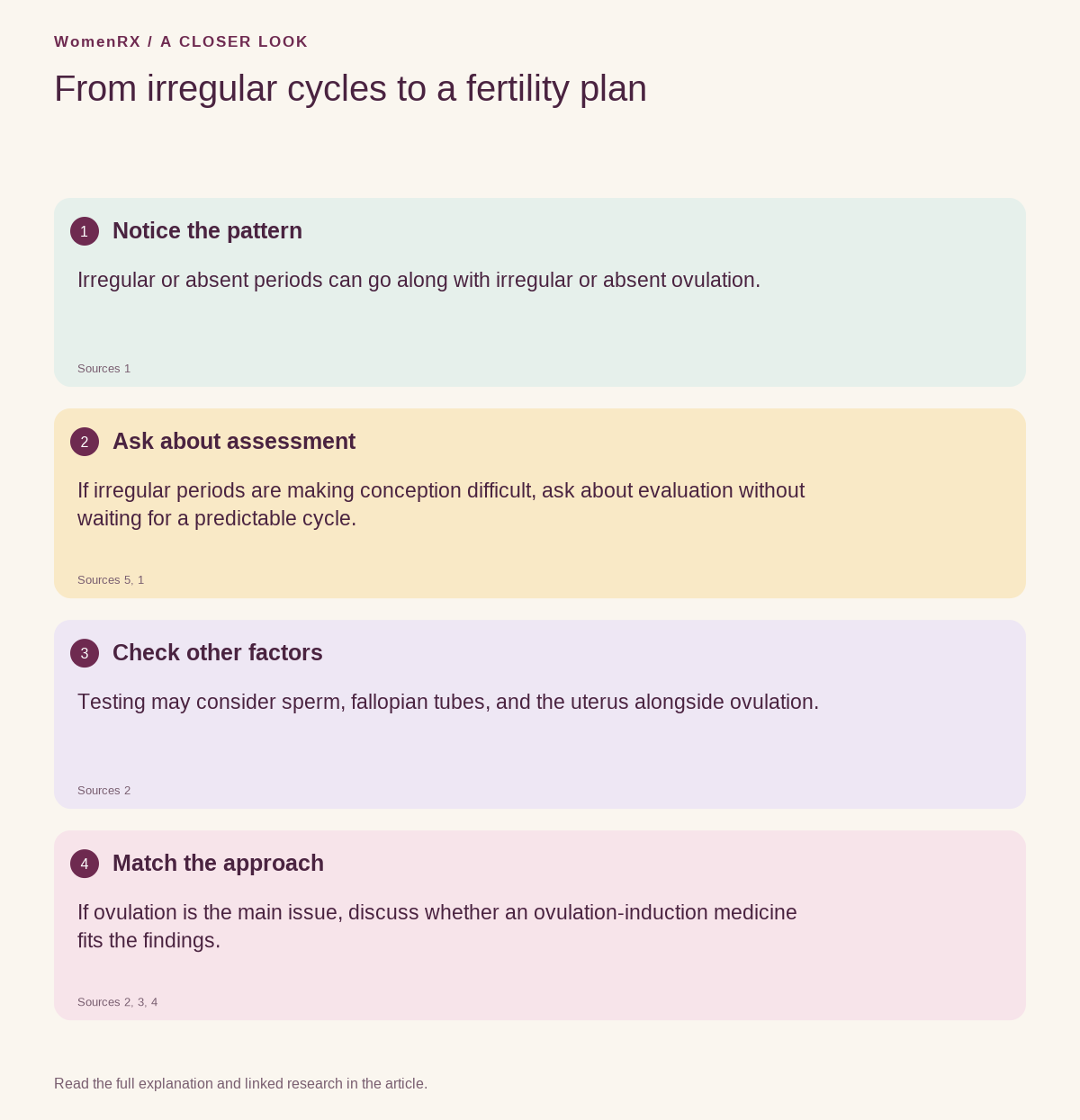
From irregular cycles to a fertility plan
Notice the pattern: Irregular or absent periods can go along with irregular or absent ovulation.1
Ask about assessment: If irregular periods are making conception difficult, ask about evaluation without waiting for a predictable cycle.51
Check other factors: Testing may consider sperm, fallopian tubes, and the uterus alongside ovulation.2
Match the approach: If ovulation is the main issue, discuss whether an ovulation-induction medicine fits the findings.234
Read the figure as text
The path separates a possible ovulation problem from other factors that could change treatment.- Notice the pattern: Irregular or absent periods can go along with irregular or absent ovulation.1
- Ask about assessment: If irregular periods are making conception difficult, ask about evaluation without waiting for a predictable cycle.51
- Check other factors: Testing may consider sperm, fallopian tubes, and the uterus alongside ovulation.2
- Match the approach: If ovulation is the main issue, discuss whether an ovulation-induction medicine fits the findings.234
More questions, answered
Can I get pregnant without fertility treatment if I have PCOS?
Yes. PCOS can make ovulation irregular, but many people with PCOS get pregnant. The diagnosis alone doesn’t tell you whether you’ll need treatment. 1
Should I wait a year if my periods are absent or irregular?
No. The one-year timeframe, or six months if you’re 35 or older, describes when infertility can be defined after frequent, unprotected sex. It doesn’t prevent you from asking about an evaluation sooner when your periods suggest ovulation may be irregular. 2 1 5
Sources you can check
- PCOS | Polycystic Ovary Syndrome | MedlinePlusAccessed 2026-09-25Return to first citation
- Infertility | Infertility Treatments | MedlinePlusAccessed 2026-09-25Return to first citation
- Treatment for infertility - NHSAccessed 2026-09-25Return to first citation
- Letrozole for Ovulation Induction in Women With Polycystic Ovary Syndrome.Li XL. · Obstetrical & gynecological survey · 2026Return to first citation
- Irregular periods - NHSAccessed 2026-09-25Return to first citation