PCOS and Acne: A Practical Treatment Roadmap
Acne care can target the skin, androgen-related symptoms, or other PCOS goals, and those approaches aren’t interchangeable.
PCOS-related acne can be treated directly with options such as benzoyl peroxide, prescription topical retinoids, or antibiotics. Hormonal treatment may also help when acne occurs alongside other androgen-related symptoms. The next discussion depends on acne severity, contraception plans, and whether pregnancy is possible. Spironolactone is another option, but PCOS-specific evidence is uncertain, and it’s not usually recommended during pregnancy. 2 3 5
Start with the skin, not a promise to “fix” PCOS
PCOS can contribute to acne through androgen-related effects on oil production and the hair follicle, but acne has several contributing processes. That’s why treating PCOS doesn’t guarantee clear skin, and skin-directed acne treatment can still matter. 4
For mild acne, a gentle routine can help you use treatment without adding avoidable irritation: wash with a mild cleanser and lukewarm water, avoid scrubbing or squeezing spots, and don’t wash affected areas more than twice a day. Over-the-counter benzoyl peroxide is one option for mild acne. It can irritate skin and bleach fabric, so follow the product directions and be mindful of towels and clothing. 1 2
Give a treatment time to work. Acne treatments often take a few months to show a noticeable effect, so changing products too frequently can make it harder to tell what’s helping. If acne is moderate or severe, or pharmacy products haven’t helped, discuss prescription options with a clinician. 2
Separate three treatment goals
1. Treating acne directly
If benzoyl peroxide isn’t enough, a clinician may discuss prescription topical retinoids, which help prevent dead skin cells from building up in hair follicles. Combinations of topical treatments are another approach; for more substantial acne, antibiotic tablets may be paired with topical treatment. These choices depend on how widespread and severe the acne is, as well as your health and pregnancy plans. If acne is severe or prescription treatment isn’t working, a dermatologist can assess further options. Isotretinoin is a specialist-prescribed treatment with pregnancy risks that need particular attention. 2
Deep, painful lumps or cysts deserve attention because severe acne can leave permanent scars. Don’t wait for a basic skin-care routine to solve persistent or scarring acne. 1 2
2. Addressing androgen-related symptoms
Combined oral contraceptives can improve acne for some women and may be especially relevant when acne flares around periods or occurs with PCOS. They may also fit a goal of contraception, but they won’t fit everyone’s health needs or plans. If you’re hoping to become pregnant, say so before discussing a contraceptive pill as an acne treatment. 2
Spironolactone is an anti-androgen medicine that may come up when acne or other androgen-related symptoms persist. It’s prescribed off-label for PCOS-related symptoms, and the evidence specific to PCOS is uncertain: a recent systematic review found five open-label trials, with three included in its meta-analysis, and did not find a significant difference from metformin in the measured outcomes. Those outcomes did not establish how reliably spironolactone clears acne. 5
Pregnancy possibility matters here. Spironolactone is not usually recommended during pregnancy because it could affect a baby’s development. Tell the prescribing clinician if you’re pregnant, trying to conceive, or could become pregnant, and discuss how that changes the plan. 3
3. Treating other PCOS goals
Metformin may be considered for metabolic or reproductive goals in PCOS, rather than as a stand-alone acne medicine. A review describes effects on insulin-related features and menstrual or ovulatory function, and suggests acne might improve in some circumstances; that does not establish metformin as a dependable acne treatment. It helps to name your main goal clearly, whether that’s acne, fertility, or metabolic health, because one treatment may not address all of them. 4 6
When the first approach isn’t enough
If acne is worsening, leaving scars, affecting your wellbeing, or not improving with appropriate over-the-counter care, ask about a step-up plan. Useful questions include: “Would a prescription topical retinoid or a combination of treatments fit my acne?” “Does the severity call for antibiotic treatment or a dermatologist?” “Could a hormonal option fit my contraception plans?” and “What changes if I’m trying to get pregnant?” A clinician can also consider whether persistent acne is part of a broader pattern of androgen-related symptoms rather than assuming every breakout has the same cause. 1 2 4
There isn’t one PCOS acne treatment that suits everyone. The practical distinction is whether you’re treating the spots themselves, addressing androgen-related symptoms, or pursuing another PCOS goal. Keeping those goals separate makes it easier to judge whether a treatment is helping where you need it to.
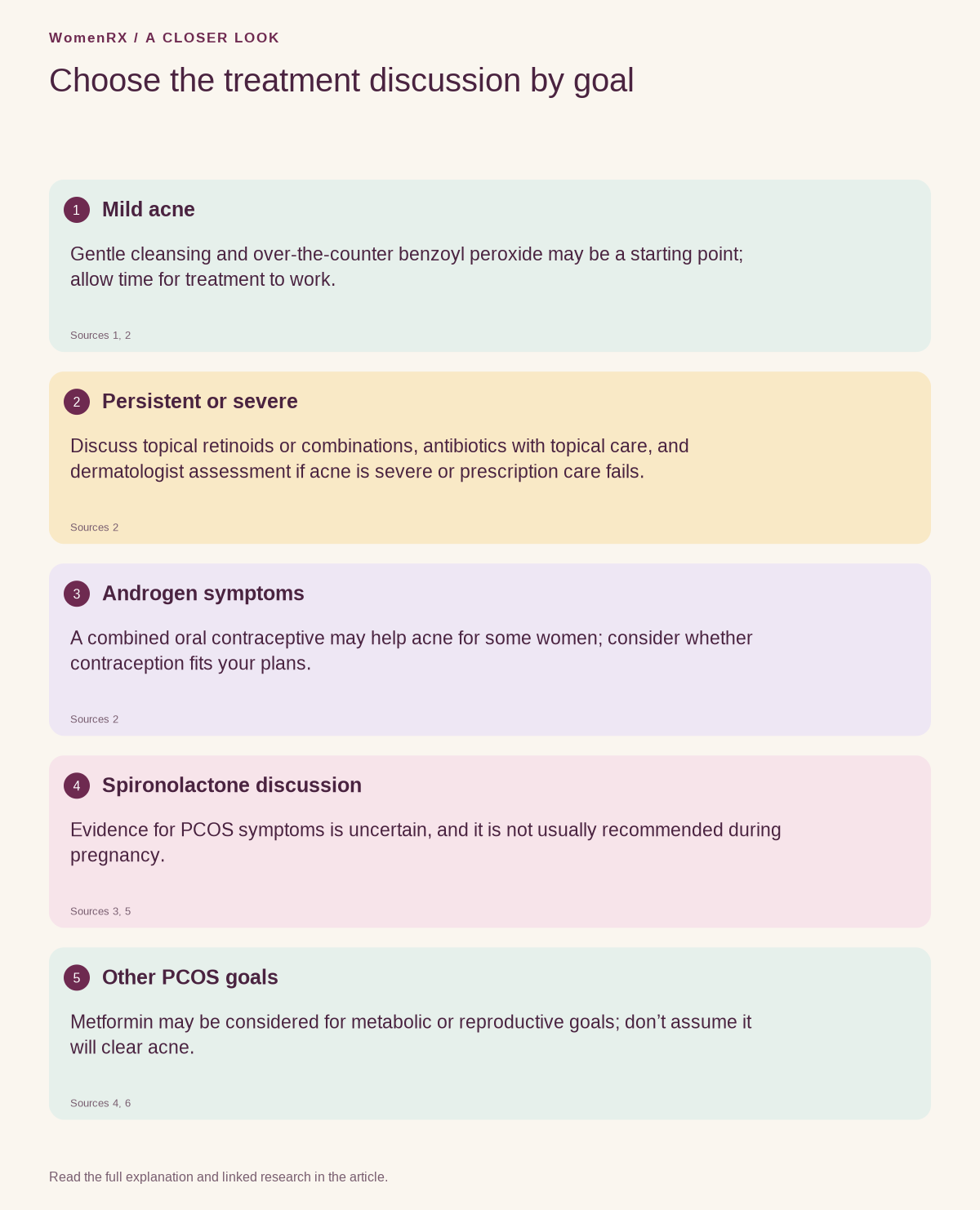
Choose the treatment discussion by goal
Mild acne: Gentle cleansing and over-the-counter benzoyl peroxide may be a starting point; allow time for treatment to work.12
Persistent or severe: Discuss topical retinoids or combinations, antibiotics with topical care, and dermatologist assessment if acne is severe or prescription care fails.2
Androgen symptoms: A combined oral contraceptive may help acne for some women; consider whether contraception fits your plans.2
Spironolactone discussion: Evidence for PCOS symptoms is uncertain, and it is not usually recommended during pregnancy.35
Other PCOS goals: Metformin may be considered for metabolic or reproductive goals; don’t assume it will clear acne.46
Read the figure as text
This flow separates care aimed at the skin from care aimed at androgen-related symptoms or other PCOS goals, while showing where pregnancy plans affect the discussion.- Mild acne: Gentle cleansing and over-the-counter benzoyl peroxide may be a starting point; allow time for treatment to work.12
- Persistent or severe: Discuss topical retinoids or combinations, antibiotics with topical care, and dermatologist assessment if acne is severe or prescription care fails.2
- Androgen symptoms: A combined oral contraceptive may help acne for some women; consider whether contraception fits your plans.2
- Spironolactone discussion: Evidence for PCOS symptoms is uncertain, and it is not usually recommended during pregnancy.35
- Other PCOS goals: Metformin may be considered for metabolic or reproductive goals; don’t assume it will clear acne.46
More questions, answered
Will treating PCOS make my acne go away?
Not necessarily. Androgens can contribute to acne in PCOS, but acne involves several processes, so PCOS treatment alone doesn’t guarantee clear skin. Skin-directed acne care may still be needed. 4
What if I’m pregnant or trying to become pregnant?
Tell the clinician discussing acne treatment before starting or changing a prescription. Spironolactone is not usually recommended during pregnancy because it could affect a baby’s development; pregnancy plans can also change whether a contraceptive pill makes sense for you. 2 3
Sources you can check
- Acne - NHSAccessed 2026-09-25Return to first citation
- Acne - Treatment - NHSAccessed 2026-09-25Return to first citation
- Spironolactone - NHSAccessed 2026-09-25Return to first citation
- Polycystic Ovary Syndrome-Associated Acne: The Interplay of Hyperandrogenism, Insulin Resistance, and Therapeutic Strategies.Damoulaki E, Sioutis D, Sarli V, Trakakis E, Mastorakos G, Katoulis A, Kastrinakis K, Koratzanis C, Machairiotis N, Panagopoulos P, Christodoulaki C. · Cureus · 2025Return to first citation
- Short-Term, Low-Dose Spironolactone for Treatment of Hyperandrogenic Symptoms of Polycystic Ovary Syndrome-A Systematic Review.Viveiros TM, Deshpande N, Karderinis I, Ma Y, Clarke S, Talaulikar V, Wattar B. · Clinical endocrinology · 2026Return to first citation
- The role of combined Metformin and pharmaceutical molecules with anti-androgenic properties in the therapy of PCOS in adult women.Antoniou-Tsigkos A, Karras G, Papagianni M, Christopoulos P, F Vlahos N, Mastorakos G. · Endocrine · 2025Return to first citation