Pain During Sex: What Its Location Can Tell You
Pain at the opening and pain deeper in the pelvis can point to different causes, so where it hurts and what else is happening are useful details to share.
Pain during sex can happen at the vaginal opening, deeper in the pelvis, or in both places. Location helps guide an evaluation, but it doesn’t identify the cause on its own. Note when pain happens and any skin, urinary, bowel, menstrual, or pelvic symptoms, then discuss recurring pain with a primary care clinician or gynecologist. 7 8
Start with where the pain is
Pain during sex, also called dyspareunia, is a symptom rather than a diagnosis. A useful first distinction is whether pain is at the vulva or vaginal opening, deeper inside the pelvis, or both. Also notice whether it happens when something touches the area, at entry, with deeper penetration, or even when you’re not having sex. These patterns help a clinician decide what to ask and examine, but they don’t prove a particular cause. 7 8
Pain at the opening may have contributors such as irritation or skin conditions, vaginal dryness, vulvar pain, or pelvic floor muscles that are tender or tighten with attempted penetration. Vulvodynia is a specific diagnosis of vulvar pain lasting at least three months when another clear cause hasn’t been identified. 7
Deeper pain can call for a broader look at pelvic causes, particularly if you also have pelvic pain at other times, pain with urination or bowel movements, or symptoms that change with your menstrual cycle. Pelvic pain can come from more than one part of the pelvis, including the bladder or bowel, so pain during sex isn’t automatically a vaginal problem. 1 3 8
The location is a clue, not a verdict. Opening and deeper pain can overlap, and symptoms may have more than one contributor. 7 8
Use the surrounding details as clues
Before an appointment, it may help to jot down a few specifics. You don’t need a perfect record; a couple of concrete examples are more useful than trying to explain everything at once.
- Timing: Does pain happen with touch, at entry, with deeper penetration, after sex, or outside sexual activity?
- Location and feeling: Is it at the opening, inside, or deep in the pelvis? Is it burning, sore, sharp, cramping, or pressure-like?
- What else is going on: Note dryness, itching or visible skin changes, urinary symptoms, bowel pain, pelvic pain, or menstrual symptoms.
- Life and health context: Mention menopause-related changes, pregnancy or birth and recovery, breastfeeding, and any medication changes. These details provide context; they don’t establish the cause.
Pain that appears with urinary, bowel, skin, or menstrual symptoms may be part of a wider picture rather than an isolated sex-related problem. Period pain and pain with sex or with urination or bowel movements are reasons to discuss symptoms with a clinician. 3 8
What an evaluation may involve
A primary care clinician or gynecologist can start by asking about the pain’s location, timing, triggers, and associated symptoms. The clinician may examine the vulva and vaginal opening, and, if appropriate, assess the pelvic floor or evaluate for deeper pelvic causes. You can ask what each part of an examination involves, request that the clinician explain before touching you, or pause an examination. The review of menopause-related pain recommends an assessment that proceeds from the vulva and vaginal opening to the vagina and pelvic floor, with deeper assessment or imaging selected when indicated. 7 8
Tests aren’t automatically needed for every person with pain during sex. A review describes lab testing or imaging as selective: they may help when infection is a concern or when deeper pain suggests a need to evaluate pelvic organs. 7
If you’re unsure where to start, a primary care clinician or gynecologist is a reasonable first contact. If the cause isn’t clear, a clinician may refer you for further evaluation or to a specialist. 1
Treatment depends on what’s contributing
There isn’t one treatment for all pain during sex. Options may include avoiding an identified irritant or trigger, using lubricant or a vaginal moisturizer for dryness, or treating an identified condition. For menopause-related dryness and irritation, a clinician may discuss local vaginal estrogen as one option; it is intended for those symptoms, not every menopause symptom or every cause of pain. 4 7
When examination finds pelvic floor tenderness, guarding, or difficulty relaxing, pelvic floor physical therapy may be considered. A systematic review found possible benefit for pelvic floor hypertonicity, but most included studies had limitations such as small samples, risk of bias, or nonstandardized treatment. Another review found that exercise protocols for dyspareunia varied, making them difficult to compare. In other words, pelvic floor treatment should match the findings; it isn’t a one-size-fits-all set of strengthening exercises. 5 6 8
You don’t need to push through painful penetration while figuring out the cause. If pelvic pain is severe or worsening, seek prompt medical care rather than waiting for a routine discussion. Severe pelvic pain can sometimes have causes that need urgent treatment. 1 3
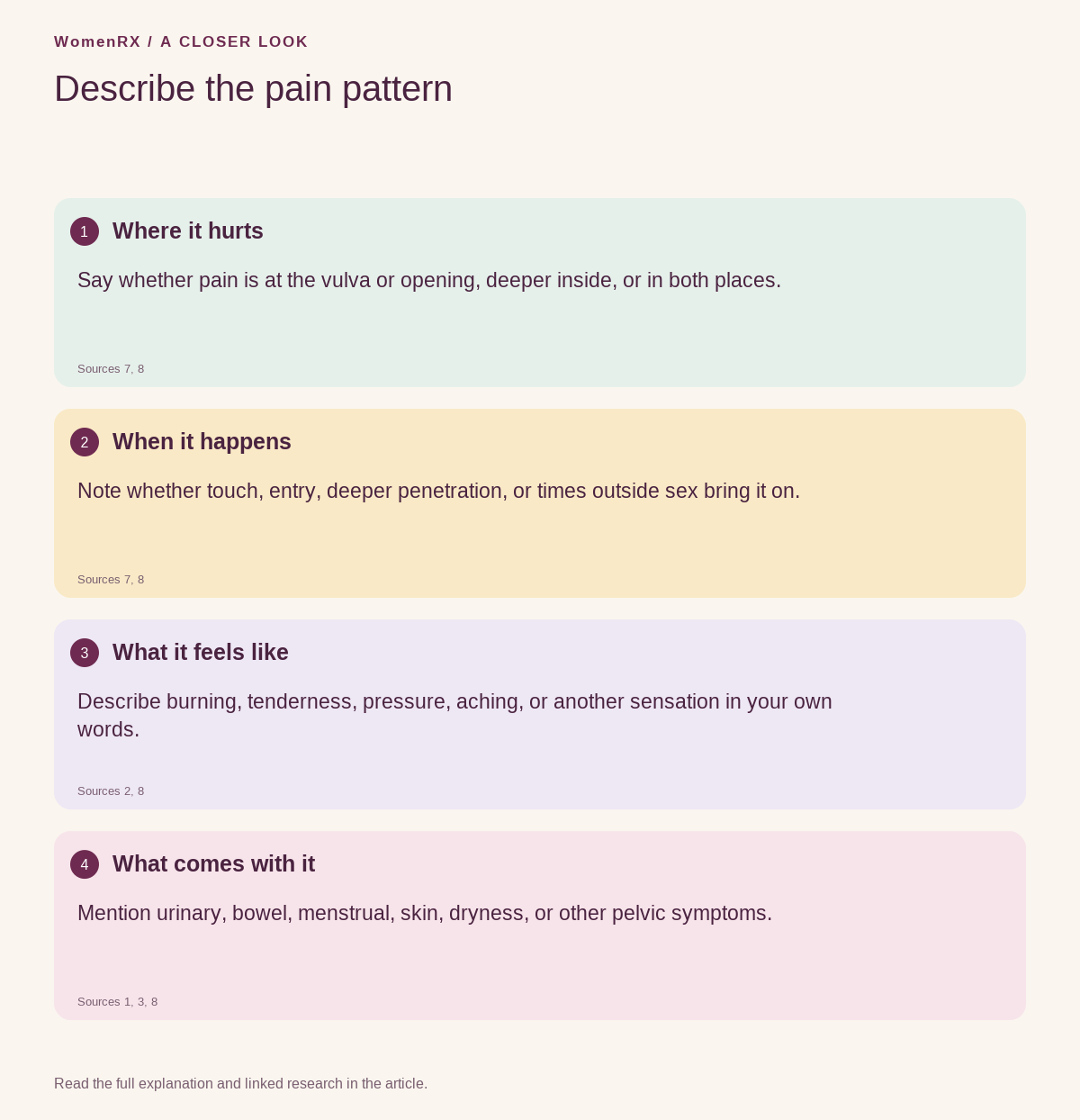
Describe the pain pattern
Where it hurts: Say whether pain is at the vulva or opening, deeper inside, or in both places.78
When it happens: Note whether touch, entry, deeper penetration, or times outside sex bring it on.78
What it feels like: Describe burning, tenderness, pressure, aching, or another sensation in your own words.28
What comes with it: Mention urinary, bowel, menstrual, skin, dryness, or other pelvic symptoms.138
Read the figure as text
These prompts can help you explain where pain happens and what accompanies it; they are not a diagnostic score.- Where it hurts: Say whether pain is at the vulva or opening, deeper inside, or in both places.78
- When it happens: Note whether touch, entry, deeper penetration, or times outside sex bring it on.78
- What it feels like: Describe burning, tenderness, pressure, aching, or another sensation in your own words.28
- What comes with it: Mention urinary, bowel, menstrual, skin, dryness, or other pelvic symptoms.138
More questions, answered
Does pain during sex mean the problem is psychological?
No. Pain can have physical contributors such as dryness, irritation, vulvar pain, pelvic floor tenderness, infection, or deeper pelvic conditions. Stress and other personal factors may be part of an individual’s experience, but pain should not be dismissed as psychological without assessing possible physical causes. 2 7
Should I try pelvic floor exercises on my own?
Not necessarily. Pelvic floor problems can involve muscles that are tender or have difficulty relaxing, and treatment approaches vary. An evaluation can help determine whether pelvic floor physical therapy fits your symptoms; research protocols have not been consistent enough to support one universal exercise routine. 5 6
Sources you can check
- Pelvic pain - NHSAccessed 2026-09-25Return to first citation
- Pain | MedlinePlusAccessed 2026-09-25Return to first citation
- Period pain - NHSAccessed 2026-09-25Return to first citation
- About vaginal oestrogen - NHSAccessed 2026-09-25Return to first citation
- Quality of Descriptions of Pelvic Floor Muscle Training Prescribed to Women With Dyspareunia: A Systematic Review.Cavalcanti IRS, Lunardi AC, Carro DF, da Silveira LTY, Ferreira EA. · Journal of manipulative and physiological therapeutics · 2025Return to first citation
- Pelvic Floor Physical Therapy for Pelvic Floor Hypertonicity: A Systematic Review of Treatment Efficacy.van Reijn-Baggen DA, Han-Geurts IJM, Voorham-van der Zalm PJ, Pelger RCM, Hagenaars-van Miert CHAC, Laan ETM. · Sexual medicine reviews · 2022Return to first citation
- Female Pelvic Conditions: Dyspareunia and Vulvodynia.Brown B. · FP essentials · 2024Return to first citation
- Assessment and management of dyspareunia in peri- and postmenopausal women: A phenotype-based gynecologic approach.Broul M, Vančo M, Banýrová J, Hujová A. · International journal of gynaecology and obstetrics: the official organ of the International Federation of Gynaecology and Obstetrics · 2026Return to first citation