Ovarian Cyst Symptoms: When to Follow Up
Sudden severe pelvic pain needs urgent assessment; milder or ongoing symptoms and an ultrasound finding usually call for planned review shaped by the scan and whether you’re past menopause.
Many ovarian cysts cause no symptoms and go away on their own. If you have sudden, severe pelvic pain, or abdominal pain with nausea or vomiting, seek urgent medical assessment. Milder or persistent pelvic discomfort, pressure, pain during sex, or feeling full quickly deserves a planned review. Ultrasound appearance, symptoms, and menopause status help determine what follow-up is appropriate. 1
Start with how you feel
An ovarian cyst is a fluid-filled sac on an ovary. Many are found during imaging for another reason, cause no symptoms, and resolve within a few months. A scan finding alone doesn’t mean a cyst is dangerous or needs surgery. 1
Cysts are more likely to cause symptoms if they become large, rupture, or twist and affect the ovary’s blood supply. Possible symptoms include pelvic pain, pain during sex, and feeling full after eating only a little. These symptoms can have other causes, too, including conditions affecting the bowel, bladder, or other reproductive organs. Symptoms alone can’t confirm that a cyst is responsible. 13
When to get urgent assessment
Seek urgent medical assessment for sudden, severe pelvic pain. Also seek urgent assessment if abdominal pain comes with nausea or vomiting. These symptoms can occur when a cyst ruptures or an ovary twists, but they don’t prove that either has happened. Ovarian torsion is a time-sensitive possibility: in a 2025 audit of 45 women treated for torsion, abdominal pain was reported in all cases, nausea in 82%, and vomiting in 51%. The audit describes one group of patients, not a way to diagnose torsion from symptoms alone. 14
If the pain is sudden and severe, don’t wait for a scheduled scan or routine appointment. An ultrasound may be part of the evaluation, but the decision about urgent assessment depends on the symptoms and clinical evaluation, not just a prior scan result. 14
When planned follow-up makes sense
Arrange a routine medical review if pelvic pain or pressure is milder but persistent, if sex is painful, or if you’re repeatedly feeling full after small amounts of food. Mention when the symptoms began, whether they come and go, and whether they’re changing. These details help put a possible cyst in context, especially since pelvic pain has many possible causes. 13
If an ultrasound has already found a cyst and you feel well, ask what its size and appearance mean in your situation and whether another scan is recommended. Some cysts are monitored with repeat ultrasound; others may not need further testing if they disappear. Size, appearance, symptoms, and whether you’ve been through menopause all inform the plan. 12
A cyst that persists, causes symptoms, is large, or raises concern on imaging may lead to discussion of further evaluation or surgery. That doesn’t mean surgery is inevitable: the choice depends on the overall picture. 2
Why menopause changes the conversation
After menopause, an ovarian cyst deserves particular attention during follow-up because the risk of ovarian cancer is somewhat higher than before menopause. That does not mean a cyst is cancer. Clinicians may use ultrasound and, when appropriate, blood tests to help assess concern and decide whether monitoring or further evaluation is needed. 12
Before menopause, many cysts occur naturally and resolve without treatment. In either life stage, the useful question is not simply “Do I have a cyst?” but “What does this cyst look like, are my symptoms concerning, and what follow-up fits my situation?” 12
A practical way to read the next step
Think of symptoms and scan results as two parts of the decision, not competing explanations. Sudden severe pain or abdominal pain with nausea or vomiting points to urgent assessment. Milder ongoing symptoms call for planned review. If there are no symptoms and a scan has found a cyst, its appearance and menopause status help determine whether monitoring is needed. 12
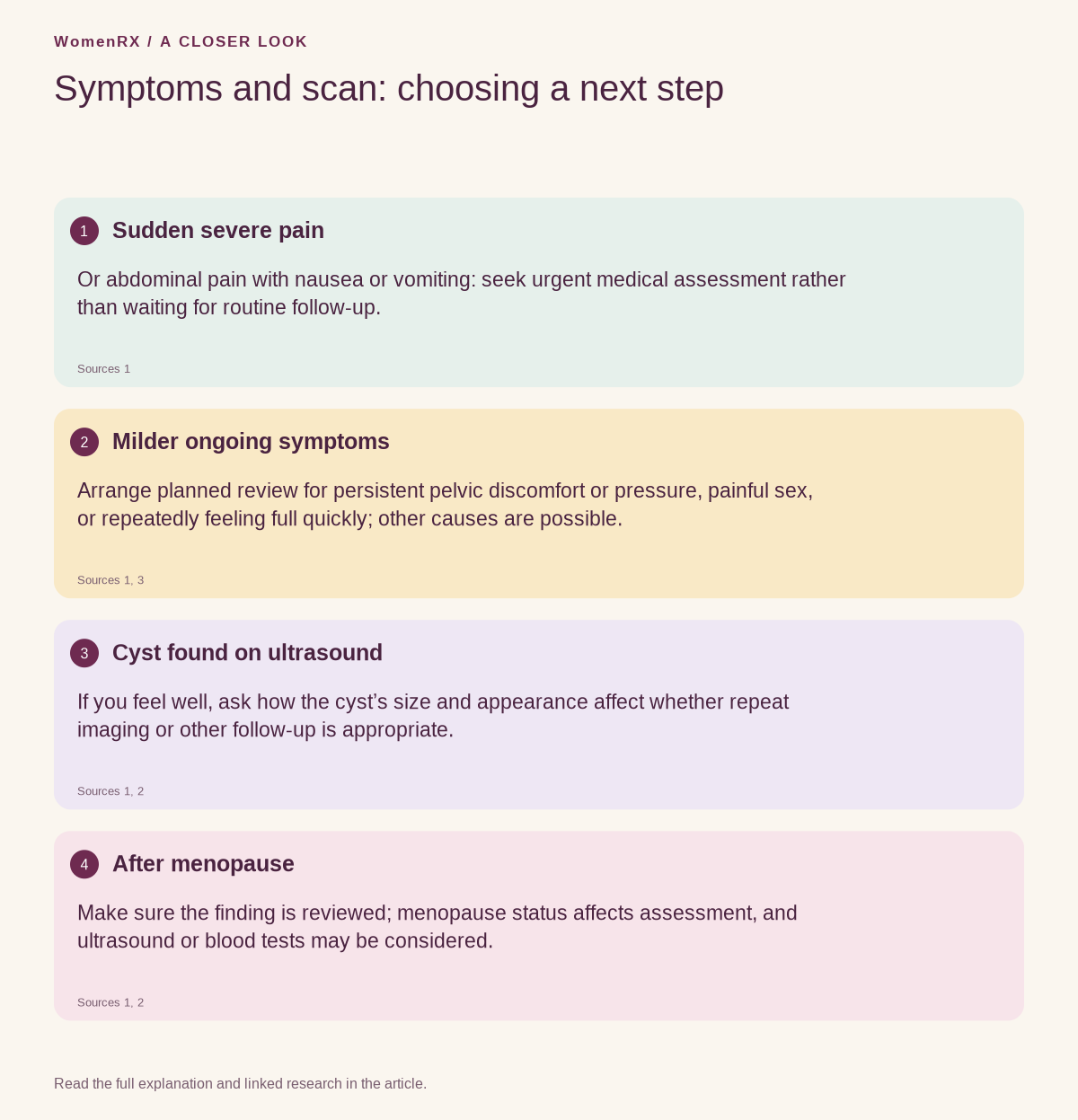
Symptoms and scan: choosing a next step
Sudden severe pain: Or abdominal pain with nausea or vomiting: seek urgent medical assessment rather than waiting for routine follow-up.1
Milder ongoing symptoms: Arrange planned review for persistent pelvic discomfort or pressure, painful sex, or repeatedly feeling full quickly; other causes are possible.13
Cyst found on ultrasound: If you feel well, ask how the cyst’s size and appearance affect whether repeat imaging or other follow-up is appropriate.12
After menopause: Make sure the finding is reviewed; menopause status affects assessment, and ultrasound or blood tests may be considered.12
Read the figure as text
Use the symptom branch first. If there are no urgent symptoms, use the scan finding and menopause status to guide planned follow-up.- Sudden severe pain: Or abdominal pain with nausea or vomiting: seek urgent medical assessment rather than waiting for routine follow-up.1
- Milder ongoing symptoms: Arrange planned review for persistent pelvic discomfort or pressure, painful sex, or repeatedly feeling full quickly; other causes are possible.13
- Cyst found on ultrasound: If you feel well, ask how the cyst’s size and appearance affect whether repeat imaging or other follow-up is appropriate.12
- After menopause: Make sure the finding is reviewed; menopause status affects assessment, and ultrasound or blood tests may be considered.12
More questions, answered
Does pelvic pressure mean I have an ovarian cyst?
No. Pelvic pain and pressure can have several causes, including conditions affecting the bowel, bladder, or reproductive organs. An ultrasound and clinical assessment help determine whether a cyst is present and whether it could explain your symptoms. 13
Does finding a cyst after menopause mean cancer?
No. The risk of ovarian cancer is somewhat higher after menopause, but a cyst is not automatically cancerous. Ultrasound appearance, symptoms, and sometimes blood tests help guide follow-up. 12
Sources you can check
- Ovarian cyst - NHSAccessed 2026-09-25Return to first citation
- Ovarian cyst - Treatment - NHSAccessed 2026-09-25Return to first citation
- Pelvic pain - NHSAccessed 2026-09-25Return to first citation
- Ovarian torsion: determining the presenting features and where the delays occur.Bedekar K, McInnes A, Burgess W. · The New Zealand medical journal · 2025Return to first citation