Oranges: Fiber, Vitamin C, and Whole Fruit Versus Juice
A medium orange offers fiber and vitamin C, while juice offers vitamin C in a different serving size.
One medium raw orange (about 131 g) is estimated to provide 62 calories, 15.5 g carbohydrate, 3.1 g fiber, 1.2 g protein, and 0.2 g fat. It also provides about 70 mg vitamin C. A ¾-cup serving of orange juice provides about 93 mg vitamin C, but these aren’t equal portions. Whole fruit brings fiber, and vitamin C helps your body absorb iron from plant foods.514
What’s in a medium orange?
A medium orange provides about 70 mg of vitamin C. For context, the recommended daily intake is 75 mg for women 19 and older who aren’t pregnant or breastfeeding, 85 mg during pregnancy, and 120 mg while breastfeeding. Your other foods count too: peppers, kiwifruit, broccoli, and strawberries are among the many vitamin C sources.1
For a serving-based picture of the whole fruit, the USDA SR Legacy record for raw oranges, all commercial varieties (FoodData Central FDC 169097), uses a medium orange weighing 131 g. Its nutrient amounts are estimates, and a particular orange may differ.5
| Nutrient in one medium raw orange (131 g) | Estimated amount |
|---|---|
| Energy | 62 calories |
| Carbohydrate | 15.5 g |
| Fiber | 3.1 g |
| Protein | 1.2 g |
| Fat | 0.2 g |
The whole fruit also gives you dietary fiber. Fiber is part of plant foods and helps add bulk to what you eat; it can help you feel full and supports digestion. An orange’s protein contribution is small, so think of it as a fruit choice rather than a meaningful protein source.35
Whole fruit and juice answer different needs
Orange juice isn’t nutritionally empty. A ¾-cup serving provides about 93 mg of vitamin C, compared with about 70 mg in one medium orange. But ¾ cup of juice and one orange aren’t equal portions, so those figures don’t tell you that juice is a better choice.1
The practical distinction is what you’re eating. With an orange, you eat the fruit’s segments and their fiber. Juice can also provide vitamin C. If fiber matters to your choice, check the fiber line on the carton.13
You don’t need to turn the comparison into a rule against juice. For example, a whole orange works as a snack you can peel and eat, while a small glass of juice might fit alongside a meal. What each contributes depends on the serving, and neither replaces variety across the rest of your diet.13
Where the iron connection fits
Vitamin C improves absorption of nonheme iron, the kind found in plant foods. Beans, lentils, tofu, and iron-fortified grains are examples of foods that provide this form of iron. So an orange with a lentil lunch, or orange segments alongside a bean dish, is a sensible pairing when you want vitamin C with a plant-based iron source.14
Iron absorption also depends on the rest of a meal and your overall diet. The NIH notes that the effects of foods that enhance or inhibit absorption are reduced within a typical Western diet and have little effect on most people’s iron status.4
Iron needs aren’t the same for every woman. The recommended daily intake is 18 mg at ages 19-50, 27 mg during pregnancy, 9 mg while breastfeeding, and 8 mg at age 51 and older. Heavy periods can contribute to anemia, and anemia can have causes besides low iron. If you’re concerned about anemia, adding oranges isn’t a substitute for finding out what’s causing it.24
For an everyday decision, keep it simple: pick the whole orange when you want fruit and its fiber; enjoy juice for its vitamin C if you like it; and think of oranges as one option among many fruits and vegetables, not a food you need to eat every day.13
Whole orange or juice?
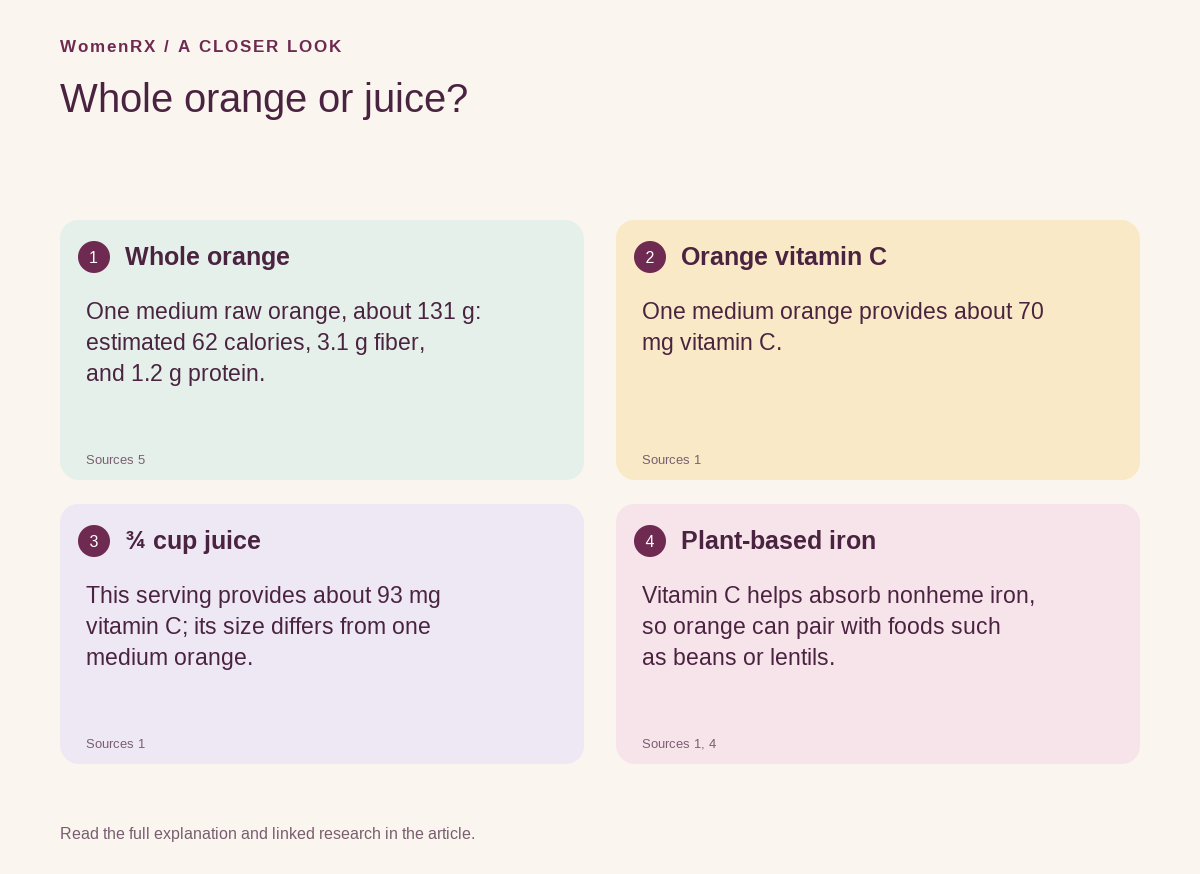
Whole orange: One medium raw orange, about 131 g: estimated 62 calories, 3.1 g fiber, and 1.2 g protein.5
Orange vitamin C: One medium orange provides about 70 mg vitamin C.1
¾ cup juice: This serving provides about 93 mg vitamin C; its size differs from one medium orange.1
Plant-based iron: Vitamin C helps absorb nonheme iron, so orange can pair with foods such as beans or lentils.14
Read the figure as text
Compare the whole fruit’s estimated nutrition with the vitamin C listed for juice, keeping serving sizes in view.- Whole orange: One medium raw orange, about 131 g: estimated 62 calories, 3.1 g fiber, and 1.2 g protein.5
- Orange vitamin C: One medium orange provides about 70 mg vitamin C.1
- ¾ cup juice: This serving provides about 93 mg vitamin C; its size differs from one medium orange.1
- Plant-based iron: Vitamin C helps absorb nonheme iron, so orange can pair with foods such as beans or lentils.14
Sources you can check
- Vitamin C - Health Professional Fact SheetAccessed 2026-09-25Return to first citation
- Anemia | MedlinePlusAccessed 2026-09-25Return to first citation
- Dietary Fiber: MedlinePlusAccessed 2026-09-25Return to first citation
- Iron - Health Professional Fact SheetAccessed 2026-09-25Return to first citation
- USDA SR Legacy: Oranges, raw, all commercial varieties (FDC 169097)Accessed 2026-09-25Return to first citation