Oral estradiol: what it’s for and what to check on your prescription
The name “estradiol” doesn’t tell you the full treatment plan: confirm the tablet’s directions, its purpose, and whether another hormone is part of your menopause therapy.
Oral estradiol is estrogen taken by mouth as a systemic hormone therapy. Menopause hormone therapy can treat bothersome hot flashes and night sweats, but the right plan depends on factors such as route, dose, timing, and whether a progestogen is used. Check your exact directions and treatment purpose, and ask how your uterus status fits the plan. 2
What the tablet is meant to do
Estradiol is a form of estrogen. When taken as a tablet, it’s an oral route of systemic hormone therapy. In menopause care, hormone therapy is used for bothersome symptoms such as hot flashes and night sweats, and can help prevent bone loss and fractures. That doesn’t mean every estradiol tablet has the same approved use or directions: the exact product and your prescription determine those details. 2
A useful distinction is whether treatment is aimed at symptoms throughout the body or mainly at vaginal and urinary symptoms. For bothersome genitourinary symptoms without a reason to use systemic hormone therapy, the North American Menopause Society recommends considering low-dose vaginal estrogen or other therapies. Vaginal estrogen and an oral estradiol tablet are different routes, so don’t assume one can replace the other. 2
The plan depends on more than the hormone name
Hormone therapy’s benefits and risks can vary with the type, dose, route, duration, timing of starting treatment, and use of a progestogen. That’s why “estradiol” alone doesn’t explain why it was prescribed or how long the plan is intended to continue. The recommendation is to individualize treatment and periodically reassess its benefits and risks. 2
If you have a uterus, confirm whether your plan includes a progestogen and what the intended regimen is. This is a worthwhile question because endometrial outcomes differ among combined hormone therapy regimens: NICE reports that continuous combined therapy decreases endometrial cancer risk, while sequential combined therapy may slightly increase it, with risk affected by factors including duration and the number of progestogen days. These findings describe combined therapy; they don’t establish what is right for your individual prescription. 1
Why the route is worth checking
A tablet and a patch, gel, or spray deliver estrogen differently. In its comparison of combined hormone therapy, NICE reports that venous thromboembolism risk is increased with oral therapy and not increased with transdermal therapy. The same guidance reports increased stroke risk with combined therapy containing oral estrogen, while stroke risk is unlikely to increase with combined therapy containing transdermal estrogen. These are population-level comparisons, not a prediction of what will happen to you. 1
If you’re deciding between routes, ask how your health history and treatment goals affect that choice. Don’t switch routes or change the dose on your own: the risks and benefits depend on more than the word “estradiol.” 2
A quick check before you leave the pharmacy
Compare the prescription label with what you expected, and ask the pharmacist or prescriber about any mismatch. In particular, confirm:
- The medicine name and strength on the label.
- The exact directions written for your tablet, including when and how often to take it.
- The reason it was prescribed and what change you’re hoping to notice.
- Whether a progestogen is part of your plan, especially if you have a uterus.
- Whether the oral route is intentional, and when your treatment plan should be reviewed.
These questions help you understand your own prescription; they aren’t instructions to start, stop, or adjust treatment. If the label is unclear or conflicts with what you were told, ask the pharmacist to explain it before relying on an assumption.
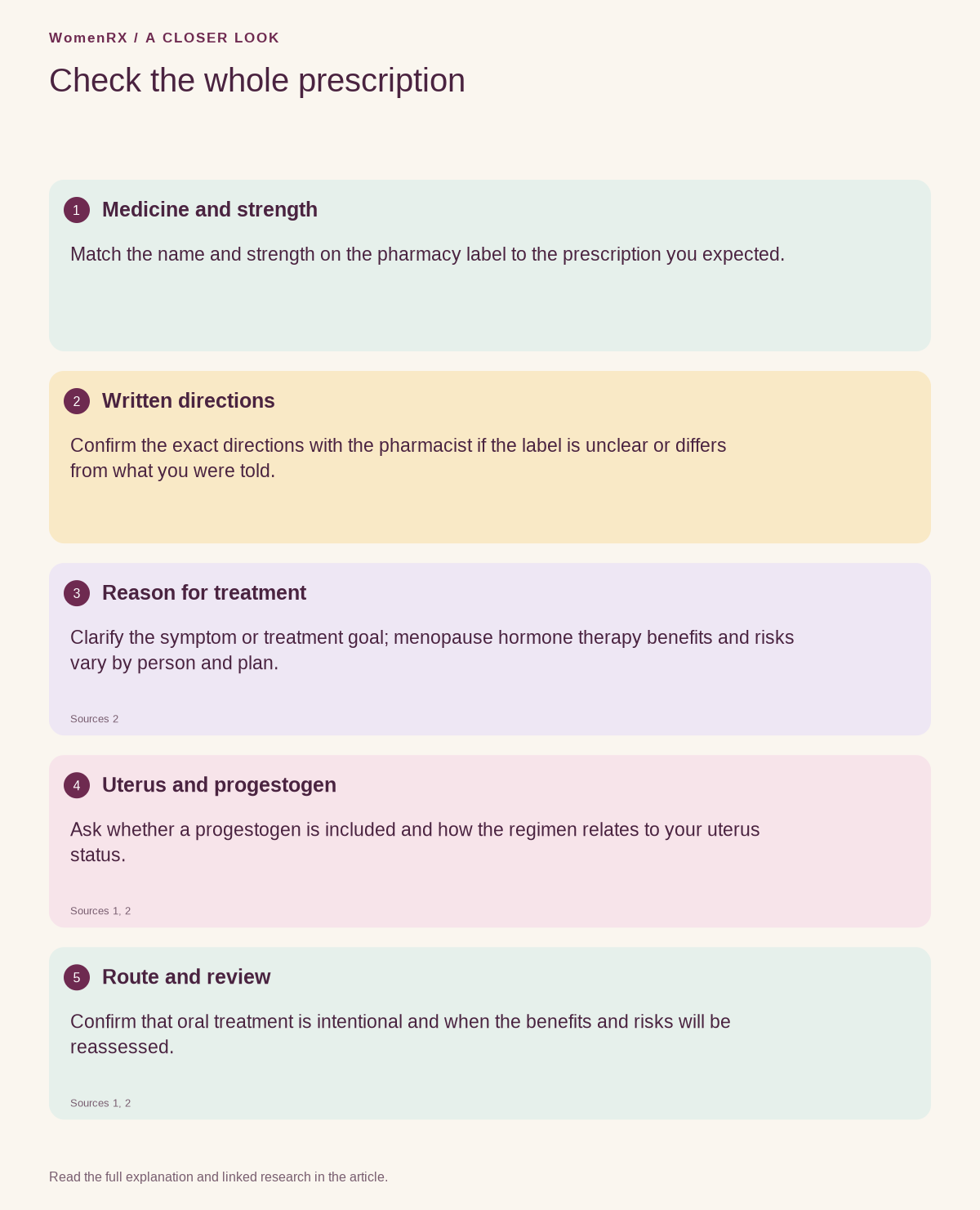
Check the whole prescription
Medicine and strength: Match the name and strength on the pharmacy label to the prescription you expected.
Written directions: Confirm the exact directions with the pharmacist if the label is unclear or differs from what you were told.
Reason for treatment: Clarify the symptom or treatment goal; menopause hormone therapy benefits and risks vary by person and plan.2
Uterus and progestogen: Ask whether a progestogen is included and how the regimen relates to your uterus status.12
Route and review: Confirm that oral treatment is intentional and when the benefits and risks will be reassessed.12
Read the figure as text
Use these prompts to distinguish the tablet and directions from the wider menopause treatment plan.- Medicine and strength: Match the name and strength on the pharmacy label to the prescription you expected.
- Written directions: Confirm the exact directions with the pharmacist if the label is unclear or differs from what you were told.
- Reason for treatment: Clarify the symptom or treatment goal; menopause hormone therapy benefits and risks vary by person and plan.2
- Uterus and progestogen: Ask whether a progestogen is included and how the regimen relates to your uterus status.12
- Route and review: Confirm that oral treatment is intentional and when the benefits and risks will be reassessed.12
More questions, answered
Is oral estradiol the same as vaginal estrogen?
No. Oral estradiol is taken by mouth as systemic hormone therapy. Low-dose vaginal estrogen is a different route that may be considered for bothersome genitourinary symptoms when systemic hormone therapy isn’t indicated. 2
Sources you can check
- Recommendations | Menopause: identification and management | Guidance | NICEAccessed 2026-09-25Return to first citation
- The 2022 hormone therapy position statement of The North American Menopause Society.“The 2022 Hormone Therapy Position Statement of The North American Menopause Society” Advisory Panel. · Menopause (New York, N.Y.) · 2022Return to first citation