Omega-3 Supplements: What the Label Really Tells You
The useful number on a fish-oil label is usually the EPA and DHA, not the larger total fish-oil amount.
You can estimate omega-3 intake from foods, but don’t treat total fish oil as the amount of EPA and DHA. For example, one typical 1,000 mg fish-oil supplement contains about 180 mg EPA and 120 mg DHA, though products vary. There’s no U.S. intake target specifically for EPA or DHA for adults; pregnancy and breastfeeding questions deserve separate, individualized advice. 1
Start with the type of omega-3
“Omega-3” covers different fats. ALA is found in foods such as walnuts, chia seeds, and flaxseed. EPA and DHA are found mainly in seafood and in some supplements. The U.S. dietary reference values for people age 1 and older set an adequate intake for ALA, but not for EPA or DHA. That means an ALA target shouldn’t be mistaken for a target for fish oil. 1
For adult women ages 19-50, the ALA adequate intake is 1.1 grams a day. It’s 1.4 grams during pregnancy and 1.3 grams during breastfeeding. These figures refer to ALA, not EPA plus DHA. An adequate intake is a reference for planning diets, not a personalized test of whether you need a supplement. 1
Estimate food sources without chasing a perfect total
A few examples help put food amounts in perspective. In the NIH reference’s food table, a 3-ounce cooked serving of Atlantic farmed salmon has 1.24 grams of EPA and 0.59 grams of DHA. Three ounces of canned sardines in tomato sauce, drained, has 0.74 grams of EPA and 0.45 grams of DHA. By contrast, an ounce of walnuts has 2.57 grams of ALA, not EPA or DHA. Fish amounts can vary by species and other factors, so food-table numbers are estimates rather than exact values for every serving. 1
Plant foods still count as omega-3 sources. But if you’re comparing them with a fish-oil product, keep the types separate: an ALA amount from chia or walnuts is not the same label number as EPA or DHA. 1
Read the supplement panel, not just the front
Look for the serving size and the separate amounts of EPA and DHA in the Supplement Facts panel. A typical fish-oil product may provide 1,000 mg of fish oil while listing about 180 mg EPA and 120 mg DHA. In that example, the EPA and DHA together total 300 mg. The 1,000 mg figure describes the fish oil, not 1,000 mg of EPA plus DHA. Formulas differ, so check the actual product label rather than assuming every capsule matches that example. 1
Algal oil is a non-fish source of long-chain omega-3s; NIH describes products that usually provide about 100-300 mg DHA, with some also containing EPA. If you’re comparing an algal product with fish oil, use its labeled EPA and DHA amounts rather than comparing capsule size or the words “omega-3” alone. 1
When might individual advice help?
For generally healthy adults, there isn’t one U.S. EPA-and-DHA target in the NIH reference that would make a supplement necessary for everyone. A 2025 review of national and international recommendations found that amounts varied. The most frequent recommendation it identified for adults was 250 mg a day of EPA plus DHA; for pregnancy, the most frequent pattern added 100-200 mg of DHA a day. These are summaries of varied recommendations, not a single U.S. requirement or a personal prescription. 1 3
Pregnancy and breastfeeding are worth discussing separately from general adult intake. The available reference values give an ALA target for those life stages, not a specific EPA or DHA target. If you’re pregnant or breastfeeding and considering a supplement, bring the product label and a rough picture of your seafood intake to your prenatal care provider. MedlinePlus advises checking with a provider before starting herbs or supplements during pregnancy. 1 2
A practical next step is to note the fish or plant sources you eat and the EPA and DHA amounts on any product you already use. That makes it easier to ask whether a supplement fits your specific situation, instead of assuming that “fish oil” on the front tells you how much EPA and DHA you’re getting.
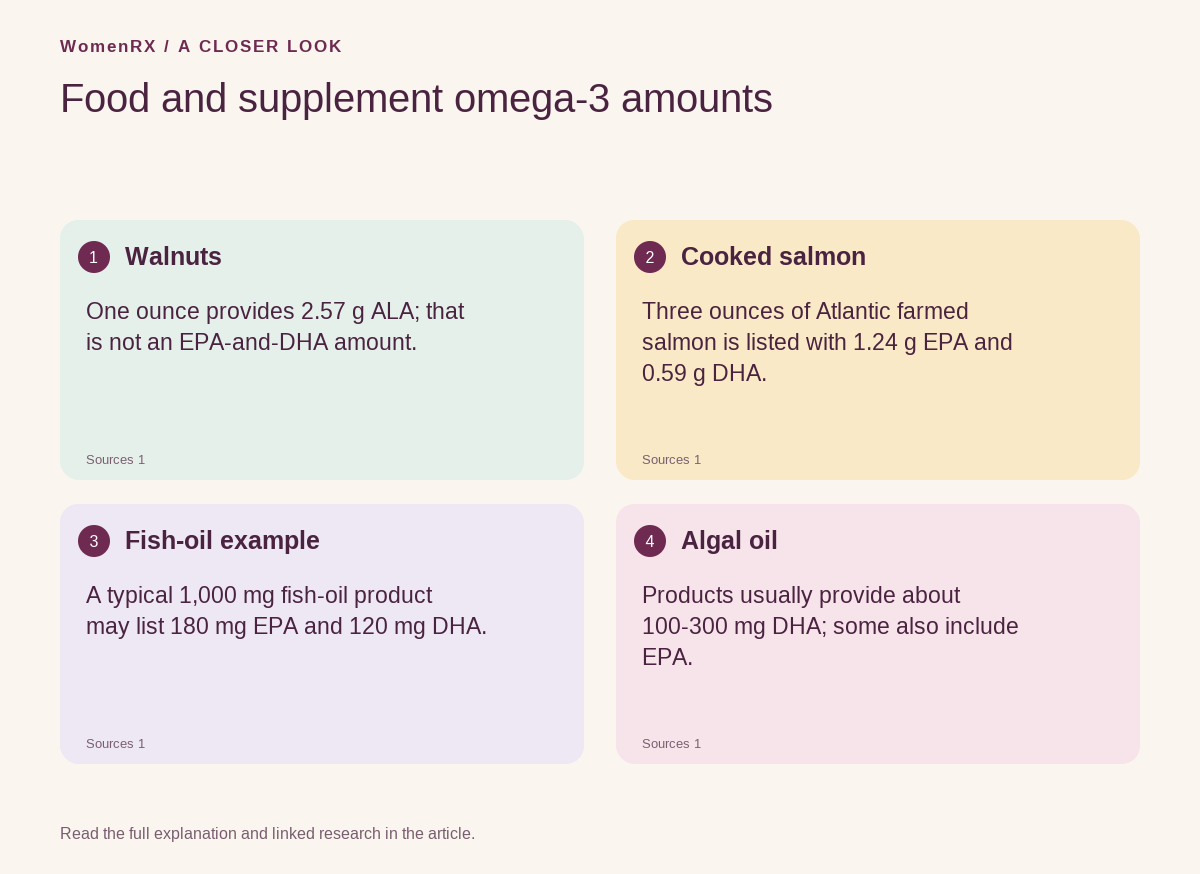
Food and supplement omega-3 amounts
Walnuts: One ounce provides 2.57 g ALA; that is not an EPA-and-DHA amount.1
Cooked salmon: Three ounces of Atlantic farmed salmon is listed with 1.24 g EPA and 0.59 g DHA.1
Fish-oil example: A typical 1,000 mg fish-oil product may list 180 mg EPA and 120 mg DHA.1
Algal oil: Products usually provide about 100-300 mg DHA; some also include EPA.1
Read the figure as text
Compare the omega-3 type and the amount listed, rather than treating every number as interchangeable.- Walnuts: One ounce provides 2.57 g ALA; that is not an EPA-and-DHA amount.1
- Cooked salmon: Three ounces of Atlantic farmed salmon is listed with 1.24 g EPA and 0.59 g DHA.1
- Fish-oil example: A typical 1,000 mg fish-oil product may list 180 mg EPA and 120 mg DHA.1
- Algal oil: Products usually provide about 100-300 mg DHA; some also include EPA.1
More questions, answered
Does a higher fish-oil number mean more EPA and DHA?
Not necessarily. Total fish oil and the listed EPA and DHA amounts are different figures. Check the serving size and the separate EPA and DHA amounts on the product’s Supplement Facts panel. 1
Do walnuts or chia replace EPA and DHA?
They provide ALA, a different omega-3. When estimating EPA and DHA from food, don’t count their ALA content as an EPA-and-DHA amount. 1
Sources you can check
- Omega-3 Fatty Acids - Health Professional Fact SheetAccessed 2026-09-25Return to first citation
- Pregnancy and Medicines | MedlinePlusAccessed 2026-09-25Return to first citation
- An overview of national and international long chain omega-3 polyunsaturated fatty acid intake recommendations for healthy populations.Calder PC, Cawood AL, James C, Page F, Putnam S, Minihane AM. · Nutrition research reviews · 2025Return to first citation