Metallic Taste During Menopause: What to Check
A metallic taste can show up in midlife, but timing alone doesn’t prove hormones are the cause.
A metallic taste during perimenopause or after menopause doesn’t, by itself, show that hormones are responsible. Burning mouth syndrome can include a metallic or diminished taste along with burning or other altered mouth sensations, but that’s different from an isolated taste change. Medicines, gum disease, airway problems, and changes in smell are other possible explanations. Note what else changed, and don’t stop prescribed medicine without medical advice. 1 2
A metallic taste can be unsettling, especially when it begins during a time of other changes. But a taste change on its own can’t tell you whether menopause is involved. It helps to look at the whole pattern: what else is happening in your mouth, nose, or health, and whether anything changed around the time the taste started.
When menopause may be relevant
Burning mouth syndrome is one reason taste changes sometimes come up in discussions of menopause. It can involve burning or altered sensations in the mouth as well as a persistent metallic taste or reduced taste. That’s a different pattern from having a metallic taste alone. 2
A 2006 review reported that burning mouth syndrome in women often begins after menopause. That finding concerns the syndrome, not isolated metallic taste, and doesn’t establish that hormonal changes caused an individual woman’s symptoms. 2
Look at other clues, too
Possible causes of a metallic taste include certain medicines, gum disease, colds or other airway problems, and a changed sense of smell. Indigestion is another possibility. These are potential explanations, not a checklist that can diagnose the cause. 1
For example, consider whether the taste began around the time you started or changed a medicine, developed a cold, noticed a change in smell, or had a new mouth or gum concern. If your mouth also burns or feels altered, mention that specifically; those symptoms provide a different clue than taste alone. 1 2
If you suspect a medicine may be involved, ask a pharmacist or the prescriber whether it could contribute. Don’t stop a prescribed medicine without medical advice. 1
Make your next step more targeted
A brief note can make the pattern easier to describe. Record when the taste began, whether it comes and goes or seems constant, any medicine changes, and any mouth, gum, smell, or airway symptoms. This isn’t a diagnostic test; it’s a practical way to organize what you’ve noticed.
If you have gum concerns, a dentist can assess your mouth. If the taste persists or has no obvious explanation, seek medical advice; clinical guidance recommends getting checked in those situations. 1
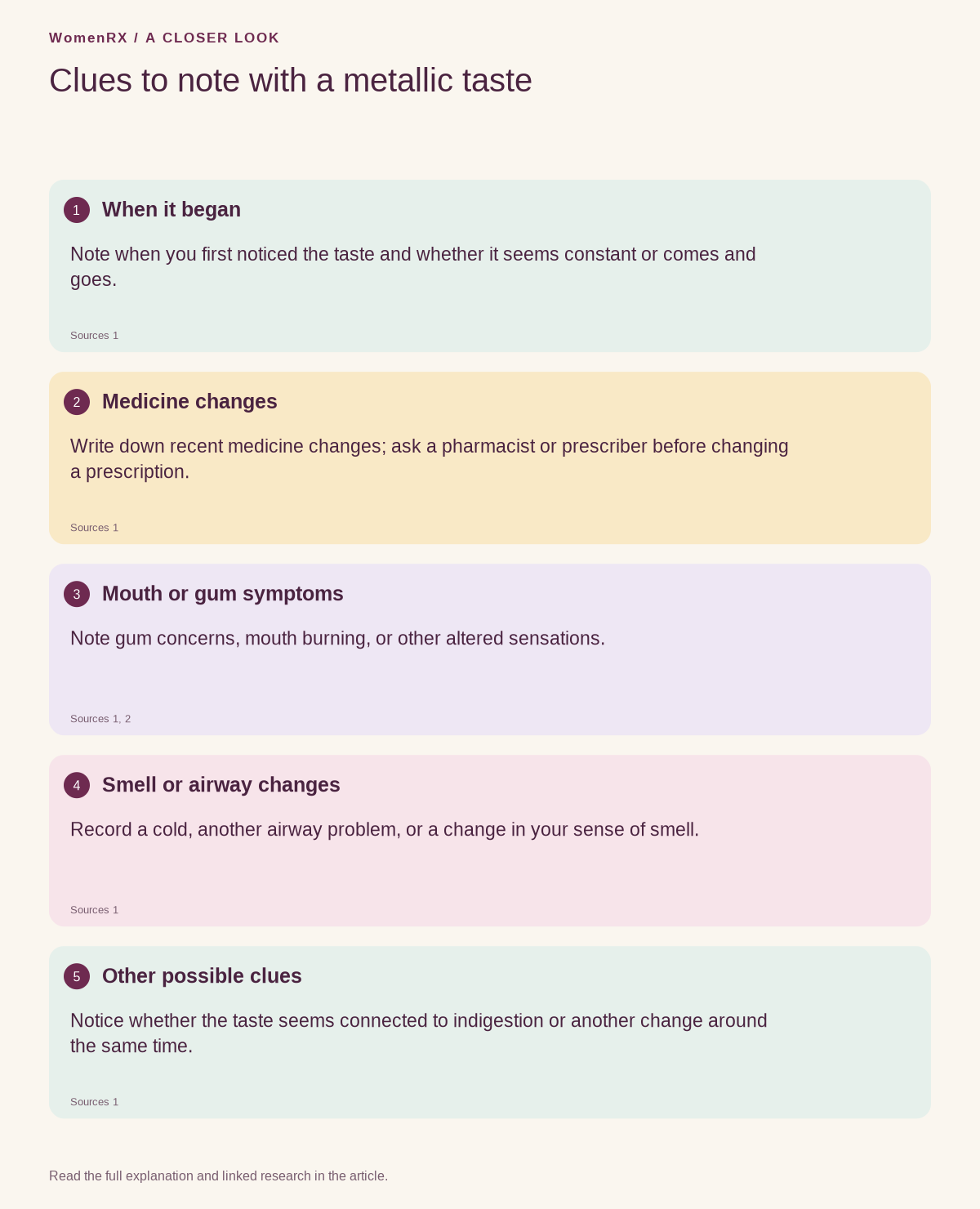
Clues to note with a metallic taste
When it began: Note when you first noticed the taste and whether it seems constant or comes and goes.1
Medicine changes: Write down recent medicine changes; ask a pharmacist or prescriber before changing a prescription.1
Mouth or gum symptoms: Note gum concerns, mouth burning, or other altered sensations.12
Smell or airway changes: Record a cold, another airway problem, or a change in your sense of smell.1
Other possible clues: Notice whether the taste seems connected to indigestion or another change around the same time.1
Read the figure as text
These details can help you explain the pattern and decide whether a dental or medical conversation may be useful. They can’t diagnose the cause.- When it began: Note when you first noticed the taste and whether it seems constant or comes and goes.1
- Medicine changes: Write down recent medicine changes; ask a pharmacist or prescriber before changing a prescription.1
- Mouth or gum symptoms: Note gum concerns, mouth burning, or other altered sensations.12
- Smell or airway changes: Record a cold, another airway problem, or a change in your sense of smell.1
- Other possible clues: Notice whether the taste seems connected to indigestion or another change around the same time.1
More questions, answered
Does a metallic taste mean I have burning mouth syndrome?
No. Burning mouth syndrome can include a metallic or reduced taste, but it also involves burning or other altered oral sensations. A metallic taste alone doesn’t establish that diagnosis. 2
Sources you can check
- Metallic taste - NHSAccessed 2026-09-25Return to first citation
- Burning mouth syndrome: an update on diagnosis and treatment methods.Suarez P, Clark GT. · Journal of the California Dental Association · 2006Return to first citation