Menopause Hormone Therapy and Weight: What the Evidence Shows
Hormone therapy isn’t a weight-loss treatment, though it may affect where body fat is stored.
Menopause hormone therapy hasn’t been shown to prevent the weight gain that can happen in midlife or to produce meaningful weight loss. Some research suggests it may lessen increases in abdominal fat or support a more favorable body composition, even when the number on the scale changes little. Those effects aren’t a reason to start therapy; its use is based on other menopause-related indications. 3 2
The scale and body composition tell different stories
Body weight combines fat, muscle, bone, and water. So a stable number on the scale doesn’t necessarily mean body composition is unchanged, and a change in weight doesn’t tell you which component changed. Waist measurement can add context about abdominal fat, but it also doesn’t explain the cause of a change on its own. 1
That distinction matters during the menopausal transition. A review of research on midlife found that weight gain itself couldn’t be attributed to menopause alone, while the transition was associated with more total and abdominal fat. In other words, the scale and fat distribution may shift differently, and menopause isn’t automatically the only explanation for a person’s weight change. 4
What studies say about hormone therapy
The clearest answer is that hormone therapy shouldn’t be expected to make you lose weight or prevent ordinary midlife weight gain. A 2026 clinical review reports that a Cochrane review of 28 randomized trials, involving 28,559 women, found no evidence that estrogen alone or estrogen combined with a progestogen changed body weight beyond the gain usually seen around menopause. It also found no evidence that hormone therapy prevents that weight gain. 3
Body composition may be a little different from scale weight. The same clinical review summarizes evidence from randomized trials and meta-analyses suggesting hormone therapy may attenuate central fat accumulation and support more favorable body composition. An earlier review likewise described a possible reduction in abdominal fat accumulation with estrogen therapy. These findings suggest a potential effect on fat distribution, not a reliable weight-loss effect or a guaranteed change for an individual. 3 4
A small change in body composition might not show up as weight loss. And even if fat distribution changes, that doesn’t establish that hormone therapy will reduce your waist measurement, improve health outcomes for you, or make weight management easier. The research summarized here doesn’t establish those individual results. 3 4
Why weight shouldn’t be the treatment goal
Menopause hormone therapy is used for specific menopause-related indications, including bothersome hot flashes and night sweats, and prevention of bone loss in appropriate patients. The Menopause Society’s position statement describes treatment as an individualized decision based on benefits and risks; it does not list weight loss as a treatment indication. 2
If you’re considering therapy partly because of weight changes, it’s reasonable to separate that concern from the reasons hormone therapy may be considered. You might ask: “What symptom or health concern are we treating?” and “What change should I realistically expect from treatment?” If weight is the main goal, hormone therapy isn’t supported as a weight-loss treatment. 2 3
Put a weight change in context
A number on the scale doesn’t distinguish fat from muscle, bone, or water, and everyday factors can affect weight. If you want a fuller picture, consider whether the change is gradual or sudden and whether other measures, such as waist size or strength, have changed too. MedlinePlus advises discussing weight gain or loss that happens without trying, especially when it’s sudden or unexpected. 1
The practical takeaway: don’t count on hormone therapy to lower the scale or stop midlife weight gain. Any possible effect on fat distribution is a separate, less predictable consideration, not a substitute for choosing treatment based on its established menopause-related benefits and risks. 2 3
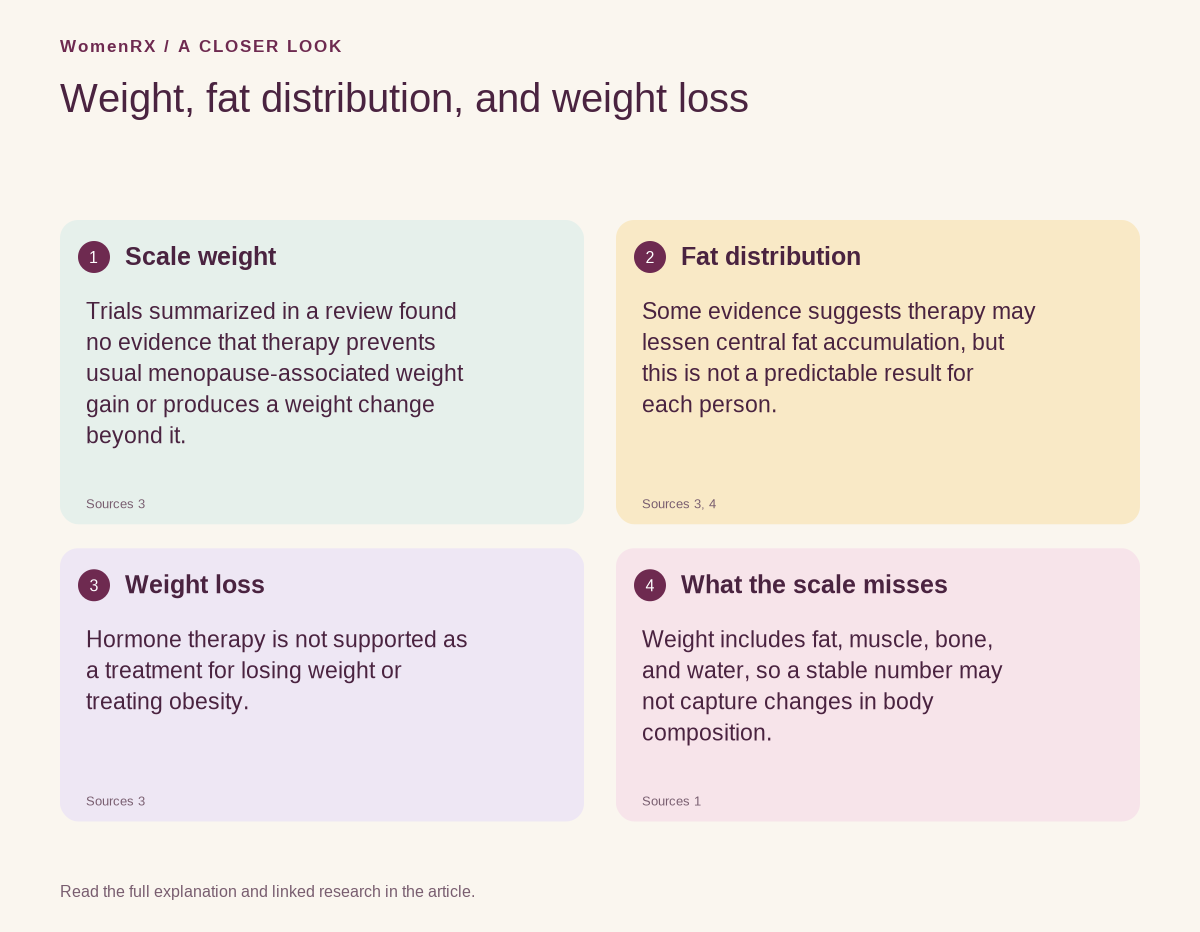
Weight, fat distribution, and weight loss
Scale weight: Trials summarized in a review found no evidence that therapy prevents usual menopause-associated weight gain or produces a weight change beyond it.3
Fat distribution: Some evidence suggests therapy may lessen central fat accumulation, but this is not a predictable result for each person.34
Weight loss: Hormone therapy is not supported as a treatment for losing weight or treating obesity.3
What the scale misses: Weight includes fat, muscle, bone, and water, so a stable number may not capture changes in body composition.1
Read the figure as text
These outcomes are related but not interchangeable. The distinction helps set realistic expectations for menopause hormone therapy.- Scale weight: Trials summarized in a review found no evidence that therapy prevents usual menopause-associated weight gain or produces a weight change beyond it.3
- Fat distribution: Some evidence suggests therapy may lessen central fat accumulation, but this is not a predictable result for each person.34
- Weight loss: Hormone therapy is not supported as a treatment for losing weight or treating obesity.3
- What the scale misses: Weight includes fat, muscle, bone, and water, so a stable number may not capture changes in body composition.1
More questions, answered
Can hormone therapy cause weight gain?
The evidence summarized in a clinical review doesn’t show that menopausal hormone therapy adds weight gain beyond what’s usually seen around menopause. That doesn’t rule out an individual noticing a change while taking it, but a change shouldn’t automatically be attributed to the therapy or to menopause alone. 3 4
If my weight is stable, could my body composition still change?
Yes. Weight includes fat, muscle, bone, and water, so the scale can stay similar while the mix changes. Research reviews describe an association between the menopausal transition and increased abdominal fat, but that pattern isn’t the same for everyone. 1 4
Sources you can check
- Body Weight: MedlinePlusAccessed 2026-09-25Return to first citation
- The 2022 hormone therapy position statement of The North American Menopause Society.“The 2022 Hormone Therapy Position Statement of The North American Menopause Society” Advisory Panel. · Menopause (New York, N.Y.) · 2022Return to first citation
- Clinical review: Menopause hormone therapy in weight management.Younglove C. · Obesity pillars · 2026Return to first citation
- Understanding weight gain at menopause.Davis SR, Castelo-Branco C, Chedraui P, Lumsden MA, Nappi RE, Shah D, Villaseca P, Writing Group of the International Menopause Society for World Menopause Day 2012. · Climacteric : the journal of the International Menopause Society · 2012Return to first citation