Menopause Fatigue: What to Check and When to Get Help
Sleep disruption can contribute to tiredness during menopause, but persistent fatigue can have other causes worth checking.
If you’re tired during menopause, first notice whether waking, trouble sleeping, or night sweats line up with your daytime fatigue. Sleep is only one possibility: fatigue can also relate to stress, sleep disorders, health conditions, or treatments. If it lasts a few weeks without a clear reason, affects daily life, or comes with other symptoms, arrange an assessment. 123
Start with what may be disrupting sleep
Fatigue can accompany hormonal changes during menopause, but it isn’t something you have to assume is simply part of the stage. Too little sleep or difficulty sleeping can contribute to tiredness, and sleep difficulties are among the symptoms reported during menopause. Notice whether waking, trouble falling asleep, or night sweats seem to coincide with your daytime fatigue. That pattern can be useful, but it doesn’t prove menopause is the only cause. 13
For a short stretch, jot down when you sleep, whether you wake, symptoms you notice overnight, and when your energy dips during the day. A fatigue diary can help you spot patterns and see how tiredness affects your usual activities. It won’t diagnose the cause, but it can make the pattern easier to explain. 2
If sleep problems or menopause symptoms are part of the picture, mention them specifically when discussing care. A systematic review of randomized trials in women experiencing the menopause transition found improvements in sleep quality and insomnia with psychosocial interventions, particularly cognitive behavioral therapy. Those findings support sleep as a possible treatment target; they do not establish that these approaches directly treat fatigue. 3
Keep other causes in view
Fatigue has many possible causes. These include stress, depression, sleep disorders, anemia, diabetes, thyroid problems, other health conditions, and treatments. Menopause can overlap with these factors, so a connection between tiredness and poor sleep doesn’t rule out another explanation. 12
Some accompanying symptoms are useful to mention during an assessment. Daytime tiredness alongside loud snoring, gasping, or choking noises during sleep can point to a sleep problem. Fatigue with palpitations, shortness of breath, or pale skin can occur with iron-deficiency anemia. Increased thirst and urination are among the symptoms listed for diabetes, while nervousness and muscle weakness can accompany an overactive thyroid. These clues don’t identify a condition on their own, but they can help guide what to check. 1
If your fatigue began around a change in treatment, include that timing when you discuss it. Don’t assume the treatment is the cause; it’s one detail to consider alongside sleep, mood, and other symptoms. 2
When to seek an assessment
Arrange an assessment if fatigue has lasted a few weeks without a clear explanation, is affecting your daily life, or comes with symptoms such as unexplained weight loss or mood changes. Mention loud snoring, gasping, or choking noises during sleep, too. These are reasons to look beyond a menopause explanation rather than trying to diagnose yourself from a symptom list. 1
An assessment may include questions about sleep and daily activities, a physical exam, and, depending on your symptoms, blood tests. Tests may check for issues such as anemia, diabetes, or an overactive thyroid. Treatment depends on what is causing the fatigue, so finding the likely contributor is a more useful first step than reaching for a one-size-fits-all supplement. 12
A brief record of sleep, daytime energy, menopause symptoms, and any recent treatment changes can help you describe what’s happening. If the tiredness continues or limits your usual activities, take that pattern to a clinician. The goal is to find what may be contributing and what can be addressed.
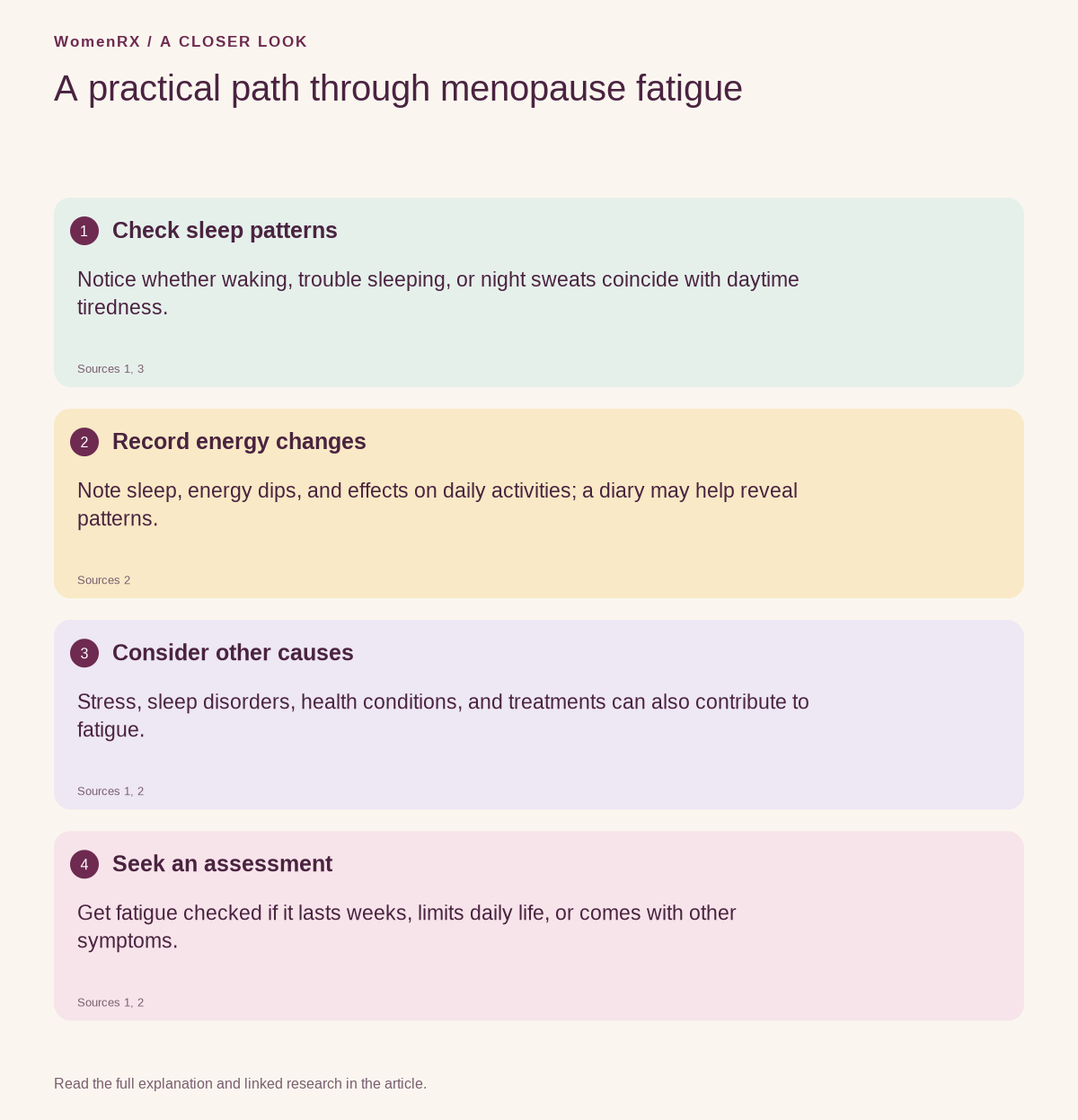
A practical path through menopause fatigue
Check sleep patterns: Notice whether waking, trouble sleeping, or night sweats coincide with daytime tiredness.13
Record energy changes: Note sleep, energy dips, and effects on daily activities; a diary may help reveal patterns.2
Consider other causes: Stress, sleep disorders, health conditions, and treatments can also contribute to fatigue.12
Seek an assessment: Get fatigue checked if it lasts weeks, limits daily life, or comes with other symptoms.12
Read the figure as text
Use the pattern of tiredness to decide what to look at first and when to seek an assessment.- Check sleep patterns: Notice whether waking, trouble sleeping, or night sweats coincide with daytime tiredness.13
- Record energy changes: Note sleep, energy dips, and effects on daily activities; a diary may help reveal patterns.2
- Consider other causes: Stress, sleep disorders, health conditions, and treatments can also contribute to fatigue.12
- Seek an assessment: Get fatigue checked if it lasts weeks, limits daily life, or comes with other symptoms.12
Sources you can check
- Tiredness and fatigue - NHSAccessed 2026-09-25Return to first citation
- Fatigue: MedlinePlusAccessed 2026-09-25Return to first citation
- The effectiveness of psychosocial interventions on physiological symptoms of menopause: a systematic review and meta-analysis.Robinson K, Hardy R, Melville M, Saidel S, Desai R, Spector A. · BMC women's health · 2026Return to first citation