Menopause and High Blood Pressure: Is There a Direct Link?
Blood pressure is more often high after menopause, but timing alone can’t show what’s behind your reading.
High blood pressure is more common among postmenopausal than premenopausal women, but that pattern doesn’t prove menopause directly causes an individual’s rise. Blood pressure also tends to increase with age, and family history, lifestyle, and some medicines can affect risk. A raised reading needs confirmation across separate appointments, alongside a review of other risk factors. 3 2 1
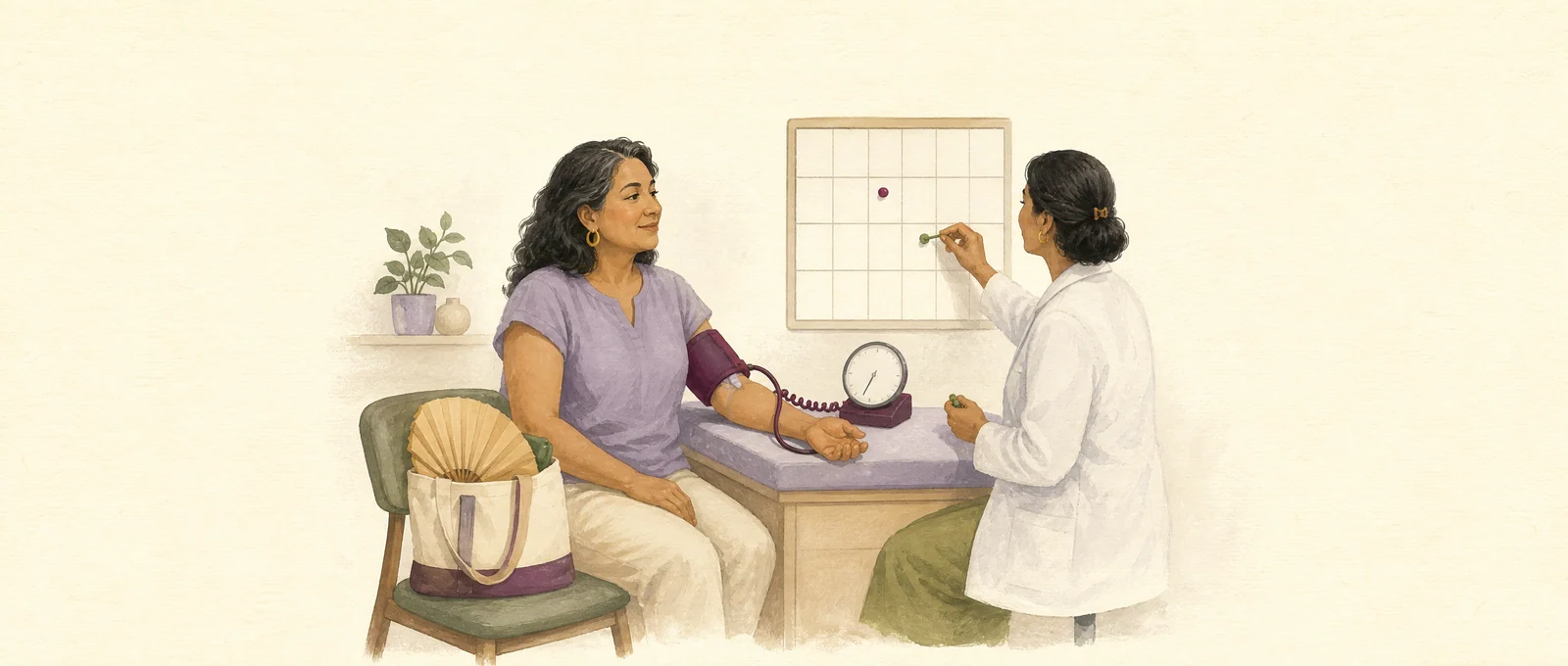
What the menopause link does, and doesn’t, tell us
High blood pressure is more prevalent in postmenopausal than premenopausal women. That’s a population-level pattern, not a way to diagnose the reason for one person’s higher reading. The comparison doesn’t establish that menopause itself caused the change or tell you how much of the difference is due to age and other risk factors. 3
Age matters: blood pressure tends to rise as people get older. Risk can also be shaped by family history, smoking, physical activity, diet, and other social and health factors. MedlinePlus notes that men are more likely than women to develop high blood pressure through middle age, while older women are more likely than older men to have it. That makes it especially useful to assess your own readings and risk factors rather than assume one explanation from menopause timing. 2
A high reading is a reason to check, not a diagnosis
High blood pressure often has no symptoms, so how you feel can’t reliably tell you whether it’s high. A single elevated result also isn’t enough to establish a diagnosis: MedlinePlus says clinicians take two or more readings at separate appointments before making one. Ask how your readings should be followed up and whether home monitoring is appropriate for you. 1
For context, MedlinePlus lists stage 1 high blood pressure as a systolic reading of 130-139 or a diastolic reading of 80-89; stage 2 is 140 or higher systolic or 90 or higher diastolic. These categories help describe readings, but they don’t replace confirmation over time. 1
A reading above 180 systolic and above 120 diastolic is listed as a hypertensive crisis, for which MedlinePlus advises seeking medical care right away. 1
Review the whole picture
When a reading has risen, it can help to review more than menopause symptoms. Age and family history are relevant, as are habits such as smoking, physical activity, and salt intake. Some medicines can raise blood pressure too, including certain antidepressants, decongestants, hormonal birth control pills, and NSAID pain relievers. If one applies to you, mention it when discussing your readings; don’t stop a prescribed medicine on your own. 2
If high blood pressure is confirmed, heart-healthy lifestyle changes may be part of care, and some people also need medication. Exercise research in menopausal and postmenopausal women found that training lowered blood pressure compared with control in randomized trials; combined exercise training showed larger reductions than aerobic training alone in that review. This supports physical activity as one part of blood-pressure care, not as a substitute for checking whether your readings are persistently high. 3 1
The useful distinction is simple: menopause timing may prompt you to pay attention, but repeated measurements and an individual risk-factor review are what help clarify whether you have hypertension and what to do next.
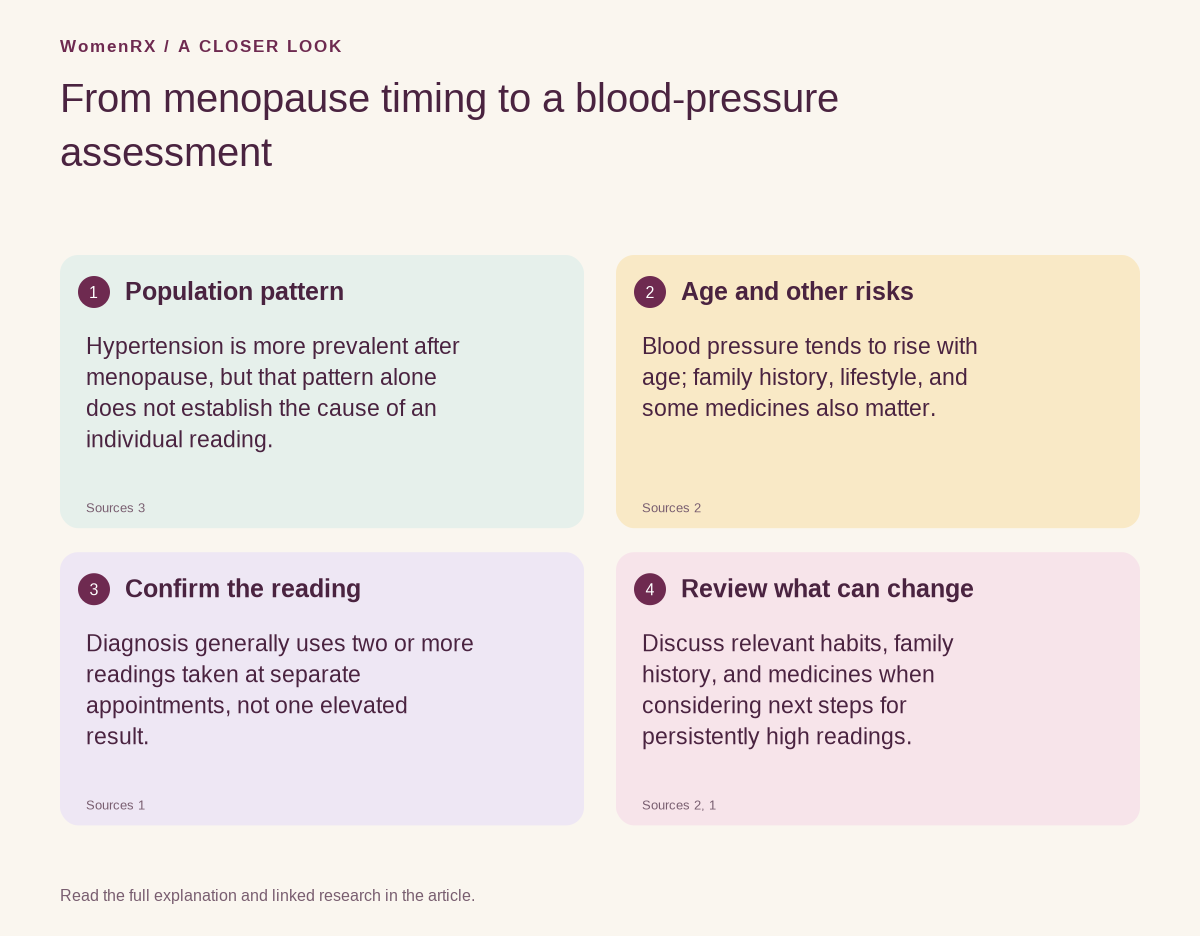
From menopause timing to a blood-pressure assessment
Population pattern: Hypertension is more prevalent after menopause, but that pattern alone does not establish the cause of an individual reading.3
Age and other risks: Blood pressure tends to rise with age; family history, lifestyle, and some medicines also matter.2
Confirm the reading: Diagnosis generally uses two or more readings taken at separate appointments, not one elevated result.1
Review what can change: Discuss relevant habits, family history, and medicines when considering next steps for persistently high readings.21
Read the figure as text
These distinctions show why a menopause-related timing pattern is a reason to check readings, not a diagnosis by itself.- Population pattern: Hypertension is more prevalent after menopause, but that pattern alone does not establish the cause of an individual reading.3
- Age and other risks: Blood pressure tends to rise with age; family history, lifestyle, and some medicines also matter.2
- Confirm the reading: Diagnosis generally uses two or more readings taken at separate appointments, not one elevated result.1
- Review what can change: Discuss relevant habits, family history, and medicines when considering next steps for persistently high readings.21
More questions, answered
Can I tell from symptoms if my blood pressure is high?
Usually not. High blood pressure often has no symptoms, so a blood pressure check is needed to find out. 1
Sources you can check
- High Blood Pressure | Hypertension | MedlinePlusAccessed 2026-09-25Return to first citation
- How to Prevent High Blood Pressure: MedlinePlusAccessed 2026-09-25Return to first citation
- The effect of exercise training on blood pressure in menopause and postmenopausal women: A systematic review of randomized controlled trials.Loaiza-Betancur AF, Chulvi-Medrano I, Díaz-López VA, Gómez-Tomás C. · Maturitas · 2021Return to first citation