Magnesium L-Threonate: Side Effects and Precautions
Digestive upset is a known risk of magnesium supplements, but short-term L-threonate research offers only limited reassurance about this specific form.
Magnesium L-threonate may cause the same digestive effects seen with other magnesium supplements, including diarrhea, nausea, and abdominal cramping, though these effects are not well characterized specifically for L-threonate. A small, six-week trial in healthy adults reported no significant adverse reactions, but it excluded pregnant and breastfeeding women and people taking regular medicines. Kidney disease and certain medicines make a label and medication review especially worthwhile. 1 2
What side effects are known?
Diarrhea, nausea, and abdominal cramping are recognized effects of taking too much magnesium from supplements or medicines. They can happen because magnesium that remains unabsorbed in the gut draws water into the intestine and can stimulate bowel movement. These are magnesium-related risks, not effects shown to be unique to L-threonate. 1
The direct human evidence for magnesium L-threonate is limited. In a six-week, placebo-controlled trial, 100 healthy adults aged 18 to 45 took L-threonate or placebo. The researchers described it as well tolerated and reported no significant adverse reactions. That’s reassuring for short-term use in a selected group, but it can’t establish long-term safety or what to expect for someone with health conditions or regular medicines. The reported safety result was overall, not a comparison of side effects by sex. 2
Check the elemental magnesium, not just the compound
A supplement label reports the amount of elemental magnesium, not the full weight of the magnesium-containing compound. That distinction matters with L-threonate: the compound’s listed weight and its elemental magnesium amount are not interchangeable. If you take more than one product containing magnesium, or use a magnesium-containing antacid or laxative, count those sources together. 1
For adults, the upper limit is 350 mg a day of magnesium from supplements and medicines. It does not include magnesium naturally present in food and beverages. This is a population-level upper limit for healthy people, not a dose to aim for, a guarantee that a particular amount is safe for you, or an L-threonate-specific threshold. The NIH lists the same adult upper limit for pregnancy and lactation. 1
When kidney health changes the calculation
Your kidneys help remove excess magnesium. If kidney function is impaired, magnesium can build up more easily, raising the risk of toxicity; the risk is greater in kidney failure. If you have kidney disease or have been told your kidney function is reduced, get individual advice before adding a magnesium supplement, including L-threonate. 1
Very high magnesium levels can cause problems beyond stomach upset, including low blood pressure, marked weakness, difficulty breathing, or an irregular heartbeat. These are not expected effects to watch for in everyone taking a supplement, but severe symptoms warrant urgent medical attention. 1
Medicines to include in a review
Magnesium can reduce absorption of some oral bisphosphonates used for osteoporosis and some antibiotics, including tetracyclines such as doxycycline and quinolones such as ciprofloxacin. That may affect how well the medicine works. Ask a pharmacist how to time magnesium around your specific prescription rather than changing or skipping prescribed treatment. 1
Some medicines can also change magnesium levels in the body. Long-term use of loop or thiazide diuretics can increase magnesium loss in urine; potassium-sparing diuretics can reduce that loss. Long-term use of proton pump inhibitors, a type of acid-reducing medicine, can lead to low magnesium in some people. These are reasons to review the full medication list, not reasons to add magnesium on your own. 1
Pregnancy and breastfeeding: don’t assume the trial applies
The L-threonate trial excluded women who were pregnant, breastfeeding, or planning pregnancy. It therefore doesn’t tell us about safety in those situations. The general magnesium upper limit for supplements and medicines is 350 mg daily for adults, including pregnant and lactating adults, but that limit does not establish that L-threonate itself is appropriate during pregnancy or breastfeeding. Discuss the specific product with your prenatal or postpartum care team before starting it. 1 2
A practical review means checking the elemental magnesium amount on the label, adding up other magnesium-containing products, and sharing the product and medication list with a pharmacist or clinician if kidney disease, pregnancy, breastfeeding, or a potentially interacting medicine applies to you. This helps separate ordinary digestive tolerability questions from situations where magnesium levels or medication absorption may matter.
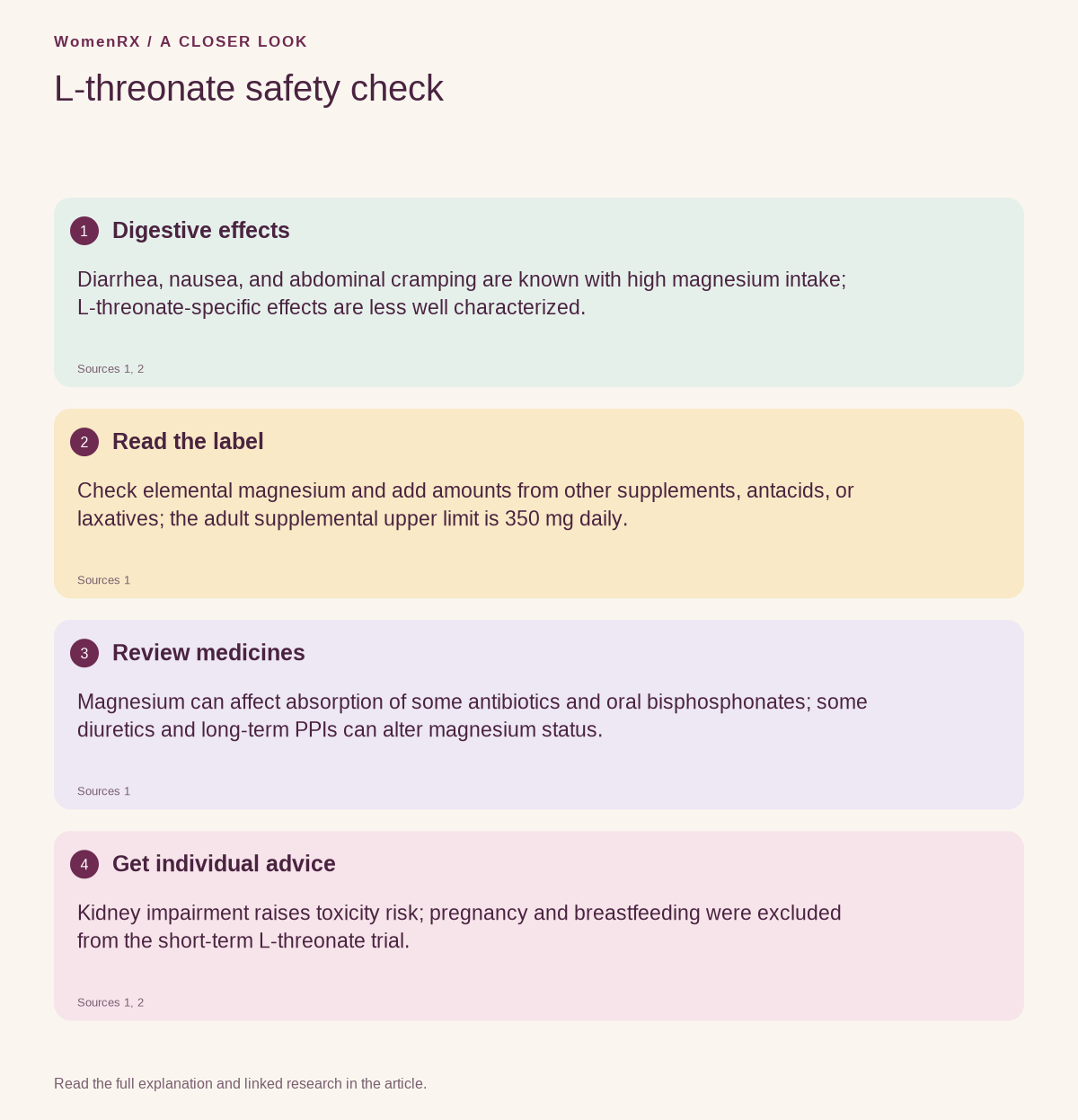
L-threonate safety check
Digestive effects: Diarrhea, nausea, and abdominal cramping are known with high magnesium intake; L-threonate-specific effects are less well characterized.12
Read the label: Check elemental magnesium and add amounts from other supplements, antacids, or laxatives; the adult supplemental upper limit is 350 mg daily.1
Review medicines: Magnesium can affect absorption of some antibiotics and oral bisphosphonates; some diuretics and long-term PPIs can alter magnesium status.1
Get individual advice: Kidney impairment raises toxicity risk; pregnancy and breastfeeding were excluded from the short-term L-threonate trial.12
Read the figure as text
Sort the main questions into everyday tolerability, medication review, and situations where kidney or life-stage factors call for individual advice.- Digestive effects: Diarrhea, nausea, and abdominal cramping are known with high magnesium intake; L-threonate-specific effects are less well characterized.12
- Read the label: Check elemental magnesium and add amounts from other supplements, antacids, or laxatives; the adult supplemental upper limit is 350 mg daily.1
- Review medicines: Magnesium can affect absorption of some antibiotics and oral bisphosphonates; some diuretics and long-term PPIs can alter magnesium status.1
- Get individual advice: Kidney impairment raises toxicity risk; pregnancy and breastfeeding were excluded from the short-term L-threonate trial.12
Sources you can check
- Magnesium - Health Professional Fact SheetAccessed 2026-09-25Return to first citation
- The effects of magnesium L-threonate (Magtein®) on cognitive performance and sleep quality in adults: a randomised, double-blind, placebo-controlled trial.Lopresti AL, Smith SJ. · Frontiers in nutrition · 2025Return to first citation