Lower-Belly Fullness Isn’t Always Body Fat
A fuller lower belly may reflect a longer-term change in body fat, digestive bloating, constipation, or something that needs a closer look.
Don’t judge a lower-belly change by its shape alone. Abdominal fat develops over time, while bloating is a feeling of fullness or discomfort that may come with gas or constipation. Neither pattern proves a cause. Notice whether your bowel habits have changed and whether the fullness goes away; persistent bloating or a new change deserves medical assessment. 134
Start with what the change feels like
A lower belly that looks or feels fuller doesn’t tell you what’s inside it. The more useful first question is whether you’re noticing a gradual change in your waist, a feeling of pressure or fullness, or a new symptom that isn’t settling. These clues can guide your next step, but they can’t diagnose the cause from appearance alone.
If your waist has changed gradually, body-fat distribution may be part of the picture. Body fat accumulates over time, and carrying more of it around the waist can matter for long-term health. A waist measurement can help assess that risk, but it cannot tell you whether today’s fullness is fat, gas, or something else. 4
If you feel full or uncomfortable, particularly with more gas than usual, bloating may be a better description of what you’re experiencing. Gas can build up after certain foods or fizzy drinks, or from swallowing air while eating. Digestive conditions, including constipation, food intolerance, celiac disease, and irritable bowel syndrome (IBS), can also cause bloating. That’s a range of possibilities, not a way to identify one by how your belly looks. 3
Check for a bowel-habit clue
Constipation can bring both bloating and a stomach ache. It may mean having fewer than three bowel movements in a week, but a change from your usual pattern also matters. Hard, dry stools or pain when passing them are other clues. You don’t need to have a bowel movement every day to be regular. 12
If constipation seems likely, reasonable first steps include drinking fluids, eating more fiber-containing fruits, vegetables, and grains, and being active. If a medicine might be contributing, ask about that rather than assuming you need to change it yourself. A sudden change in bowel habits is worth discussing with a clinician. 12
For bothersome gas, notice whether fizzy drinks or a particular food reliably precedes the discomfort. Eating with your mouth closed may reduce swallowed air, and regular movement may help digestion and bloating. You don’t need to cut out broad food groups just because your belly feels full once. 3
Put life stage in context, not in charge
Some people feel bloated around their period. Constipation is also common during pregnancy and after giving birth. Those connections may help you make sense of a familiar pattern, but they don’t establish the cause of a new one. If pregnancy is possible, find out whether you’re pregnant rather than trying to read the answer from your body shape. And don’t write off persistent new fullness as ‘just menopause’ without having it assessed. 23
Match the next step to the problem
If what concerns you is a longer-term increase in waist size rather than discomfort, a sustainable approach to overall weight and health makes more sense than trying to shrink one spot. Healthy eating patterns and regular physical activity are established parts of weight management. Exercise studies in older adults have found reductions in waist circumference, but they don’t show that an exercise can choose precisely where on the belly fat comes off; women-specific results weren’t reported in that review. 45
If bloating is frequent, doesn’t go away, or continues despite changes you’ve tried, arrange a medical assessment. Do the same if it comes with unintentional weight loss or blood in your stool. Bloating with abdominal pain, vomiting, fever, or a significant bowel change calls for more prompt attention. A swollen abdomen with severe pain that comes on suddenly needs immediate medical care. These are reasons to look beyond a fat-loss plan, not reasons to assume the worst. 23
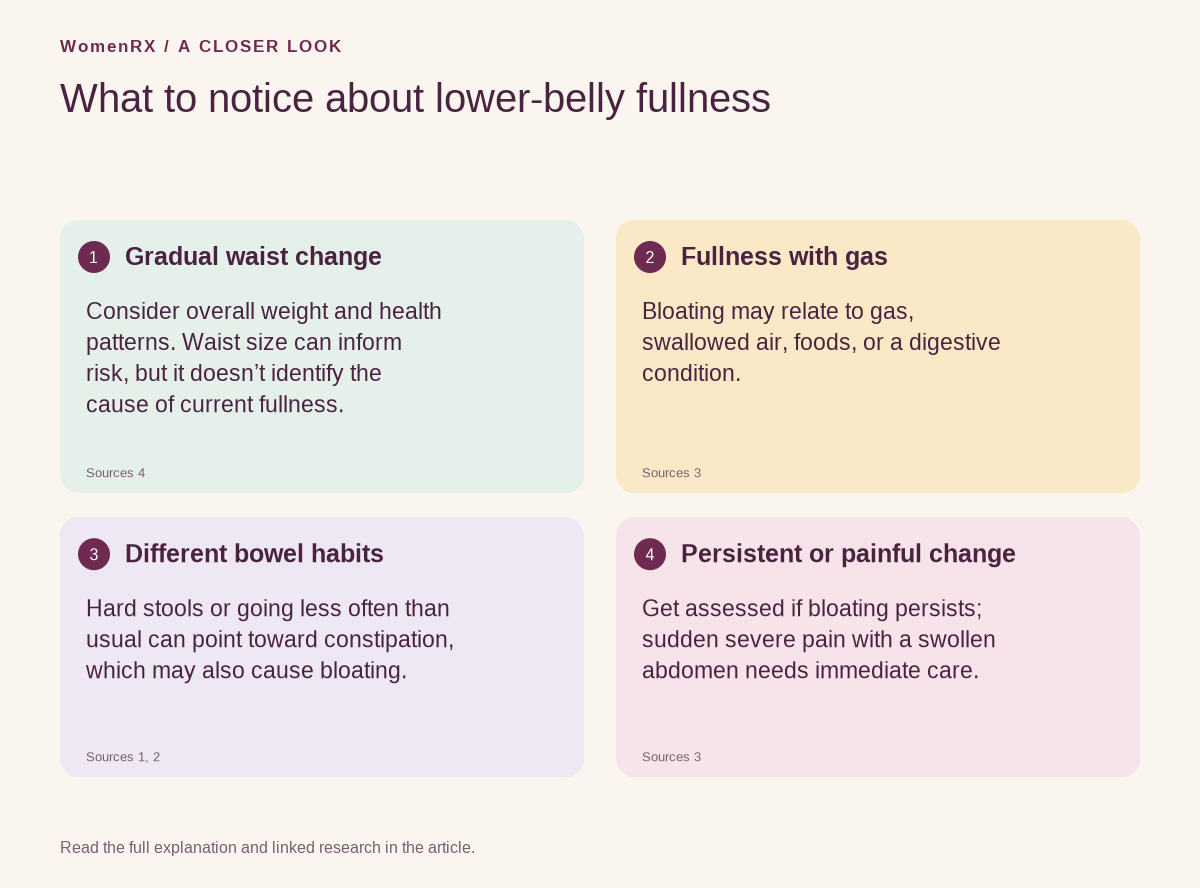
What to notice about lower-belly fullness
Gradual waist change: Consider overall weight and health patterns. Waist size can inform risk, but it doesn’t identify the cause of current fullness.4
Fullness with gas: Bloating may relate to gas, swallowed air, foods, or a digestive condition.3
Different bowel habits: Hard stools or going less often than usual can point toward constipation, which may also cause bloating.12
Persistent or painful change: Get assessed if bloating persists; sudden severe pain with a swollen abdomen needs immediate care.3
Read the figure as text
These clues suggest different next steps; none can identify a cause from body shape alone.- Gradual waist change: Consider overall weight and health patterns. Waist size can inform risk, but it doesn’t identify the cause of current fullness.4
- Fullness with gas: Bloating may relate to gas, swallowed air, foods, or a digestive condition.3
- Different bowel habits: Hard stools or going less often than usual can point toward constipation, which may also cause bloating.12
- Persistent or painful change: Get assessed if bloating persists; sudden severe pain with a swollen abdomen needs immediate care.3
More questions, answered
Can I have abdominal fat and bloating at the same time?
Yes. A longer-term waist change doesn’t rule out digestive bloating on a particular day. If you also feel full or uncomfortable, have more gas, or notice a change in bowel habits, consider those symptoms separately rather than assuming one explanation covers everything. 134
Sources you can check
- Constipation | MedlinePlusAccessed 2026-09-25Return to first citation
- Constipation - NHSAccessed 2026-09-25Return to first citation
- Bloating - NHSAccessed 2026-09-25Return to first citation
- Obesity: MedlinePlusAccessed 2026-09-25Return to first citation
- Effect of exercise on abdominal obesity and inflammatory response in the older adults: a systematic review and meta-analysis of randomized controlled trials.Liu Y, Mao S, Xie W, Qian G, Wu X, Xu H, Ossowski Z. · Frontiers in sports and active living · 2025Return to first citation