Bloating: Track Patterns Before Cutting Foods
A simple record of when bloating happens, bowel changes, meals, and cycle timing can help you spot useful patterns without ruling out whole food groups.
Track when bloating starts and fades, whether your belly looks distended or mainly feels full, what your bowel habits are doing, and any meals or menstrual-cycle timing that seem relevant. Look for repeats rather than blaming one food after one episode. Persistent or frequent bloating, or bloating with concerning symptoms, deserves medical assessment rather than a more restrictive diet. 1 3
Start by describing what you feel
Bloating is a feeling of fullness or discomfort; abdominal distension means your belly is visibly larger. They can happen together or separately. In your notes, record which one you notice, rather than treating them as the same symptom. 3
Bloating is common and can have several explanations, including gas, digestion-related conditions, or constipation. Some people notice it around their period, but timing alone doesn’t establish the cause. 1
Keep a brief, low-effort diary
Write a few words when symptoms happen. You don’t need to measure every bite or make the record perfect. Include:
- Timing: When did the bloating begin, and when did it ease? Did it happen after a meal, later in the day, or at another recognizable time?
- What you noticed: Was there a feeling of fullness, visible swelling, discomfort, or abdominal pain?
- Bowel habits: Note whether you had a bowel movement and whether constipation, diarrhea, or a change from your usual pattern was present. With IBS, bloating can occur alongside changes in bowel habits. 4
- Food and eating context: Note meals and drinks that seem relevant, including fizzy drinks or whether you were eating quickly. Some drinks and foods can contribute to gas, and swallowing air while eating is another possible factor. A single episode doesn’t prove a food caused your symptoms. 1
- Other patterns: Record other symptoms and, if relevant, where you are in your menstrual cycle. Cycle timing is one clue to track, not a reason to assume persistent or severe symptoms are hormonal. 1
Look for a repeat, not a culprit
After you have a few entries, ask whether the same situation shows up more than once. For example, you might notice that bloating tends to coincide with constipation, certain drinks, or a particular point in your cycle. These are leads to discuss or test thoughtfully, not a diagnosis.
Try not to respond by cutting out several foods at once. That makes it harder to tell what, if anything, changed the pattern. If constipation seems to be part of the picture, foods high in soluble fiber, such as oats, may help with constipation. 1 Increasing fiber too quickly can itself cause gas, bloating, and cramps. 2 A gradual change is less likely to add a new source of discomfort.
A specific eating plan may be considered for some people with functional bloating or IBS, but it isn’t a universal fix. Clinical guidance includes options such as limiting lactose or a low-FODMAP diet; which, if either, makes sense depends on the person and the clinical picture. 3 If you’re considering a restrictive plan, ask about a focused approach rather than continuing broad exclusions on your own.
Use the pattern to choose a next step
Occasional, short-lived bloating: Keep the record simple and notice whether a practical change, such as chewing with your mouth closed or having smaller, more frequent meals, seems to help. These are general measures suggested for bloating, not proof that a particular cause has been found. 1
Bloating that keeps returning or doesn’t go away: Arrange medical assessment, especially if diet changes haven’t helped. Bloating can have functional or other digestive causes, so the pattern may help explain what’s happening but can’t rule conditions in or out. 1 3
Bloating with unintentional weight loss or blood in your stool: Get medical advice rather than continuing to experiment with food exclusions. 1
Bloating with vomiting, diarrhea or constipation, abdominal pain, or a fever: Seek urgent medical care. If your abdomen is swollen and you have sudden, severe abdominal pain, seek emergency care. 1
Bring your notes if you seek care. A short record of timing, bowel habits, meals, and cycle patterns can make the conversation more specific, without turning food tracking into a reason to blame yourself or restrict your diet.
From Bloating Pattern to Next Step
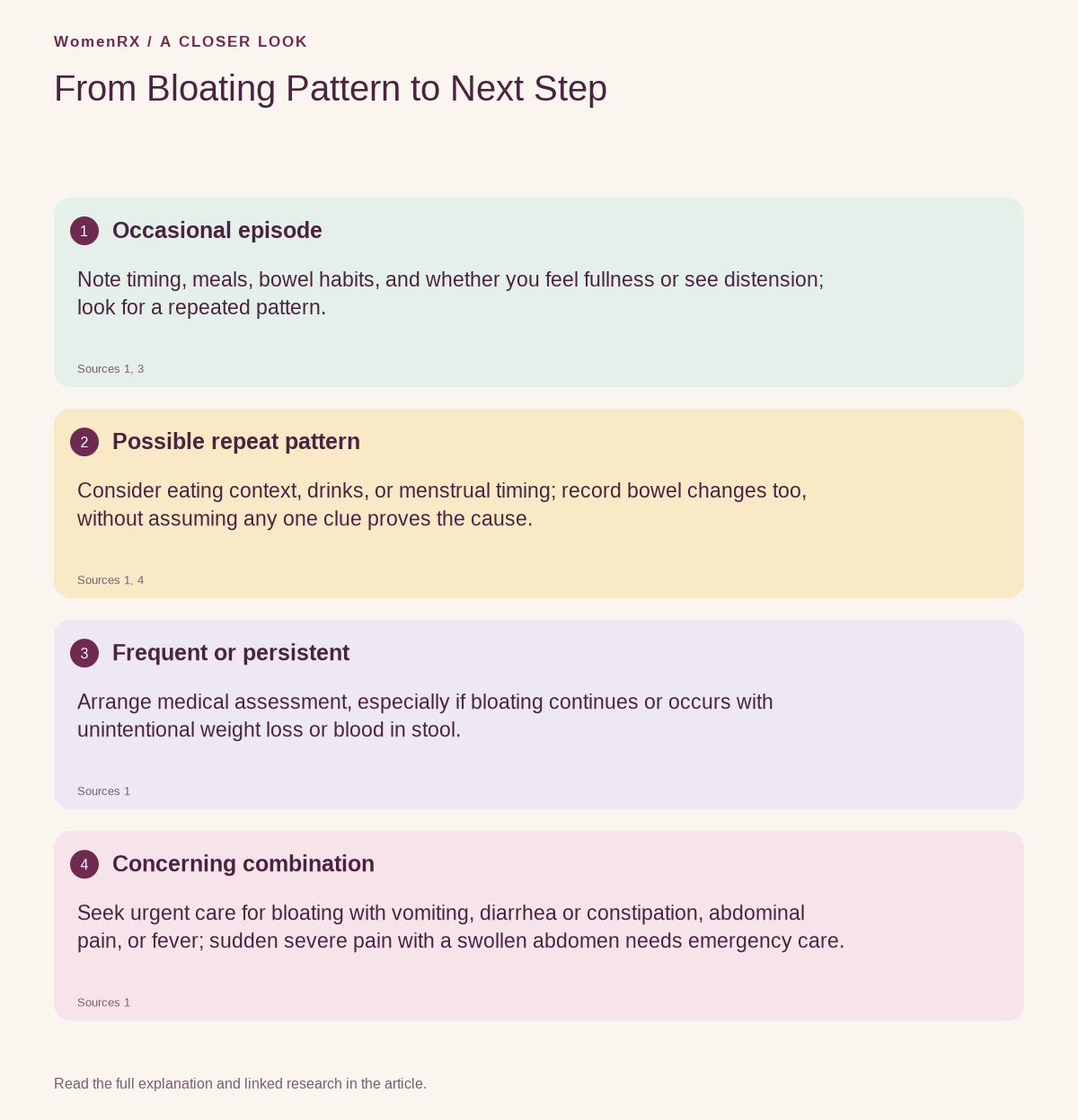
Occasional episode: Note timing, meals, bowel habits, and whether you feel fullness or see distension; look for a repeated pattern.13
Possible repeat pattern: Consider eating context, drinks, or menstrual timing; record bowel changes too, without assuming any one clue proves the cause.14
Frequent or persistent: Arrange medical assessment, especially if bloating continues or occurs with unintentional weight loss or blood in stool.1
Concerning combination: Seek urgent care for bloating with vomiting, diarrhea or constipation, abdominal pain, or fever; sudden severe pain with a swollen abdomen needs emergency care.1
Read the figure as text
Use the symptom pattern to decide whether to keep observing, seek routine assessment, or get urgent care.- Occasional episode: Note timing, meals, bowel habits, and whether you feel fullness or see distension; look for a repeated pattern.13
- Possible repeat pattern: Consider eating context, drinks, or menstrual timing; record bowel changes too, without assuming any one clue proves the cause.14
- Frequent or persistent: Arrange medical assessment, especially if bloating continues or occurs with unintentional weight loss or blood in stool.1
- Concerning combination: Seek urgent care for bloating with vomiting, diarrhea or constipation, abdominal pain, or fever; sudden severe pain with a swollen abdomen needs emergency care.1
Sources you can check
- Bloating - NHSAccessed 2026-09-25Return to first citation
- Dietary Fiber: MedlinePlusAccessed 2026-09-25Return to first citation
- European Consensus on Functional Bloating and Abdominal Distension-An ESNM/UEG Recommendations for Clinical Management.Melchior C, Hammer H, Bor S, Barba E, Horvat IB, Celebi A, Drug V, Dumitrascu D, Kalkan IH, Hauser G, Lionis C, Livovsky D, Mari A, Mulak A, Surdea-Blaga T, Tack J, Vanuytsel T, Sa... · United European gastroenterology journal · 2025Return to first citation
- Irritable Bowel Syndrome.Greer KB, Sultan S. · Annals of internal medicine · 2025Return to first citation