Low Desire: When to Wait and When to Get Help
A change in desire doesn’t need to last a set number of weeks before you can ask about it, especially if pain, bleeding, or a medication change is part of the picture.
If a recent dip in desire fits stress or a new baby and isn’t bothering you, you can see whether things change. Book a visit if you’re worried, desire hasn’t returned after pregnancy, or you suspect a medicine or contraception link. Mention painful sex at a routine visit; bleeding after sex should be checked. A missed period with unusual bleeding and abdominal pain needs prompt attention.12
Start with what changed and how you feel about it
The useful questions are whether this is a change for you, whether it bothers you, and what else was happening when it began. Research on low sexual desire distinguishes desire alone from low desire accompanied by distress.5
For example, if you’ve had an exhausting few weeks and feel comfortable giving yourself time, you may choose to see whether your interest shifts as life settles. Stress, relationship difficulties, pregnancy and caring for a baby can all affect desire. That doesn’t mean you have to wait it out if you’d rather talk it through now.1
When a routine visit can help
Make an appointment if the change worries you, continues after pregnancy when you expected your desire to return, or seems connected to a medicine or hormonal contraception. These are reasons to look for an explanation, not proof that the medicine, birth control, or life stage caused the change.1
Think about what changed alongside desire. Vaginal dryness can be relevant to low desire.1 Dryness and painful sex were associated with lower sexual function and avoidance of sex in a study of couples aged 50 to 70; that observational finding doesn’t mean menopause explains every woman’s change in desire.6 If sex has become uncomfortable, say so directly. Addressing discomfort may be more useful than focusing only on desire.1
Mood and medication deserve separate attention. Depression and anxiety can affect desire, while antidepressants themselves can cause sexual side effects, including low desire or difficulty reaching orgasm. If the timing fits a new antidepressant, bring that up with the prescriber rather than stopping it on your own.13
Symptoms that change the next step
Bleeding after sex or between periods should be checked, even if low desire is what first caught your attention. Vaginal dryness is one possible cause of bleeding after sex, but there are others, so it’s worth a medical evaluation rather than an assumption.2
Seek prompt medical attention if you’ve recently missed a period and have unusual vaginal bleeding along with abdominal or pelvic pain. This combination can signal an ectopic pregnancy. Don’t wait for a routine sexual-health appointment to discuss it.2
Bring the pattern, not a self-diagnosis
You don’t need a detailed diary. A few specifics can make the conversation more productive: roughly when the change began; whether it feels new or familiar; whether you feel distressed by it; and whether sex is painful, dry, or followed by bleeding. Mention a recent birth, a contraception change, menopause, new medicines, or changes in mood if they apply. Menopause does not necessarily explain a change in desire. Those details point toward different possible causes and options.123
Treatment depends on what’s driving the problem. Options discussed in clinical guidance include addressing vaginal dryness, mental health concerns, relationship difficulties, or a possible medication or contraception link.1 Medicines studied specifically for distressing low desire, including flibanserin and bremelanotide, aren’t a shortcut to explaining every change in interest. Most completed drug trials in one review enrolled premenopausal women with acquired, generalized hypoactive sexual desire disorder, and trial outcomes and safety reporting varied.4
A good first question at the visit is simple: “What might be contributing to this change for me?” It leaves room to discuss your body, your circumstances, and what you actually want help with.
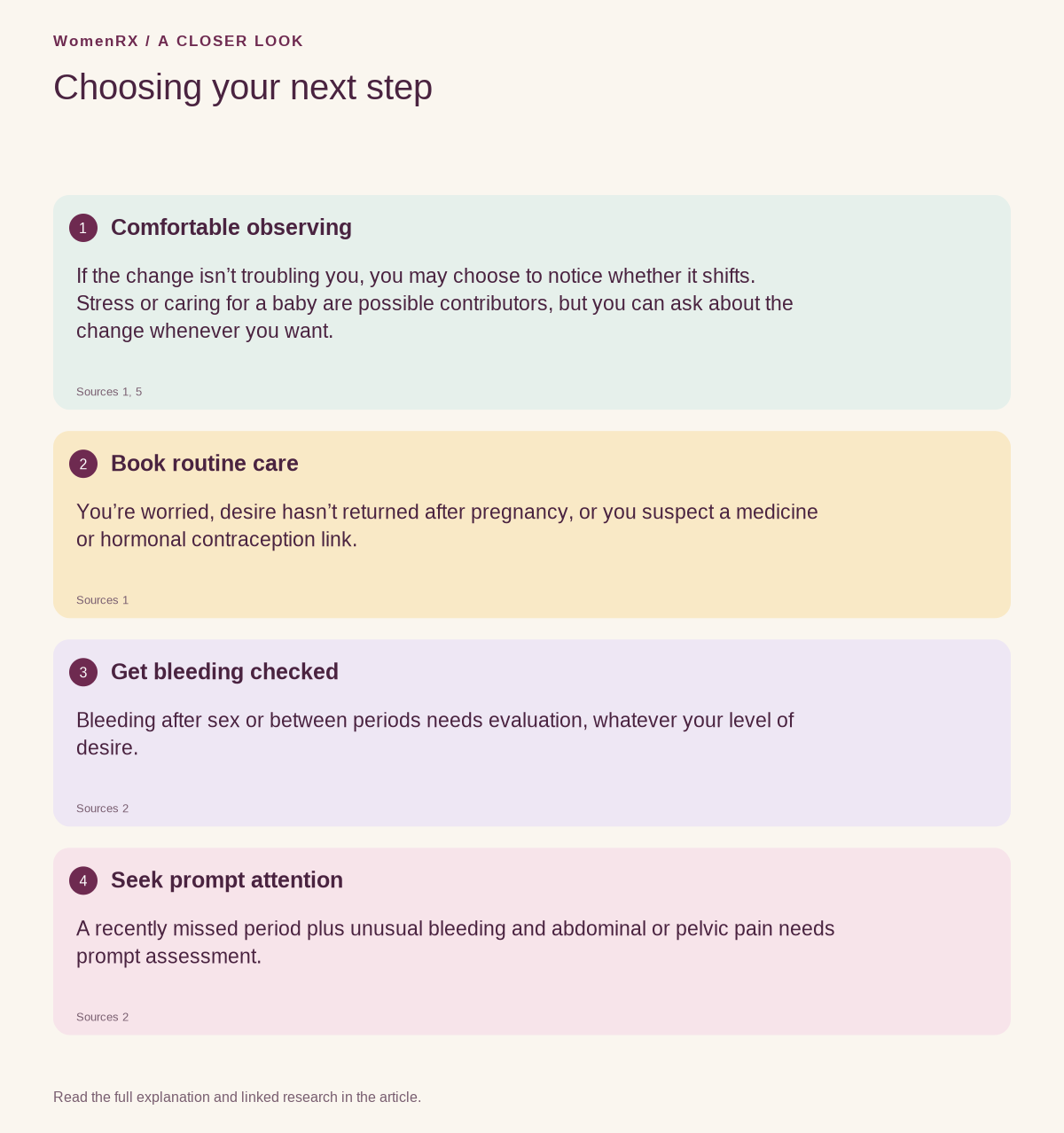
Choosing your next step
Comfortable observing: If the change isn’t troubling you, you may choose to notice whether it shifts. Stress or caring for a baby are possible contributors, but you can ask about the change whenever you want.15
Book routine care: You’re worried, desire hasn’t returned after pregnancy, or you suspect a medicine or hormonal contraception link.1
Get bleeding checked: Bleeding after sex or between periods needs evaluation, whatever your level of desire.2
Seek prompt attention: A recently missed period plus unusual bleeding and abdominal or pelvic pain needs prompt assessment.2
Read the figure as text
Use the branch that fits what’s happening now; these are choices, not stages you must pass through.- Comfortable observing: If the change isn’t troubling you, you may choose to notice whether it shifts. Stress or caring for a baby are possible contributors, but you can ask about the change whenever you want.15
- Book routine care: You’re worried, desire hasn’t returned after pregnancy, or you suspect a medicine or hormonal contraception link.1
- Get bleeding checked: Bleeding after sex or between periods needs evaluation, whatever your level of desire.2
- Seek prompt attention: A recently missed period plus unusual bleeding and abdominal or pelvic pain needs prompt assessment.2
Sources you can check
- Low sex drive (loss of libido) - NHSAccessed 2026-09-25Return to first citation
- Vaginal bleeding between periods or after sex - NHSAccessed 2026-09-25Return to first citation
- Antidepressants - NHSAccessed 2026-09-25Return to first citation
- Clinical trial evidence on emerging pharmacological therapies for hypoactive sexual desire disorder in women: a systematic review and analysis of completed studies registered on ClinicalTrials.gov.Ashour AM. · Frontiers in medicine · 2026Return to first citation
- Incidence and Predictors of Low Sexual Desire and Hypoactive Sexual Desire Disorder in Women: A Systematic Review and Meta-Analysis.Tetik S, Yalçınkaya Alkar Ö. · Journal of sex & marital therapy · 2023Return to first citation
- Genitourinary syndrome of menopause and sexual function, partner knowledge, and the impact on coupled sexual relationships.Costa-Paiva L, Perini MP, de Padua KS, Valadares ALR. · Menopause (New York, N.Y.) · 2025Return to first citation