Joint Pain During Perimenopause: What to Check
Aches can occur during the menopause transition, but the pain pattern and any swelling matter more than timing alone.
Joint aches can occur during perimenopause, but their timing doesn’t tell you what’s causing them. Notice which joints hurt, whether pain follows activity or rest, and whether a joint is swollen or hot. A hot, swollen, painful joint needs urgent assessment. Severe joint pain after an injury, or being unable to bear weight on a joint, calls for immediate emergency care. 1 4
Menopause is context, not a diagnosis
Joint aches can occur during perimenopause and menopause. A review of menopause-related joint pain discusses possible links with changing sex hormones and with age-related muscle loss. Those links may help explain why some women notice aches in midlife, but they cannot tell you why your joint hurts. Injuries and joint conditions are other possibilities. 1 4
The most useful distinction is often not whether the pain began alongside other perimenopause symptoms. It’s what the joint does: when it hurts, what happens after you’ve been still, and whether it looks swollen or feels hot. 1
Patterns worth noticing
These are clues to describe, not a way to diagnose yourself:
- Worse with walking, with stiffness after activity: This can fit an osteoarthritis pattern. 1
- Stiff on both sides after being still: Pain and stiffness that worsen after inactivity, including on waking, can fit a rheumatoid arthritis pattern. 1
- Suddenly very painful, hot, and swollen at the big toe: Gout is one possible cause. 1
- Pain with swelling or bruising after intense or repetitive activity: A sprain or strain may be involved. 1
Patterns can overlap. For example, the fact that pain is worse in the morning does not, by itself, identify a condition. If you seek care, it helps to describe where the pain is, when it started, what makes it worse, and whether you can see swelling or bruising. Your description helps guide an assessment. 1 2
What may help depends on the cause
There isn’t one perimenopause joint-pain treatment that fits every pattern. Pain management depends on what is causing the pain; physical therapy is one non-drug option that may be considered. That makes it more useful to address a persistent or disruptive ache as joint pain than to assume you must wait out a hormonal symptom. 1 2
The North American Menopause Society’s 2022 position statement summary identifies hormone therapy benefits for bothersome hot flashes and genitourinary symptoms, and for preventing bone loss and fracture. It does not address whether hormone therapy relieves joint pain, so it can’t answer that question. If hormone therapy is part of a conversation about other menopausal symptoms, an aching joint still deserves its own look. 3
Know which changes should not wait
Get urgent medical assessment for a painful joint that is hot and swollen, even if you do not have a fever. Feeling feverish, chilled, or generally unwell alongside joint pain adds concern. 1
Seek immediate emergency care for very bad joint pain after a fall or injury, or if you cannot walk or put weight on a joint. This is a more immediate threshold than an ache that needs a routine appointment. 1
Arrange a non-emergency evaluation if pain is affecting sleep or ordinary activities, getting worse, or repeatedly returning. You do not need to settle the question of “hormones or arthritis” before getting help with pain that is changing your day. 1
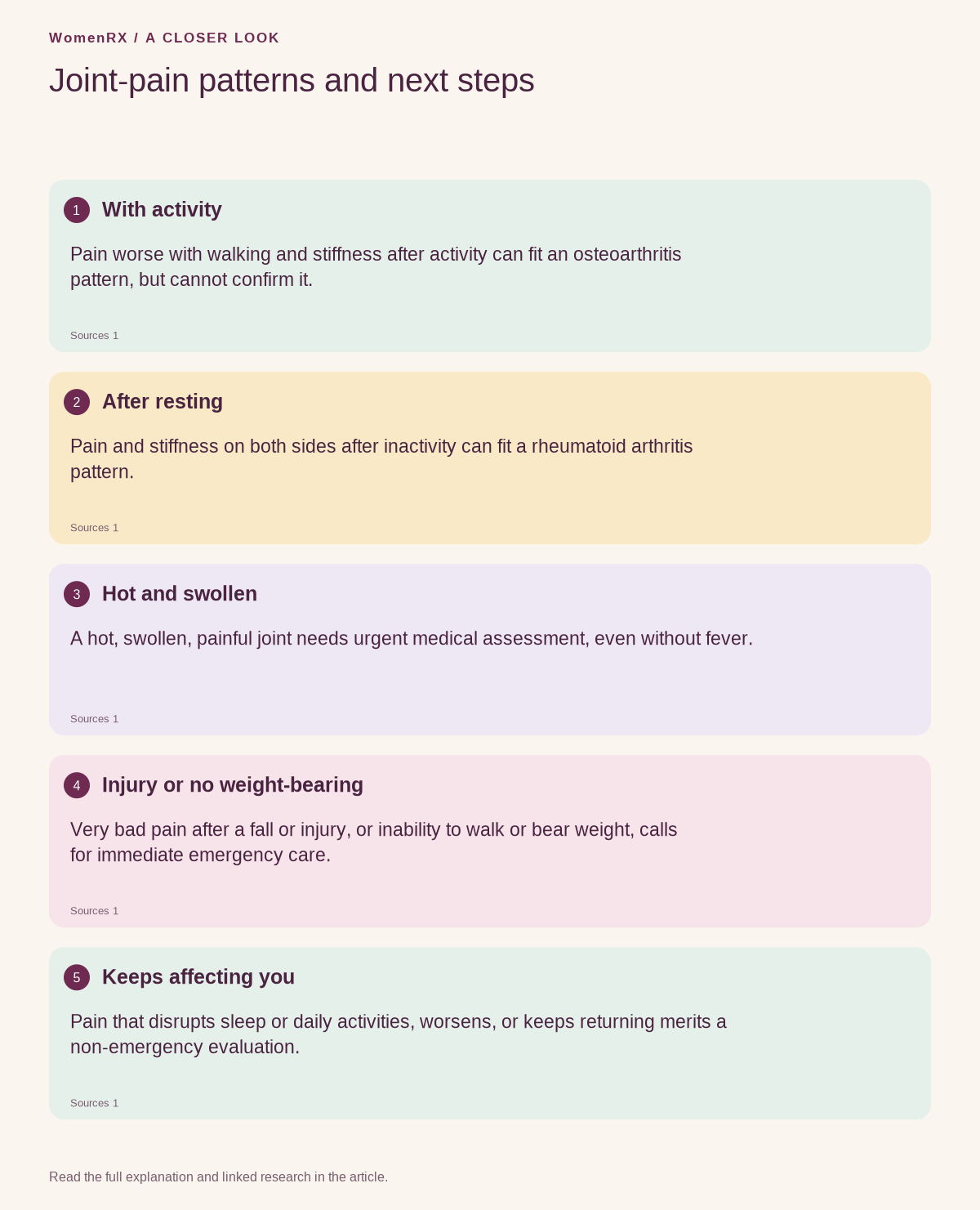
Joint-pain patterns and next steps
With activity: Pain worse with walking and stiffness after activity can fit an osteoarthritis pattern, but cannot confirm it.1
After resting: Pain and stiffness on both sides after inactivity can fit a rheumatoid arthritis pattern.1
Hot and swollen: A hot, swollen, painful joint needs urgent medical assessment, even without fever.1
Injury or no weight-bearing: Very bad pain after a fall or injury, or inability to walk or bear weight, calls for immediate emergency care.1
Keeps affecting you: Pain that disrupts sleep or daily activities, worsens, or keeps returning merits a non-emergency evaluation.1
Read the figure as text
Use these features to describe the pain and distinguish a routine evaluation from urgent or immediate care.- With activity: Pain worse with walking and stiffness after activity can fit an osteoarthritis pattern, but cannot confirm it.1
- After resting: Pain and stiffness on both sides after inactivity can fit a rheumatoid arthritis pattern.1
- Hot and swollen: A hot, swollen, painful joint needs urgent medical assessment, even without fever.1
- Injury or no weight-bearing: Very bad pain after a fall or injury, or inability to walk or bear weight, calls for immediate emergency care.1
- Keeps affecting you: Pain that disrupts sleep or daily activities, worsens, or keeps returning merits a non-emergency evaluation.1
Sources you can check
- Joint pain - NHSAccessed 2026-09-25Return to first citation
- Pain | MedlinePlusAccessed 2026-09-25Return to first citation
- The 2022 hormone therapy position statement of The North American Menopause Society.“The 2022 Hormone Therapy Position Statement of The North American Menopause Society” Advisory Panel. · Menopause (New York, N.Y.) · 2022Return to first citation
- Arthralgia of menopause - A retrospective review.Blumer J. · Post reproductive health · 2023Return to first citation