Itchy Skin in Perimenopause: What Might Be Causing It?
Itching can happen for many reasons, so where it itches and what the skin looks like are more useful clues than timing alone.
Itchy skin isn’t proof that perimenopause is the cause. Dry or irritated skin, a skin condition, an allergy, a medicine, and some health conditions can all cause itching. Itching after menopause is recognized, and menopause-related changes can cause vulvovaginal itching, but that doesn’t explain every itch elsewhere. Notice whether there’s a rash, where the itch is, and what seems to trigger it. 1 2 4
Start with where the itch is and what you can see
A new itch during perimenopause can feel like a hormone clue, but timing by itself can’t identify the cause. Itchy skin has many possible explanations, including dry skin, eczema or psoriasis, an allergic reaction, irritating products, and reactions to medicines. Some nervous-system conditions can also cause itching. 1 The NHS describes itching as common after menopause, but that doesn’t establish that a particular itch during perimenopause is hormonal. 2
Look at the skin in good light, including the area around the itch. Note whether it looks unchanged, dry or cracked, bumpy, swollen, or irritated. These observations won’t diagnose the cause, but they can help distinguish a visible skin problem from itching without an obvious rash.
If you can see a rash or skin change
A rash, bumps, swelling, or irritated patches can point toward a skin reaction or a skin condition. Possibilities include hives, heat rash, eczema, psoriasis, fungal infections, and insect or parasite-related conditions. 2 A new soap, cosmetic, laundry product, clothing fabric, or medicine may also be worth noting because irritants, chemicals, and medicines are among recognized causes. 1
Itching and skin changes on the vulva deserve particular attention. Vulvar itching can occur with inflammatory skin conditions such as contact dermatitis, lichen sclerosus, and lichen planus, as well as with other vulvovaginal disorders. 6 Menopause-related changes can also cause vulvovaginal dryness, irritation, and itching. That is a localized possibility, not an explanation for itching across the body. The cited discussion concerns postmenopausal changes, so it does not establish how often this happens during perimenopause. 4
If vulvar itching persists or the skin looks changed, arrange an examination rather than assuming it is a yeast infection or a hormone symptom. Different conditions can feel similar and may need different treatment. 6
If there’s no obvious rash
Skin can itch even when you can’t see a clear change. Dryness is one possible cause; a medicine or a health condition may also be involved. 1 The absence of a rash doesn’t rule out a cause, and it doesn’t point specifically to perimenopause.
For a few days, keep a simple note of where you itch, when it happens, what the skin looks like, and anything new around that time, such as a medicine or skincare product. Also note whether the itch is limited to one area or widespread, and whether it comes with other symptoms. This isn’t a diagnostic test; it’s a practical way to spot a possible pattern and describe it clearly if you seek care.
Try gentle steps while you watch the pattern
A cool compress may ease the sensation. Pat or tap rather than scratch, and reduce exposure to high heat, irritating fabrics, and products that seem to aggravate the skin. 1 If perfumed soap or moisturizer might be irritating the area, try avoiding it. 2 These steps may soothe skin, but improvement doesn’t prove what caused the itch.
An antihistamine isn’t a universal answer: itching has causes other than allergies, and medicines for allergy symptoms are not a general fix for every kind of itch. 1 3 If you’re considering one, ask a pharmacist or prescriber whether it fits your situation, particularly if you take other medicines. 3
When to get help
Contact a healthcare provider if the itching is severe, lasts more than a few weeks, or has no apparent cause. 1 It’s also reasonable to seek an assessment sooner if you see persistent changes on the vulvar skin, since several skin conditions and other vulvovaginal problems can cause itching. 6 If you’re unsure what you’re seeing, describe the location and pattern rather than trying to diagnose it yourself. 2
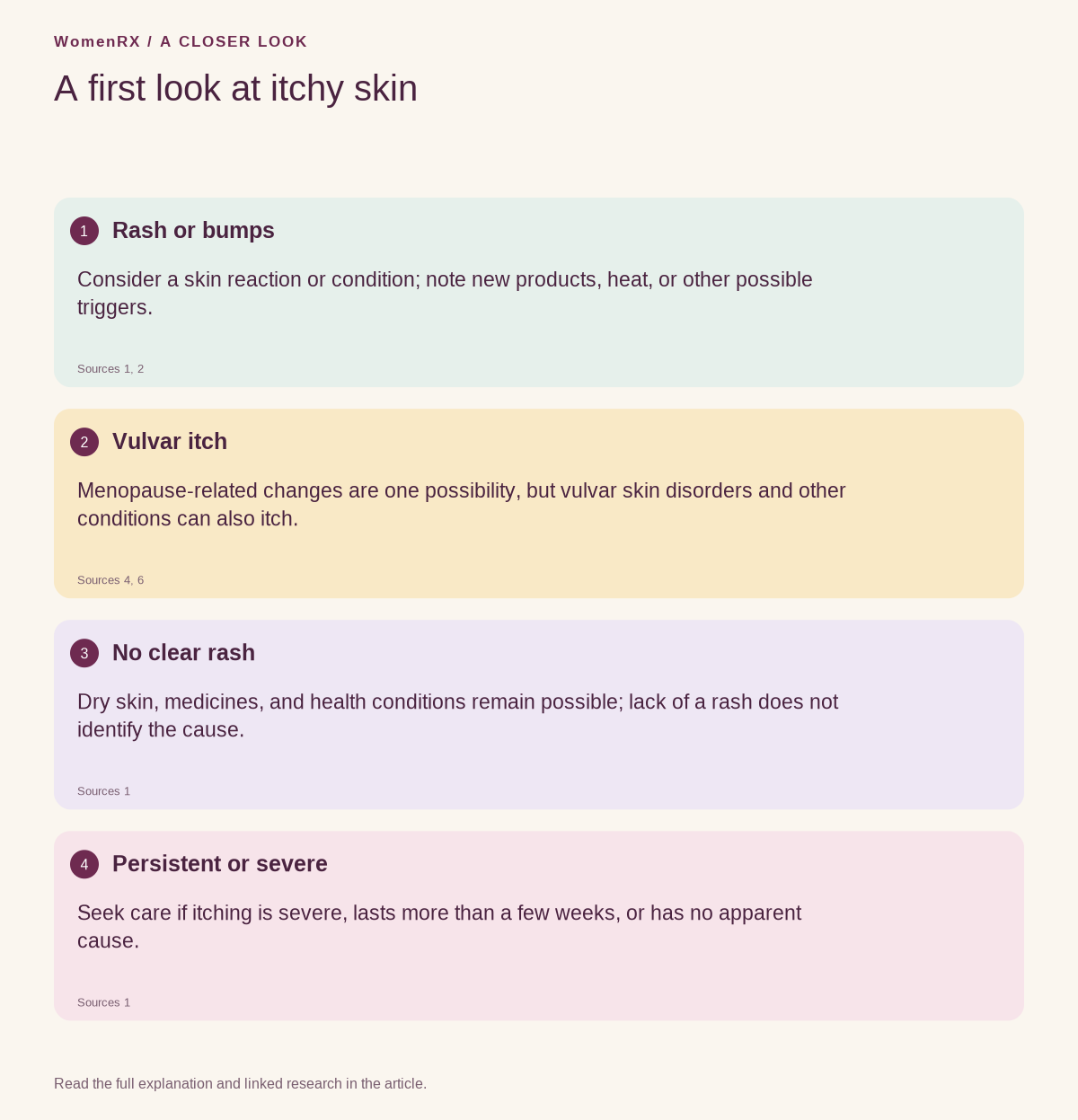
A first look at itchy skin
Rash or bumps: Consider a skin reaction or condition; note new products, heat, or other possible triggers.12
Vulvar itch: Menopause-related changes are one possibility, but vulvar skin disorders and other conditions can also itch.46
No clear rash: Dry skin, medicines, and health conditions remain possible; lack of a rash does not identify the cause.1
Persistent or severe: Seek care if itching is severe, lasts more than a few weeks, or has no apparent cause.1
Read the figure as text
Use location, visible changes, and the pattern over time to choose a sensible next step, not to diagnose yourself.- Rash or bumps: Consider a skin reaction or condition; note new products, heat, or other possible triggers.12
- Vulvar itch: Menopause-related changes are one possibility, but vulvar skin disorders and other conditions can also itch.46
- No clear rash: Dry skin, medicines, and health conditions remain possible; lack of a rash does not identify the cause.1
- Persistent or severe: Seek care if itching is severe, lasts more than a few weeks, or has no apparent cause.1
More questions, answered
Does itchy skin mean I need hormone therapy?
No. Itching alone doesn’t show that hormones are the cause or that hormone therapy is appropriate. Menopause-related treatment recommendations concern specific symptoms and are individualized; they don’t make hormone therapy a general treatment for unexplained itching. 5
What should I write down before seeking care?
Note where the itch is, when it started, whether there’s a rash or other skin change, and any new products or medicines around the same time. These details can help explain the pattern, but they can’t diagnose the cause on their own. 1 2
Sources you can check
- Itching | Pruritus | Itchy skin | MedlinePlusAccessed 2026-09-25Return to first citation
- Itchy skin - NHSAccessed 2026-09-25Return to first citation
- Antihistamines - NHSAccessed 2026-09-25Return to first citation
- Microablative fractional radiofrequency for the genitourinary syndrome of menopause: protocol of randomised controlled trial.Sarmento ACA, Fernandes FS, Costa APF, Medeiros KS, Crispim JC, Gonçalves AK. · BMJ open · 2021Return to first citation
- The 2022 hormone therapy position statement of The North American Menopause Society.“The 2022 Hormone Therapy Position Statement of The North American Menopause Society” Advisory Panel. · Menopause (New York, N.Y.) · 2022Return to first citation
- Diagnosis and Management of Vulvar Skin Disorders: ACOG Practice Bulletin, Number 224.American College of Obstetricians and Gynecologists' Committee on Practice Bulletins, Gynecology. · Obstetrics and gynecology · 2020Return to first citation