Itchy Skin Around Menopause: Causes and Relief
Menopause can coincide with dry, itchy skin, but the pattern and any visible changes can point to other causes.
Dryness can make skin itchy, and a review links menopause with both dry skin and itching. But menopause alone doesn’t explain every itch: rashes, allergies, medicine reactions, and some health conditions can also be involved. Try a fragrance-free moisturizer and reduce common irritants. Get the itch checked if it’s widespread, persistent, severe, or comes with a concerning rash or swelling. 125
Menopause may be part of the picture, not the whole answer
If your skin feels tight, rough, or flaky and itching began around the same time as other midlife changes, dryness is one reasonable possibility. A review of research on menopause and skin reports associations between menopause, dry skin (xerosis), and itching. It describes skin changes linked with lower estrogen, but an association doesn’t establish that menopause is the cause of your particular itch. 5
Itching is a symptom, not a diagnosis. Dry or irritated skin is one cause, but eczema, psoriasis, fungal infections, hives, insect bites, and allergic reactions can also itch. Some medicines can trigger reactions, and conditions affecting nerves or the thyroid, liver, or kidneys are among other possible causes. 12
Match the first steps to what you notice
Dry, rough, or flaky skin without a new rash: Try a plain, fragrance-free moisturizer and stop perfumed soaps, deodorants, or skin products that may irritate you. A cool compress may soothe the area. Pat or tap instead of scratching, and avoid irritating fabrics and high heat or humidity. These steps may help when dryness or irritation is contributing to the itch; they won’t identify or treat every cause. 12
A new rash, raised welts, or swelling: Don’t assume this is ordinary menopausal dryness. A rash or swelling can help distinguish possible causes, including an allergic reaction or a skin condition, but appearance alone may not tell you which one. Get medical advice if the change worries you, keeps returning, or accompanies persistent itching. 12
Itching all over, especially without an obvious skin cause: Arrange a routine medical review rather than attributing it to menopause. Widespread itch can have causes beyond the skin; a clinician may examine your skin, ask about other symptoms and medicines, and decide whether tests are useful. 12
Throat tightness or trouble swallowing with a sudden allergic-type reaction: Seek emergency care. These can be signs of a serious allergic reaction. 4
Make a small, low-irritation routine
For a few days, keep the routine simple: use a fragrance-free moisturizer, pause scented products, and choose clothing that doesn’t rub the itchy area. If a new product seems to make things worse, stop using it. This can reduce possible irritation without treating menopause as the explanation. A cold compress and patting rather than scratching can offer extra short-term relief. 12
An antihistamine isn’t a universal fix for itch. It may help with some causes, such as allergy-related symptoms, but it won’t establish why you’re itchy. Cetirizine is used for allergy symptoms, including hives, and can still make some people sleepy despite being described as less likely to cause sleepiness than some other antihistamines. 234
When to get the itch checked
Seek routine care if itching affects daily life, is all over your body, keeps coming back, or doesn’t improve with self-care. MedlinePlus advises contacting a healthcare provider for severe itch, itch without an apparent cause, or itch that hasn’t gone away after a few weeks. A new rash, lump, or swelling that concerns you is another reason to get advice. 12
The useful distinction is not simply whether you’re in menopause. Notice whether there’s visible dryness or a new rash, whether the itch is in one area or widespread, and whether a product or medicine changed around the same time. Those clues can help guide the next step, but persistent or unexplained itching deserves an assessment rather than a menopause label. 125
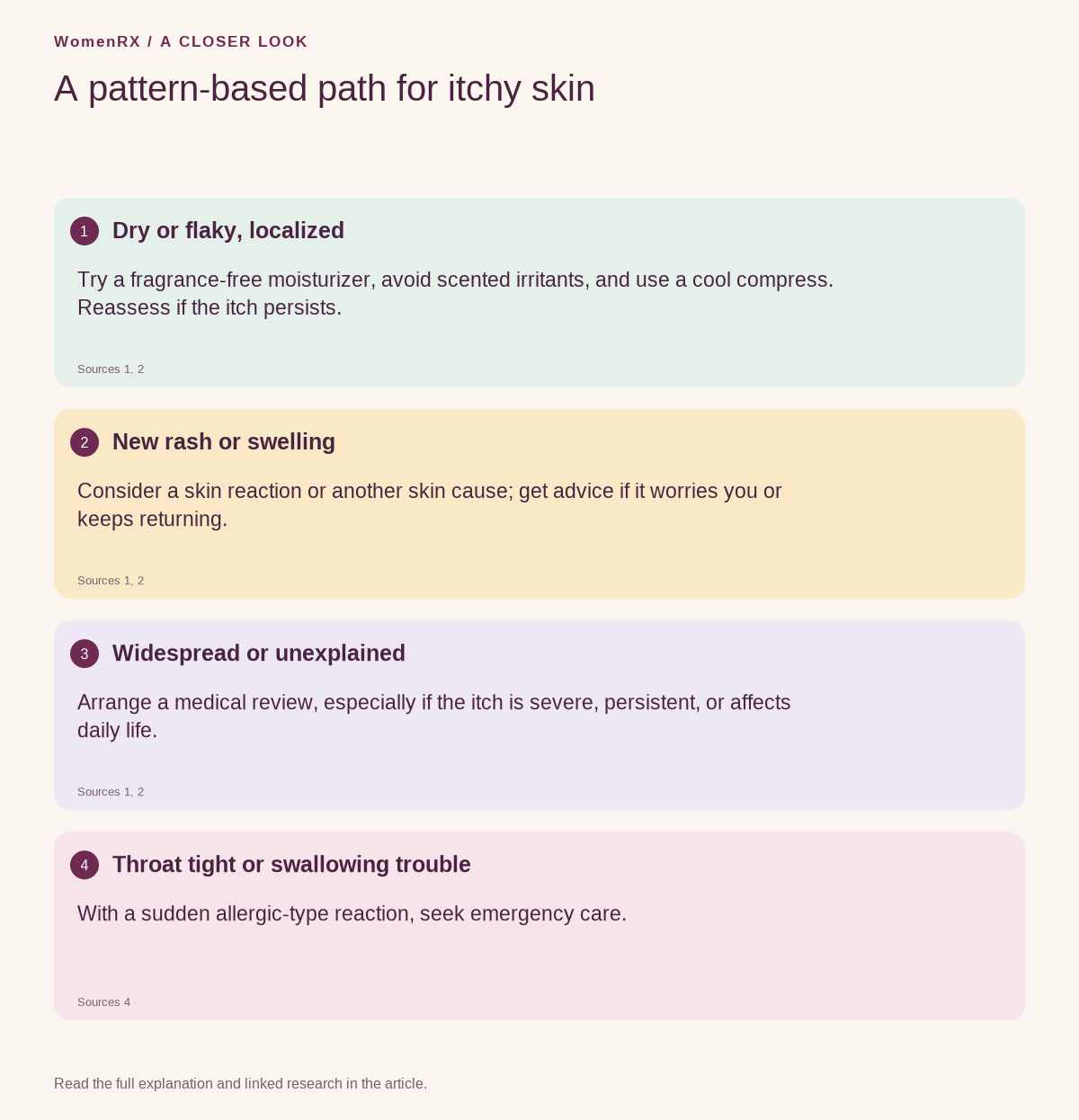
A pattern-based path for itchy skin
Dry or flaky, localized: Try a fragrance-free moisturizer, avoid scented irritants, and use a cool compress. Reassess if the itch persists.12
New rash or swelling: Consider a skin reaction or another skin cause; get advice if it worries you or keeps returning.12
Widespread or unexplained: Arrange a medical review, especially if the itch is severe, persistent, or affects daily life.12
Throat tight or swallowing trouble: With a sudden allergic-type reaction, seek emergency care.4
Read the figure as text
Use the skin pattern and any accompanying symptoms to choose a sensible next step; these clues don’t diagnose the cause.- Dry or flaky, localized: Try a fragrance-free moisturizer, avoid scented irritants, and use a cool compress. Reassess if the itch persists.12
- New rash or swelling: Consider a skin reaction or another skin cause; get advice if it worries you or keeps returning.12
- Widespread or unexplained: Arrange a medical review, especially if the itch is severe, persistent, or affects daily life.12
- Throat tight or swallowing trouble: With a sudden allergic-type reaction, seek emergency care.4
More questions, answered
Will cetirizine help menopause-related itching?
Not necessarily. Cetirizine treats allergy symptoms, including hives; it isn’t a general treatment for every kind of itch. It can also make some people sleepy. If the cause is unclear or the itching continues, seek medical advice rather than relying on an antihistamine to explain it. 234
Does itchy skin mean I’m in menopause?
No. Itching is linked with menopause in a skin review, but it also has many other possible causes, including dry skin, skin conditions, allergies, medicine reactions, and some health conditions. Itch by itself can’t establish that menopause is the cause. 125
Sources you can check
- Itching | Pruritus | Itchy skin | MedlinePlusAccessed 2026-09-25Return to first citation
- Itchy skin - NHSAccessed 2026-09-25Return to first citation
- About cetirizine - NHSAccessed 2026-09-25Return to first citation
- Side effects of cetirizine - NHSAccessed 2026-09-25Return to first citation
- Menopause, skin and common dermatoses. Part 2: skin disorders.Kamp E, Ashraf M, Musbahi E, DeGiovanni C. · Clinical and experimental dermatology · 2022Return to first citation