Is Telehealth Right for Your Women's Health Concern?
A remote visit can be a useful first step, but some symptoms need an examination, testing, or urgent in-person care.
Telehealth can help you explain symptoms, discuss possible next steps, and arrange follow-up. It has evidence for specific uses, including postpartum depression care and some pregnancy follow-up, but that doesn’t mean every reproductive or menopause-related concern can be handled remotely. Choose a visit that can connect you to in-person exams, tests, or urgent care when needed. 6 7
Think of telehealth as a care pathway, not a test of whether your concern is serious
A remote appointment may be a good starting point when your symptoms are stable and you can describe them clearly. A clinician can take a history, discuss what needs checking, and help coordinate next steps. But whether a concern can be fully managed remotely depends on the symptoms and on whether an exam, lab work, imaging, or a procedure is needed.
That distinction matters because similar symptoms can have different causes. For example, bleeding between periods, unusually heavy or prolonged bleeding, and bleeding after menopause can have several causes. Evaluating abnormal bleeding may involve a pelvic exam, blood tests, imaging, or other procedures. A telehealth visit may help organize that evaluation, but it can’t perform those tests itself. 1 5
Research supports some specific remote-care uses, not a blanket claim that telehealth is equal to in-person care for every women’s health concern. A review of randomized trials found antenatal telehealth follow-up had similar results to face-to-face care for many maternal and newborn outcomes. A separate meta-analysis of 20 randomized trials involving 3,252 postpartum patients found telemedicine interventions helped treat postpartum depression and anxiety and improve functional impairment. Those findings apply to the care studied, not to every symptom or situation. 6 7
Match the visit to the concern
- Menstrual changes: A remote visit can be a starting point for describing when bleeding happens, how long it lasts, and how it differs from your usual pattern. Ask whether you’ll need an exam, blood tests, or imaging. Digital records can help make bleeding history clearer, but evidence for digital triage outcomes remains limited. 1 5
- Pregnancy-related concerns: Telehealth has been studied as part of antenatal follow-up, but the evidence doesn’t mean all pregnancy concerns should wait for a remote appointment. If you have bleeding during pregnancy, contact a care provider promptly. 1 6
- After childbirth: Remote care may be one way to access support for postpartum depression. Tell the clinician if you’re breastfeeding, since that can affect treatment choices. If you have thoughts of harming yourself or your baby, or confusion or hallucinations, seek emergency help rather than waiting for a routine appointment. 2 7
- Menopause-related concerns: A remote visit may be a useful place to describe what’s changed and ask what evaluation is needed. Don’t treat bleeding after menopause as just another symptom to monitor; abnormal bleeding can require diagnostic testing. 1
- Pelvic pain or changing vaginal discharge: These symptoms can have more than one cause, including infection or conditions involving other pelvic organs. Ask whether an exam or testing is needed, especially if symptoms are worsening or accompanied by unusual bleeding or discharge. 3 4
Before you book, check whether the service can complete the next step
The practical question isn’t only, “Can I have this conversation by video?” Ask what happens if the clinician decides you need an exam or testing.
- Clarify who you’ll see. Ask for the clinician’s name, credentials, and relevant experience with your concern. Confirm that they can provide care where you are during the visit.
- Ask about follow-through. Can the service arrange or coordinate in-person exams, lab work, imaging, or a specialist referral? Who will explain results, and how will you reach the care team if symptoms change?
- Ask about prescriptions without assuming one is appropriate. If medication might be part of care, ask whether the clinician can prescribe when indicated and what follow-up is available. A prescription alone may not answer a symptom that needs an examination or testing.
- Make a privacy plan that works for you. Ask how the visit is conducted and how appointment details, records, or billing communications may reach you. Choose a place where you can speak privately if possible. Don’t assume every service or situation offers the same privacy protections.
- Prepare a short symptom summary. Note when the concern began, what has changed, any related symptoms, and what you’ve tried. For bleeding, a record of timing and duration can help describe the pattern; self-entered tracking may be incomplete, so treat it as a memory aid rather than a diagnosis. 5
Know when remote-only care doesn’t fit
A video or phone visit shouldn’t delay urgent assessment for severe or sudden pelvic pain, fainting, heavy vaginal bleeding, or pelvic pain when you may be pregnant. Those symptoms can need urgent in-person evaluation. 4 If you’re pregnant and bleeding, contact a care provider right away. 1
For postpartum mental health symptoms, thoughts of suicide or harming your baby, or signs such as confusion or hallucinations need emergency help. MedlinePlus advises calling 911 or going to an emergency room for these situations. 2
For other concerns, a remote visit can still be useful even when it doesn’t provide the final answer. Before you end the appointment, make sure you know the next step, who is responsible for arranging it, and what change in symptoms means you should seek care sooner.
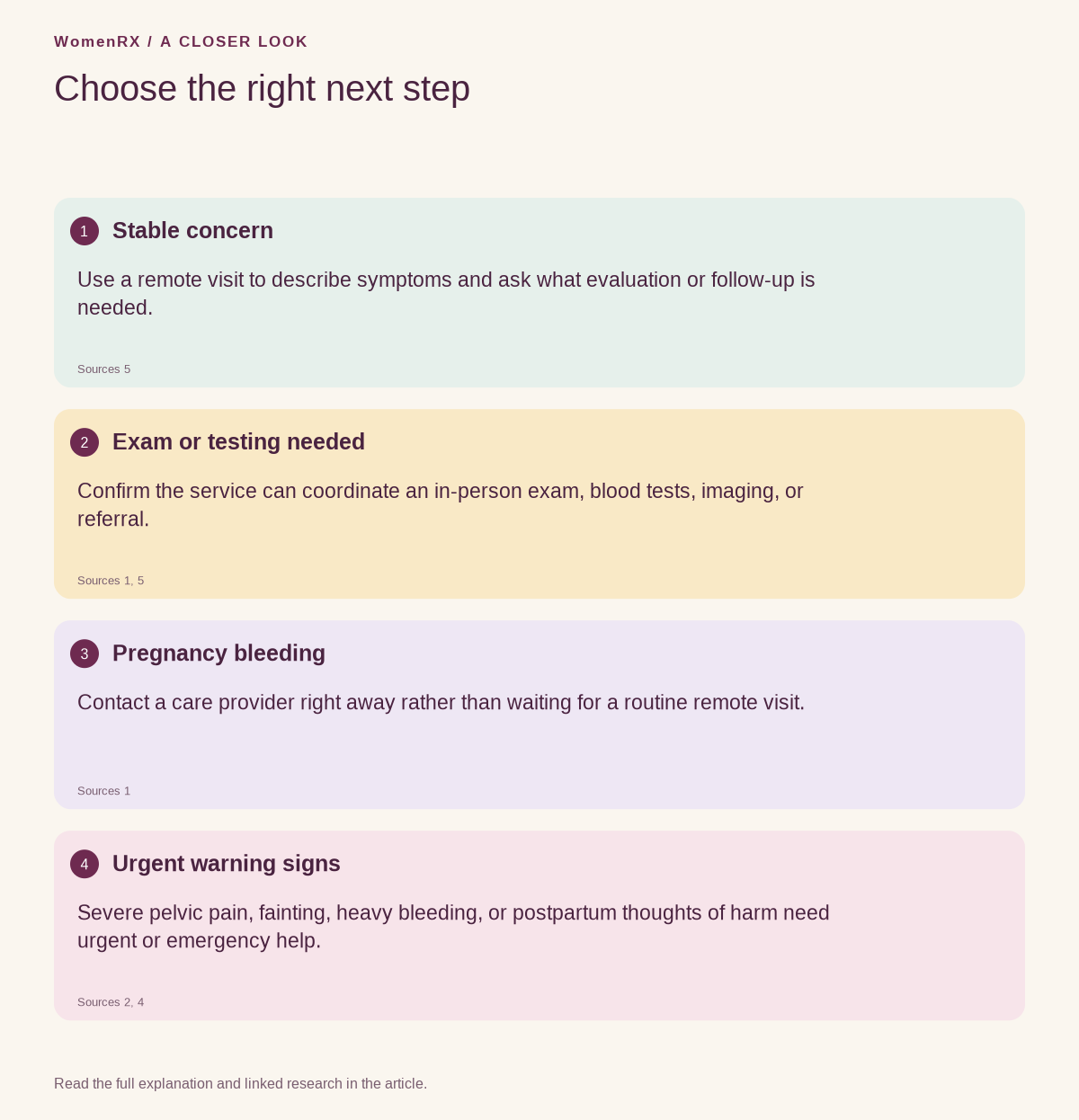
Choose the right next step
Stable concern: Use a remote visit to describe symptoms and ask what evaluation or follow-up is needed.5
Exam or testing needed: Confirm the service can coordinate an in-person exam, blood tests, imaging, or referral.15
Pregnancy bleeding: Contact a care provider right away rather than waiting for a routine remote visit.1
Urgent warning signs: Severe pelvic pain, fainting, heavy bleeding, or postpartum thoughts of harm need urgent or emergency help.24
Read the figure as text
Use symptoms and the next needed care step to decide whether telehealth is a reasonable start or whether in-person or emergency care is needed.- Stable concern: Use a remote visit to describe symptoms and ask what evaluation or follow-up is needed.5
- Exam or testing needed: Confirm the service can coordinate an in-person exam, blood tests, imaging, or referral.15
- Pregnancy bleeding: Contact a care provider right away rather than waiting for a routine remote visit.1
- Urgent warning signs: Severe pelvic pain, fainting, heavy bleeding, or postpartum thoughts of harm need urgent or emergency help.24
More questions, answered
Can a telehealth clinician diagnose a vaginal infection?
A remote visit can help discuss symptoms and decide what testing or examination may be needed, but discharge changes can have different causes. Ask whether the service can arrange appropriate testing or an in-person exam rather than relying on symptoms alone. 3
What should I do if bleeding starts during pregnancy?
Contact a care provider right away. Bleeding during pregnancy can have different causes, and it needs prompt assessment rather than waiting for a routine telehealth appointment. 1
Sources you can check
- Vaginal Bleeding | Uterine Fibroids | MedlinePlusAccessed 2026-09-25Return to first citation
- Postpartum Depression: MedlinePlusAccessed 2026-09-25Return to first citation
- Vaginal discharge - NHSAccessed 2026-09-25Return to first citation
- Pelvic pain - NHSAccessed 2026-09-25Return to first citation
- Digital Tools for the Recognition and Triage of Abnormal Uterine Bleeding: A Narrative Review.Zahoor H, Rajra SK. · Cureus · 2026Return to first citation
- The impact of antenatal telehealth services on maternal and neonatal outcomes, a comparison of results before and during the COVID-19 pandemic: A systematic review and meta-analysis (The impact of telehealth services on maternal and neonatal outcomes).Kurnaz D, Şenoğlu A, Karaçam Z. · Midwifery · 2024Return to first citation
- The effectiveness of telemedicine interventions on women with postpartum depression: A systematic review and meta-analysis.Liu X, Huang S, Hu Y, Wang G. · Worldviews on evidence-based nursing · 2022Return to first citation