Is Estradiol a Type of Estrogen?
Estrogen is the broader term, and estradiol is one specific estrogen; the treatment route or a lab result adds context the name alone can’t provide.
Yes. Estrogen is the broader term, and estradiol is a specific form used in some hormone treatments and measured in some lab tests. In menopause care, the route matters: systemic estrogen and low-dose vaginal estrogen are used for different symptoms. Estradiol levels can also vary during the menopause transition, so one result is only part of the picture. 1 3 4
The short version: a category and one specific hormone
“Estrogen” is the broad term. “Estradiol” names a specific hormone within that category. For example, a treatment description may identify estradiol as the estrogen delivered through a skin spray. The terms are related, not names for unrelated substances. 3
You may see “estrogen” in general information about menopause treatment and “estradiol” on a product or lab report. Knowing the specific name tells you which hormone is being discussed. It doesn’t tell you the route of treatment, its intended use, or what a blood result means on its own.
Why the route matters in menopause treatment
Menopause hormone therapy can contain estrogen alone or estrogen combined with a progestogen, which is a different hormone. Estrogen treatment can come in several forms, including skin patches, gels, sprays, tablets, and vaginal products. 1
The form helps explain what the treatment is meant to address. Low-dose vaginal estrogen can help with vaginal dryness, burning, or pain during sex. It isn’t expected to relieve symptoms such as hot flashes or sleep problems. Other forms, such as estrogen delivered through the skin, are systemic treatments. 1 Menopause hormone therapy decisions depend on factors beyond the hormone’s name, including the treatment route, timing, and whether a progestogen is used. 2
If you have a uterus and are using systemic estrogen, check whether the treatment plan also includes a progestogen. Guidance describes using both to help protect the womb lining. That point has an exception: the same guidance says low-dose vaginal estrogen can be used without a progestogen, even if you still have a uterus. 1
So if a prescription says “estradiol,” look at the rest of the product information to understand how it’s given and what it’s intended to treat. A vaginal estrogen product should not be assumed to contain estradiol based on the word “estrogen” alone.
What an estradiol result can tell you
An estradiol result is a measurement of that specific hormone at the time the sample was taken. During the menopause transition, estradiol levels can vary as ovarian function changes and eventually stops. A single result therefore captures one point in a changing process, not the full transition. 4
The number also doesn’t explain by itself why you’re having symptoms or which treatment is suitable. Menopause treatment choices are individualized, and the benefits and risks can vary with factors such as the route and timing of treatment and whether a progestogen is used. 2
If you’re reading a lab report, it may help to ask what question the test is meant to answer and how the result fits with your symptoms and menstrual history. If you’re reading a prescription, start with the product and route: those details provide information the word “estradiol” alone doesn’t.
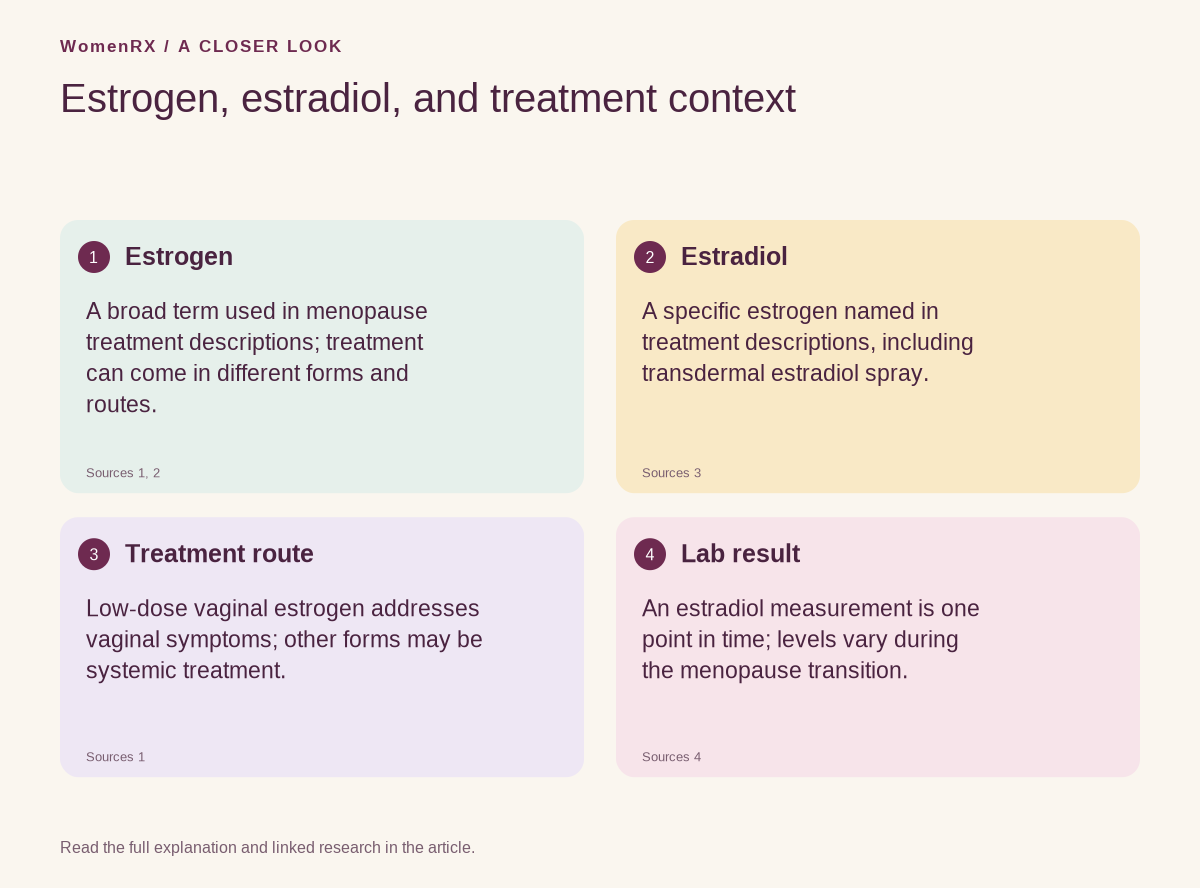
Estrogen, estradiol, and treatment context
Estrogen: A broad term used in menopause treatment descriptions; treatment can come in different forms and routes.12
Estradiol: A specific estrogen named in treatment descriptions, including transdermal estradiol spray.3
Treatment route: Low-dose vaginal estrogen addresses vaginal symptoms; other forms may be systemic treatment.1
Lab result: An estradiol measurement is one point in time; levels vary during the menopause transition.4
Read the figure as text
Separate the broad hormone term from the specific hormone name, then look at route and context for more information.- Estrogen: A broad term used in menopause treatment descriptions; treatment can come in different forms and routes.12
- Estradiol: A specific estrogen named in treatment descriptions, including transdermal estradiol spray.3
- Treatment route: Low-dose vaginal estrogen addresses vaginal symptoms; other forms may be systemic treatment.1
- Lab result: An estradiol measurement is one point in time; levels vary during the menopause transition.4
More questions, answered
Does an estradiol prescription mean I’m taking estrogen?
Yes. Estradiol is a specific estrogen. The product’s form and route tell you more about how it’s used; for example, low-dose vaginal estrogen is used for vaginal symptoms, while other forms may be systemic treatment. 1 3
Does one estradiol test tell me whether I’m in menopause?
One result measures estradiol at a particular time. Since levels can vary during the menopause transition, the result is only part of the picture and needs to be considered in context. 4
Sources you can check
- Types of hormone replacement therapy (HRT) - NHSAccessed 2026-09-25Return to first citation
- The 2022 hormone therapy position statement of The North American Menopause Society.“The 2022 Hormone Therapy Position Statement of The North American Menopause Society” Advisory Panel. · Menopause (New York, N.Y.) · 2022Return to first citation
- Estradiol transdermal spray for menopausal symptom management: From RCT to real-world evidence.Hirschberg AL, Stute P, Águas F, Fait T, Polo-Kantola P, Amorim FG, Rézette I, Hadji P. · Maturitas · 2026Return to first citation
- Introduction to special issue: the influence of menopause and other hormonal changes on neuropsychological functioning.Sullivan-Baca E, Ellison RL. · Journal of clinical and experimental neuropsychology · 2026Return to first citation