Type 2 Diabetes: From Testing to Protecting Your Health
A blood test can clarify whether you have diabetes, while ongoing care looks beyond glucose to your heart, kidneys, eyes, and feet.
Thirst, frequent urination, fatigue, or unexplained weight loss are reasons to ask about a blood glucose test, but symptoms alone can’t diagnose type 2 diabetes. You may also need testing if you have risk factors and feel well. If diabetes is confirmed, discuss glucose treatment alongside heart and kidney risk, eye screening, and foot health. A history of gestational diabetes or PCOS can also shape testing conversations. 678910
Start with the test, not a guess
Type 2 diabetes can develop gradually, and some people have no noticeable symptoms. Feeling unusually thirsty, urinating more often, fatigue, unexplained weight loss, blurred vision, or slow-healing cuts are reasons to ask about testing. A blood test, rather than symptoms alone, is used to diagnose diabetes. Family history, high blood pressure, and a history of gestational diabetes are also worth mentioning when you discuss whether you need testing. 65
If a result is described as prediabetes, that means blood glucose is higher than normal but not high enough for a diabetes diagnosis. It’s a chance to discuss changes that may help lower your risk, not the same diagnosis as type 2 diabetes. 6
Treatment has more than one job
After a diagnosis, one question is how to manage your blood glucose. Another is how to protect the rest of your health. Food choices, physical activity, and not smoking are part of diabetes care; medication may be needed too. The treatment plan can change as your health and glucose levels change, so ask what each part of it is meant to accomplish. 78
To make glucose follow-up less vague, ask which result you’ll review at checkups, such as HbA1c, and how you’ll tell whether treatment is working. HbA1c monitoring is one routine process of diabetes care, but that doesn’t make one result the whole picture. 47
Medicine choices depend on more than a glucose result. Metformin helps your body handle insulin, while an SGLT2 inhibitor lowers glucose by allowing more of it to leave through urine. If you have a history of heart disease, a GLP-1 receptor agonist may be another option to discuss. It may also be considered when someone has obesity and other treatments haven’t lowered glucose enough. Insulin can be used for type 2 diabetes if other medicines don’t help enough. These are different treatment possibilities, not a required sequence for everyone. 7 Diabetes and high blood pressure are common causes of chronic kidney disease, and kidney care can include managing blood glucose, blood pressure, and cholesterol. 3
A useful distinction is glucose control versus complication prevention. Ask how you’ll know whether your glucose treatment is working, then ask separately what you’re doing to lower your heart and kidney risks. That second conversation can include your blood pressure and cholesterol results. If you have heart disease, ask whether it affects your glucose-lowering treatment choices. A reassuring glucose result doesn’t, by itself, answer both questions. 1378
Keep track of what each check protects
Regular checkups help assess treatment and find complications early. Type 2 diabetes can affect blood vessels, kidneys, sight, and feet. Rather than treating follow-up as one vague “diabetes check,” understand what your results say about blood vessel, kidney, and eye health, and which foot changes to report. 78
One way to follow the plan is to keep your glucose, blood pressure, and cholesterol results together and ask what has changed or needs attention. Keep kidney blood and urine results there too. The care needs behind those numbers differ: blood glucose reflects diabetes management, while blood pressure and cholesterol also matter to cardiovascular and kidney health. Your follow-up schedule and treatment targets should reflect your health and the results you’re seeing, rather than assuming every number needs the same response. 1378
Kidney disease often has no symptoms early on. Blood and urine tests provide different information: a blood test is used to estimate how well the kidneys filter, while a urine test can look for signs of damage, including protein. This is why feeling fine isn’t a reliable kidney check. 23 Diabetes can damage sight, and eye screening is one routine diabetes care process documented in a large Scottish study. Foot problems can include ulcers and infections. Ask when eye screening is due and what its result means for your care. Foot changes you notice matter too. 48
Don’t wait for a routine appointment if you notice a blister or cracked skin on your foot, worsening vision, or new pain, tingling, or numbness. These changes deserve a prompt conversation with your care team. If you have diabetes and become very thirsty and urinate a lot along with confusion, marked sleepiness, nausea, or shortness of breath, seek emergency care. Severe high-glucose complications can be life-threatening. 8
When pregnancy history, PCOS, or menopause matters
After gestational diabetes, the question is continued testing. Before pregnancy with type 2 diabetes, it is reviewing glucose management and medicines. 579
If you’ve had gestational diabetes, your risk of type 2 diabetes remains higher after pregnancy. Arrange blood glucose follow-up after birth and discuss continued testing even if an early result is normal. An umbrella review found that later diabetes risk varies among women with a history of gestational diabetes; factors repeatedly associated with higher risk included family history and higher glucose measurements during pregnancy. A past diagnosis is a reason for follow-up, not a prediction that you’ll develop type 2 diabetes. 59
PCOS is another reason to discuss glucose testing, including if you’re young or don’t have symptoms. Research reviews associate PCOS with glucose abnormalities, but recommendations differ on the best test and how often to repeat it. Evidence about later diabetes risk in women with PCOS who are at a normal weight is mixed, so weight alone doesn’t settle the testing conversation. PCOS does not, by itself, diagnose diabetes or dictate a diabetes medicine. 1011
Menopause belongs in the health picture without replacing the usual diabetes checks. If menopause happened before age 45, mention it when discussing heart risk: a review of cohort studies found an association between early menopause and heart failure among women with type 2 diabetes. That finding doesn’t establish a different diabetes treatment. A separate review found only small, uncertain metabolic effects of menopause hormone therapy in women with diabetes, so it isn’t a substitute for a diabetes treatment plan. 1312
If you have type 2 diabetes and are thinking about pregnancy, raise that plan early. Glucose management and medicines may need to be reviewed before pregnancy rather than after a positive test. 7
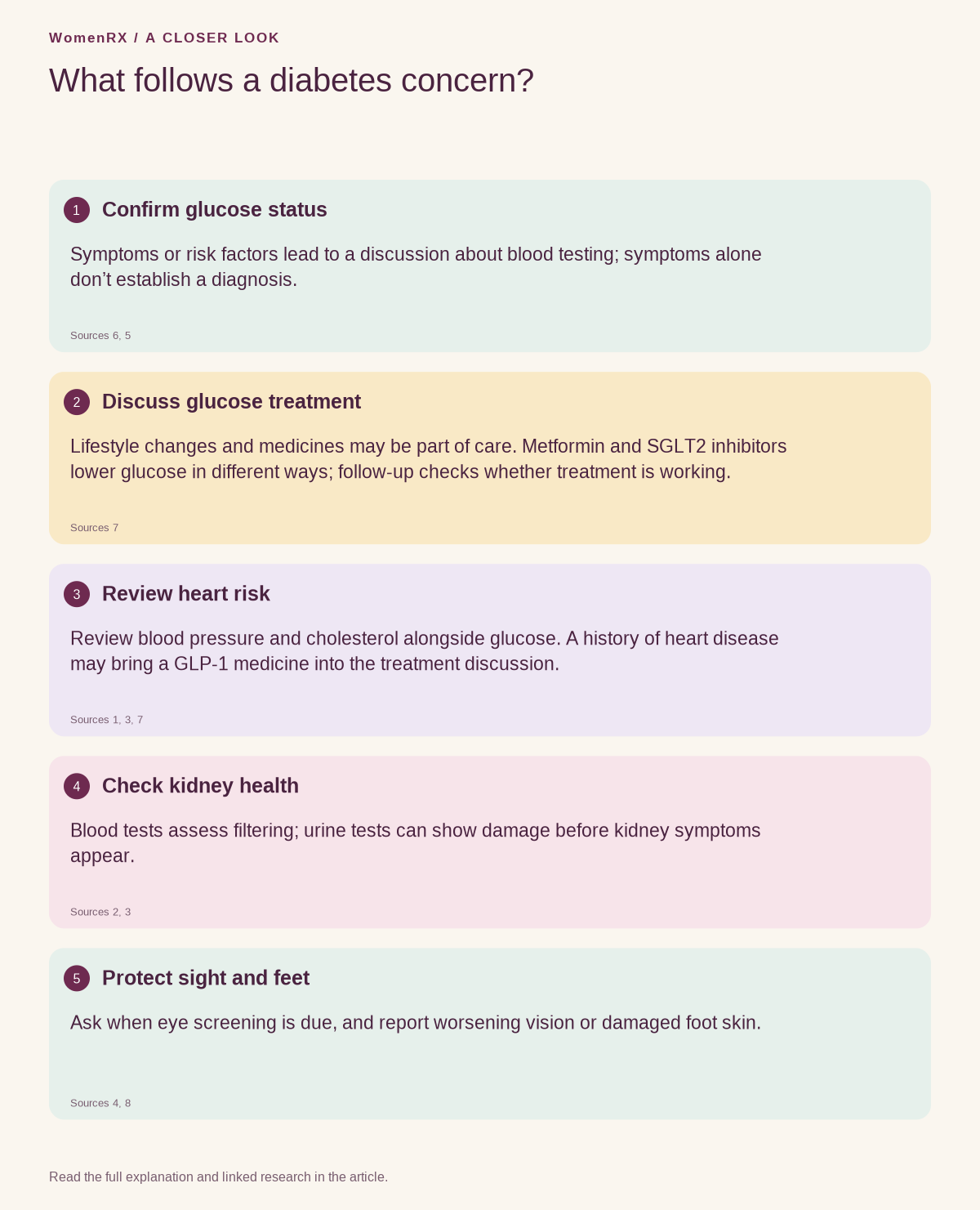
What follows a diabetes concern?
Confirm glucose status: Symptoms or risk factors lead to a discussion about blood testing; symptoms alone don’t establish a diagnosis.65
Discuss glucose treatment: Lifestyle changes and medicines may be part of care. Metformin and SGLT2 inhibitors lower glucose in different ways; follow-up checks whether treatment is working.7
Review heart risk: Review blood pressure and cholesterol alongside glucose. A history of heart disease may bring a GLP-1 medicine into the treatment discussion.137
Check kidney health: Blood tests assess filtering; urine tests can show damage before kidney symptoms appear.23
Protect sight and feet: Ask when eye screening is due, and report worsening vision or damaged foot skin.48
Read the figure as text
A pathway from confirming glucose status to choosing treatment and following the different parts of complication prevention.- Confirm glucose status: Symptoms or risk factors lead to a discussion about blood testing; symptoms alone don’t establish a diagnosis.65
- Discuss glucose treatment: Lifestyle changes and medicines may be part of care. Metformin and SGLT2 inhibitors lower glucose in different ways; follow-up checks whether treatment is working.7
- Review heart risk: Review blood pressure and cholesterol alongside glucose. A history of heart disease may bring a GLP-1 medicine into the treatment discussion.137
- Check kidney health: Blood tests assess filtering; urine tests can show damage before kidney symptoms appear.23
- Protect sight and feet: Ask when eye screening is due, and report worsening vision or damaged foot skin.48
Sources you can check
- Chronic kidney disease - Prevention - NHSAccessed 2026-09-25Return to first citation
- Chronic kidney disease - Diagnosis - NHSAccessed 2026-09-25Return to first citation
- Chronic Kidney Disease | Kidney Disease | CKD | MedlineplusAccessed 2026-09-25Return to first citation
- Ethnic disparities in quality of diabetes care in Scotland: A national cohort study.Scheuer SH, Fleetwood K, Wild SH, Jackson CA, Scottish Diabetes Research Network epidemiology group. · Diabetic medicine : a journal of the British Diabetic Association · 2024Return to first citation
- Global evidence on risk factors for the progression of gestational diabetes to type 2 diabetes: an umbrella review of systematic reviews and meta-analyses.Tamir TT, Zegeye AF, Tekeba B, Mekonen EG, Endalew HL, Bazezew AM, Zeleke GA, Wassie M, Kassie AT. · Diabetology & metabolic syndrome · 2026Return to first citation
- Symptoms of type 2 diabetes and how it's diagnosed - NHSAccessed 2026-09-25Return to first citation
- Treatment for type 2 diabetes - NHSAccessed 2026-09-25Return to first citation
- Complications of type 2 diabetes - NHSAccessed 2026-09-25Return to first citation
- Gestational diabetes - Treatment - NHSAccessed 2026-09-25Return to first citation
- Assessment of Type 2 Diabetes Risk in Young Women with Polycystic Ovary Syndrome.Livadas S, Paparodis R, Anagnostis P, Gambineri A, Bjekić-Macut J, Petrović T, Yildiz BO, Micić D, Mastorakos G, Macut D. · Diagnostics (Basel, Switzerland) · 2023Return to first citation
- Prospective Risk of Type 2 Diabetes in Normal Weight Women with Polycystic Ovary Syndrome.Glintborg D, Kolster ND, Ravn P, Andersen MS. · Biomedicines · 2022Return to first citation
- Menopause hormone therapy and type 2 diabetes risk and prognosis: systematic review and meta-analyses.Liang C, Dobson AJ, Doust J, Ribeiro LW, Mishra GD. · Diabetologia · 2026Return to first citation
- Association between early menopause and adverse cardiovascular events in postmenopausal women: a systematic review and meta-analysis stratified by smoking status and type 2 diabetes mellitus.Chen Z, Zhang X, Chen Y, Shi W, Ma C, Chen X, Yao S. · Frontiers in public health · 2026Return to first citation