Blood Sugar, Insulin, and Weight: What the Connection Means
Weight can affect type 2 diabetes risk, but it cannot tell you whether your blood sugar is normal or whether you have diabetes.
Glucose is sugar in your blood; insulin helps move it into cells to use for energy. When insulin doesn’t work well enough, glucose regulation can be affected, but weight alone can’t diagnose insulin resistance, prediabetes, or diabetes. Blood tests assess glucose directly. A history of gestational diabetes is also worth raising when discussing follow-up testing. 1 4 2
The connection, without treating weight as a diagnosis
After you eat, your body releases glucose into your bloodstream. Insulin, a hormone made by the pancreas, helps glucose enter cells to be used for energy. Diabetes develops when the body doesn’t make enough insulin, doesn’t use it effectively, or both, leaving too much glucose in the blood. 1
Insulin resistance describes insulin not working as effectively as it should. It is not the same thing as a diabetes diagnosis: a blood test measures glucose, while body weight cannot reveal what your glucose level is. Prediabetes is an intermediate state in which glucose concentrations are above normal but below the threshold for diabetes. It can be identified using an A1C test, fasting blood glucose, or a two-hour glucose test; different tests may not classify everyone the same way. 1 4
Overweight and obesity are risk factors for abnormal blood glucose, but risk is not certainty. A US study of screening describes a recommendation to test nonpregnant adults ages 40 to 70 who have overweight or obesity for abnormal blood glucose every three years. That’s a risk-based screening example, not a diagnosis based on weight, and it doesn’t answer what schedule is right for every person. 5
What a blood test can tell you
An A1C test estimates average blood glucose over about three months. Fasting glucose and an oral glucose tolerance test assess glucose in different ways. Ask which test was used, whether the result falls in the normal, prediabetes, or diabetes range, and whether another test or follow-up is appropriate. The categories depend on measured glucose, not a person’s appearance or weight. 1 4
Prediabetes is not a guarantee that diabetes will develop. Its course can vary, and the number of abnormal test criteria can change a person’s estimated risk. One review notes that there is no global consensus on the thresholds used to define prediabetes, so it can be useful to ask how your clinician interprets your specific result. 4
If you had gestational diabetes
Include gestational diabetes in your health history, even if your blood sugar returned to normal after pregnancy. It is a relevant reason to discuss postpartum and ongoing testing. As one example, UK NHS guidance recommends a diabetes blood test 6 to 13 weeks after birth, then yearly if the result is normal. That is UK guidance, not a US schedule; ask what follow-up is recommended for you where you receive care. 2
If you’re planning another pregnancy after gestational diabetes, the same NHS guidance recommends checking for diabetes before becoming pregnant and describes earlier screening in a subsequent pregnancy. You can ask whether testing before pregnancy or earlier screening is appropriate for your situation. 2
Symptoms and when to raise them
High blood glucose can cause thirst or blurred vision. Increased thirst, needing to urinate more often than usual, and dry mouth are also listed as possible symptoms in gestational-diabetes guidance. These symptoms don’t establish a diagnosis, but if they’re happening, bring them up rather than relying only on a future routine screening test. 1 2
A US medical-records study found that men were more likely than women to receive glucose testing in the group it studied. That finding describes testing patterns, not a sex difference in how glucose works or in diabetes risk. It doesn’t establish a distinct blood-sugar mechanism that applies to all women. 5
A practical conversation can start with: “Which test did I have, and what range is my result in?” If you’ve had gestational diabetes, add: “What follow-up testing fits that history?” These questions help keep the focus on your results and risk factors, rather than assuming weight tells the whole story.
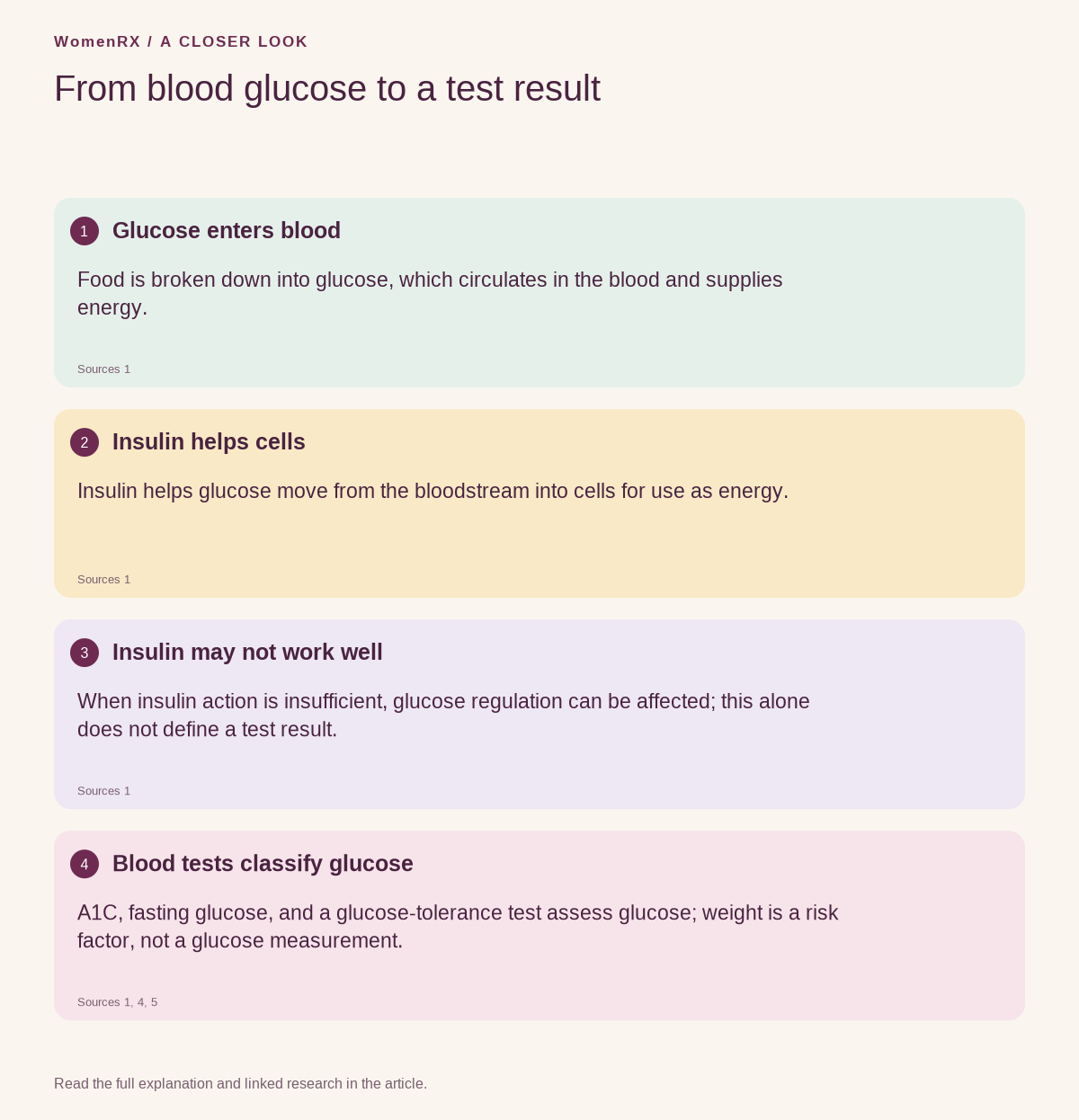
From blood glucose to a test result
Glucose enters blood: Food is broken down into glucose, which circulates in the blood and supplies energy.1
Insulin helps cells: Insulin helps glucose move from the bloodstream into cells for use as energy.1
Insulin may not work well: When insulin action is insufficient, glucose regulation can be affected; this alone does not define a test result.1
Blood tests classify glucose: A1C, fasting glucose, and a glucose-tolerance test assess glucose; weight is a risk factor, not a glucose measurement.145
Read the figure as text
This shows how glucose and insulin relate to cell energy, and why risk factors and diagnosis are different things.- Glucose enters blood: Food is broken down into glucose, which circulates in the blood and supplies energy.1
- Insulin helps cells: Insulin helps glucose move from the bloodstream into cells for use as energy.1
- Insulin may not work well: When insulin action is insufficient, glucose regulation can be affected; this alone does not define a test result.1
- Blood tests classify glucose: A1C, fasting glucose, and a glucose-tolerance test assess glucose; weight is a risk factor, not a glucose measurement.145
More questions, answered
Does a higher body weight mean I have insulin resistance?
No. Overweight and obesity are risk factors for abnormal blood glucose, but weight alone does not measure insulin function or diagnose prediabetes or diabetes. Blood tests assess glucose directly. 1 5
Can prediabetes turn into diabetes?
Prediabetes is associated with increased risk of type 2 diabetes, but its course varies. A prediabetes result is a reason to discuss your overall risk and follow-up, not a guarantee that diabetes will develop. 3 4
Sources you can check
- Blood Glucose | Blood Sugar | Diabetes | MedlinePlusAccessed 2026-09-25Return to first citation
- Gestational diabetes - NHSAccessed 2026-09-25Return to first citation
- Prediabetes: diagnostic aspects, clinical features, and emerging therapeutic opportunities, with a focus on Vitamin D.Aimaretti G, Avogaro A, Buzzetti R, Candido R, Colao A, Fadini GP, Luzi L, Morviducci L, Napoli N, Giustina A. · Journal of endocrinological investigation · 2026Return to first citation
- Reframing prediabetes: A call for better risk stratification and intervention.Kim SH. · Journal of internal medicine · 2024Return to first citation
- Prevalence of Testing for Diabetes Among US Adults With Overweight or Obesity, 2016-2019.Chen Y, Lundeen EA, Koyama AK, Kompaniyets L, Andes LJ, Benoit SR, Imperatore G, Rolka DB. · Preventing chronic disease · 2023Return to first citation