Is 25 mg of Sertraline Enough for Anxiety?
A 25 mg starting dose can give you and your prescriber a chance to assess side effects, but whether it’s enough depends on the condition being treated and how you respond.
Maybe, but 25 mg isn’t a universal answer for anxiety. It’s the listed starting dose of Zoloft (sertraline) for adults with panic disorder, post-traumatic stress disorder, or social anxiety disorder. A prescriber may start low to reduce side effects, then weigh symptom improvement and tolerability before deciding whether to change the dose.32

Why 25 mg may be the starting point
If you’ve been prescribed 25 mg of sertraline, you might wonder whether it’s meant to treat your anxiety or simply ease you into treatment. It can be a starting dose without being a promise that you’ll need more. The US Zoloft prescribing information lists 25 mg as the starting dose for adults with panic disorder, post-traumatic stress disorder (PTSD), and social anxiety disorder. It also says a prescriber may increase the dose when the response is inadequate, depending on tolerability. Starting low can reduce the chance of side effects.32
The diagnosis matters. “Anxiety” can describe persistent worry, repeated panic attacks, or fear and avoidance in social situations, but these aren’t all the same condition. The Zoloft label names panic disorder, PTSD, and social anxiety disorder among its uses; it does not list generalized anxiety disorder (GAD). If your prescription says only “for anxiety,” asking which symptoms it’s intended to treat will make the dose conversation more useful.13
A starting dose isn’t a verdict on the final dose
The clinical studies behind Zoloft’s use for panic disorder began with 25 mg, then used higher doses according to response and tolerability. A social anxiety study also began with 25 mg before moving to a higher-dose treatment plan. Those studies support 25 mg as a starting point for those conditions; they don’t establish that everyone needs an increase or that 25 mg is enough as an ongoing dose for a particular person.3
Rather than judging the number alone, consider what you and your prescriber hoped would change. For example, if panic attacks were keeping you from taking the bus, useful signs of progress might include how often attacks occur and whether you can ride again. For social anxiety, the question might be whether fear still makes you avoid a meeting or a meal with friends. These are examples, not a score you have to meet. Anxiety disorders can interfere with daily activities, and treatment decisions are about that lived impact as well as symptoms.13
What to notice before a review
It helps to keep two separate questions in mind: Is it helping? and Is it tolerable? Tell your prescriber about any change in the anxiety you’re treating and anything that’s become harder to live with since starting sertraline. Nausea, diarrhea, sleep changes, sweating, and decreased sex drive are among reported side effects. Side effects can ease after the first couple of weeks, but some last longer. A bothersome effect is worth discussing even if you’ve also noticed a benefit.32
Ask when your response will be reviewed and what the plan is if you’re improving only partly. The prescribed time for a review isn’t a deadline by which you must feel completely better. If you’re having troubling side effects, worsening anxiety, or a sudden change in mood or behavior, contact your prescriber rather than waiting for that visit. New thoughts of harming yourself need prompt help; call 911 if you’re in immediate danger.3
Don’t raise, lower, or stop sertraline on your own to test whether 25 mg is “enough.” Stopping abruptly can cause withdrawal symptoms, including dizziness, nausea, and a return of anxiety-like symptoms, making it harder to tell what’s happening.3
Details that can change the plan
Bring up other medicines and supplements before a dose change. Sertraline can increase bleeding risk when taken with medicines such as ibuprofen, aspirin, or warfarin. Combining it with other medicines that affect serotonin, including some migraine medicines and tramadol, can increase the risk of serotonin syndrome. Monoamine oxidase inhibitors (MAOIs) are a particularly serious interaction. A prescriber or pharmacist can check your actual medication list rather than leaving you to sort out these combinations alone.3
Pregnancy or breastfeeding also calls for an individual discussion, not an automatic change. During pregnancy, the decision weighs treatment needs alongside possible risks to the baby; the US prescribing information also notes considerations around late-pregnancy exposure. Sertraline passes into breast milk in low amounts, so a breastfeeding discussion should include your need for treatment and any concerns about your baby. If you’re pregnant, planning pregnancy, or breastfeeding, tell your prescriber before changing your medication.3
For your next conversation, the most useful question may be: “What are we treating with 25 mg, what changes should we look for, and when will we decide together whether to stay here or adjust the plan?”
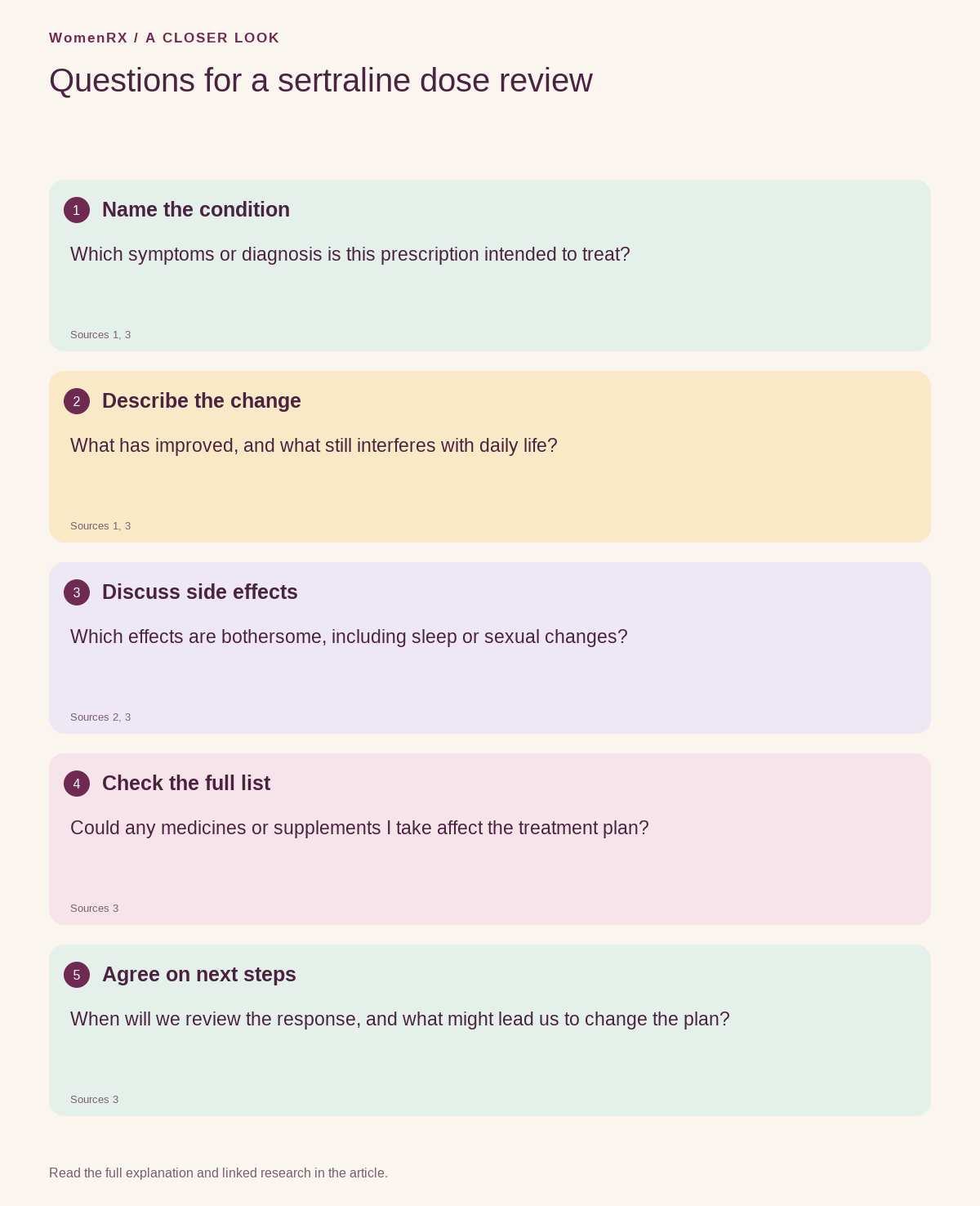
Questions for a sertraline dose review
Name the condition: Which symptoms or diagnosis is this prescription intended to treat?13
Describe the change: What has improved, and what still interferes with daily life?13
Discuss side effects: Which effects are bothersome, including sleep or sexual changes?23
Check the full list: Could any medicines or supplements I take affect the treatment plan?3
Agree on next steps: When will we review the response, and what might lead us to change the plan?3
Read the figure as text
Use these prompts to discuss whether the current plan fits your symptoms and how you’re tolerating treatment. This is a conversation aid, not a diagnostic score.- Name the condition: Which symptoms or diagnosis is this prescription intended to treat?13
- Describe the change: What has improved, and what still interferes with daily life?13
- Discuss side effects: Which effects are bothersome, including sleep or sexual changes?23
- Check the full list: Could any medicines or supplements I take affect the treatment plan?3
- Agree on next steps: When will we review the response, and what might lead us to change the plan?3
More questions, answered
Does being prescribed 25 mg mean my anxiety is mild?
No. The US Zoloft prescribing information lists 25 mg as a starting dose for several conditions, including panic disorder and social anxiety disorder. A starting dose describes the treatment plan, not the severity of what you’re experiencing.3
What if my symptoms improve but a side effect bothers me?
Tell your prescriber about both. Symptom improvement and tolerability are separate parts of deciding what to do next. Sexual changes, for example, can be associated with sertraline and may not come up unless you mention them.3
Sources you can check
- Anxiety: MedlinePlusAccessed 2026-09-25Return to first citation
- Sertraline: an antidepressant medicine - NHSAccessed 2026-09-25Return to first citation
- ZOLOFT sertraline tablets and oral concentrate, Viatris | complete current US product informationAccessed 2026-09-25Return to first citation