Irregular Periods: Which Changes Need Attention?
A changing cycle can be ordinary, but missed periods, bleeding between periods, and a new pattern call for different next steps.
Count your cycle from the first day of one period to the first day of the next. A cycle doesn’t have to be 28 days to be normal, but a new pattern is worth noticing. If pregnancy is possible and a period is missed, consider a pregnancy test. Bleeding between periods should be checked, especially if you’ve also missed a period and have abdominal pain.125
First, name what has changed
“Irregular” can mean that periods start at unpredictable times, that one doesn’t arrive, or that bleeding happens when you weren’t expecting a period. Those aren’t quite the same question. To see the difference, mark the first day of each period, how many days bleeding lasts, and any spotting between periods. The gap from one start date to the next is your cycle length. Twenty-eight days is an average, not a deadline; cycles from 21 to 35 days can be normal.14
Compare those dates with your usual pattern. For example, a period that starts a few days later than expected is different from repeatedly having gaps longer than 35 days. Note whether the change began around a new contraceptive method, childbirth, a major weight change, or a period of unusually high stress or exercise. This short record helps you describe what changed; it can’t tell you the cause by itself.124
If the time between periods keeps changing
Cycle timing is more likely to be irregular when periods first begin during puberty and as menopause approaches. After childbirth or while breastfeeding, hormonal changes can affect periods too. These contexts matter, but they don’t mean every new change should be dismissed.12
Stress, substantial weight changes, and excessive exercise are other possible reasons for irregular timing. Hormonal contraception, including progestogen-only methods, can change bleeding patterns. Sometimes an underlying condition, such as an ovarian hormone condition or a thyroid problem, is involved. None of these can be identified from cycle dates alone.2
If your cycles are repeatedly shorter than 21 days or longer than 35 days, or your established pattern changes noticeably, make a routine care appointment rather than waiting indefinitely for it to settle. Mention symptoms alongside the dates. Weight gain, tiredness, new facial hair growth, and skin changes can help shape the assessment. If you’re trying to conceive, irregular cycles are also worth discussing because ovulation may not be happening regularly.2
If a period doesn’t arrive
A missed period can be an early sign of pregnancy. If pregnancy is possible, checking for it is more useful than assuming the delay is due to stress, breastfeeding, or approaching menopause. A pregnancy test may also be part of an assessment for unusual bleeding.25
If you’ve recently given birth, distinguish postpartum bleeding from a returning menstrual cycle: spotting or bleeding can come and go for up to six weeks after birth. Breastfeeding can affect when periods return, but a missing period alone doesn’t establish that you can’t become pregnant. As contraception, lactational amenorrhea applies only while all three conditions hold: you haven’t had a period since birth, you’re fully or nearly fully breastfeeding, and you’re less than six months postpartum.136
If periods have stopped and you’re concerned, or missed periods become a change from your usual pattern, arrange an assessment. Your pregnancy possibility, age, recent birth and breastfeeding status, contraception, and other symptoms all change what questions need answering.124
If bleeding appears between periods
Spotting between periods isn’t simply a longer or shorter cycle. Possible causes include hormonal contraception, polyps or fibroids, and sexually transmitted infections. Bleeding after sex can have other causes, including cervical changes or vaginal dryness. Have bleeding between periods or after sex checked even if it’s light; an assessment may include a pregnancy test, an STI test, an examination, blood tests, or further imaging, depending on the history.5
Get prompt medical attention if you’ve recently missed a period and now have unusual bleeding with abdominal or pelvic pain. That combination needs timely assessment because it can be a sign of an ectopic pregnancy.5
The amount and duration of bleeding matter as well as its timing. Bring up bleeding that lasts longer than seven days, is much heavier than usual, or comes with severe pain. Heavy bleeding that disrupts daily life deserves attention even if periods arrive on schedule; a clinician may investigate with an examination, blood tests, or imaging.124
The useful distinction is not “regular or irregular” on its own. It’s which part of the pattern changed, whether pregnancy is possible, and whether bleeding or other symptoms point to something that needs checking now rather than more observation.125
Start with the change you noticed
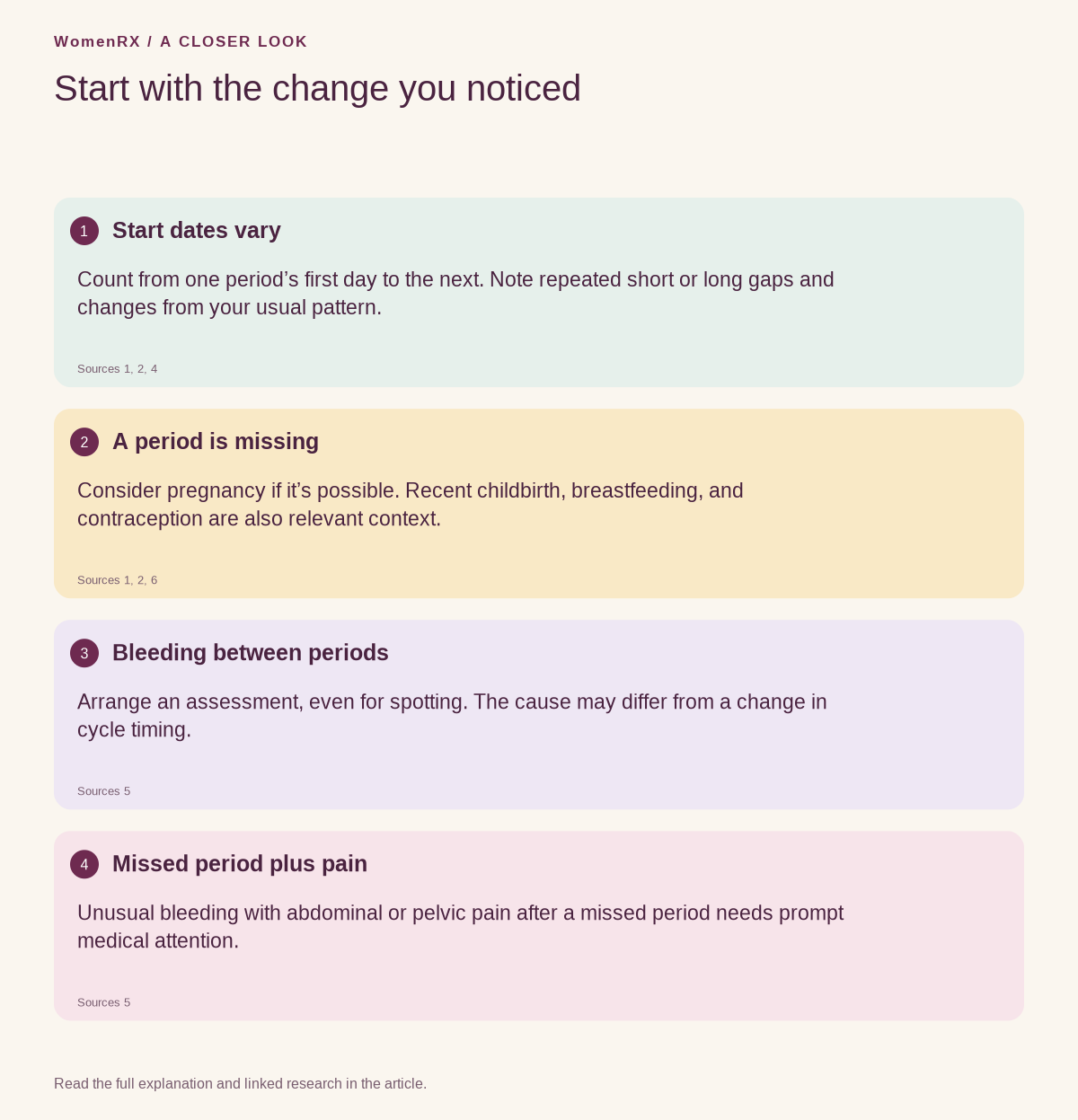
Start dates vary: Count from one period’s first day to the next. Note repeated short or long gaps and changes from your usual pattern.124
A period is missing: Consider pregnancy if it’s possible. Recent childbirth, breastfeeding, and contraception are also relevant context.126
Bleeding between periods: Arrange an assessment, even for spotting. The cause may differ from a change in cycle timing.5
Missed period plus pain: Unusual bleeding with abdominal or pelvic pain after a missed period needs prompt medical attention.5
Read the figure as text
These routes separate a change in period timing from a missed period or bleeding outside a period.- Start dates vary: Count from one period’s first day to the next. Note repeated short or long gaps and changes from your usual pattern.124
- A period is missing: Consider pregnancy if it’s possible. Recent childbirth, breastfeeding, and contraception are also relevant context.126
- Bleeding between periods: Arrange an assessment, even for spotting. The cause may differ from a change in cycle timing.5
- Missed period plus pain: Unusual bleeding with abdominal or pelvic pain after a missed period needs prompt medical attention.5
More questions, answered
Could a new birth control method be the reason?
Yes. Hormonal contraception can change your usual cycle or cause bleeding between periods, and changing methods can disturb a previously familiar pattern. Don’t assume the method explains persistent bleeding between periods or after sex without having that bleeding checked.245
Sources you can check
- Menstruation | Period | MedlinePlusAccessed 2026-09-25Return to first citation
- Irregular periods - NHSAccessed 2026-09-25Return to first citation
- Postpartum Care: MedlinePlusAccessed 2026-09-25Return to first citation
- Period problems - NHSAccessed 2026-09-25Return to first citation
- Vaginal bleeding between periods or after sex - NHSAccessed 2026-09-25Return to first citation
- CDC: Birth control methods, barrier methods, fertility awareness and breastfeedingAccessed 2026-09-25Return to first citation