Iron Supplements and Weight: What the Evidence Shows
Iron treats low iron, but it isn’t established as a direct cause of weight loss or gain.
Iron supplements are used to treat or prevent iron deficiency, not to manage body weight. The clinical findings discussed here don’t establish that iron directly causes weight loss or gain, or that iron deficiency itself explains a weight change. If treatment eases fatigue, activity might feel easier, but that’s different from a demonstrated effect on weight. Iron can also cause stomach upset or constipation. 1 3
Iron’s job isn’t weight control
Iron helps your body make hemoglobin, the protein in red blood cells that carries oxygen. When iron-deficiency anemia develops, symptoms can include fatigue, weakness, and reduced exercise or work performance. Treating a confirmed deficiency is about restoring iron, not changing body weight. 1
That distinction matters: feeling less tired and weighing less are different outcomes. If symptoms improve, you might find everyday movement easier. That’s a plausible indirect change, not evidence that iron itself burns fat or makes weight drop. A small, open-label study of 36 iron-deficient premenopausal women who did not have anemia, had a normal BMI, and did not have heavy menstrual bleeding reported improvements in iron measures and self-reported health after treatment. It does not provide evidence of a change in body weight. 3
Why weight changes can have other explanations
The reason iron is being considered may be more relevant to your health than the supplement itself. Blood loss is one cause of low iron, and women with heavy menstrual bleeding have a higher risk of iron deficiency. Pregnancy also raises iron needs as the mother’s blood volume and red blood cell mass expand. These are contexts for assessing iron status, not evidence that iron deficiency itself causes a weight change. 1
If your weight changes while you’re being treated, the timing alone doesn’t show that iron caused it. This evidence also doesn’t establish iron deficiency as the cause. For weight loss that continues without a change in diet or exercise, other possible causes include stress, digestive conditions, an overactive thyroid, diabetes, or medication effects. It’s worth having ongoing unintentional weight loss assessed rather than automatically attributing it to iron or its treatment. 2 Iron deficiency is assessed with blood measures, including ferritin and hemoglobin, and clinicians may use more than one measure. Weight alone can’t confirm that you need iron. 1
What iron can change: how your stomach feels
Oral iron can cause gastrointestinal effects, including nausea, abdominal discomfort, and constipation. Those side effects may affect how you feel, but they don’t show that iron has caused a lasting change in body weight. 1
A useful way to read the scale
If you’re taking iron and notice a change, separate three questions: Was a deficiency confirmed? Have symptoms such as fatigue changed? Was body weight actually measured over time? Improvement in one doesn’t prove a change in another. Iron isn’t a weight-loss or weight-gain aid, and weight change by itself isn’t a reason to start it.
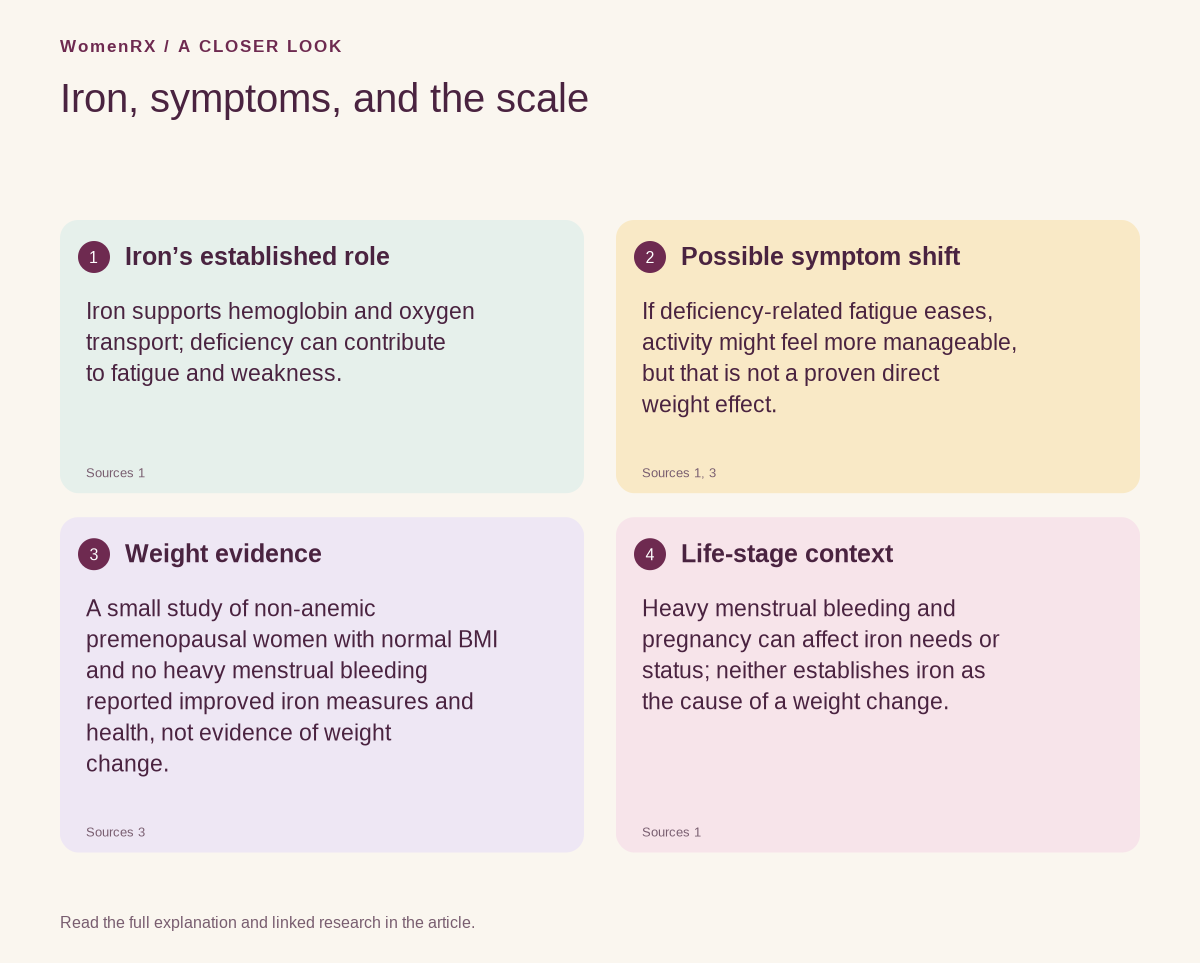
Iron, symptoms, and the scale
Iron’s established role: Iron supports hemoglobin and oxygen transport; deficiency can contribute to fatigue and weakness.1
Possible symptom shift: If deficiency-related fatigue eases, activity might feel more manageable, but that is not a proven direct weight effect.13
Weight evidence: A small study of non-anemic premenopausal women with normal BMI and no heavy menstrual bleeding reported improved iron measures and health, not evidence of weight change.3
Life-stage context: Heavy menstrual bleeding and pregnancy can affect iron needs or status; neither establishes iron as the cause of a weight change.1
Read the figure as text
These distinctions help show why feeling different during iron treatment doesn’t by itself establish a direct change in body weight.- Iron’s established role: Iron supports hemoglobin and oxygen transport; deficiency can contribute to fatigue and weakness.1
- Possible symptom shift: If deficiency-related fatigue eases, activity might feel more manageable, but that is not a proven direct weight effect.13
- Weight evidence: A small study of non-anemic premenopausal women with normal BMI and no heavy menstrual bleeding reported improved iron measures and health, not evidence of weight change.3
- Life-stage context: Heavy menstrual bleeding and pregnancy can affect iron needs or status; neither establishes iron as the cause of a weight change.1
More questions, answered
Can weight loss tell me that my iron is low?
No. Weight alone can’t establish iron deficiency. Iron status is assessed with blood tests such as ferritin and hemoglobin, sometimes together with other measures. 1
Could feeling more energetic on iron mean I’ll lose weight?
Not necessarily. Iron-deficiency anemia can cause fatigue and reduced exercise performance, so feeling better could affect activity. That possibility is not the same as evidence that iron directly causes weight loss. 1
Sources you can check
- Iron - Health Professional Fact SheetAccessed 2026-09-25Return to first citation
- Unintentional weight loss - NHSAccessed 2026-09-25Return to first citation
- Effectiveness of low-dose iron treatment in non-anaemic iron-deficient women: a prospective open-label single-arm trial.Simic S, Karczewski M, Klapdor S, Nowak A, Schubert M, Moretti D, Swinkels DW, Beuschlein F, Saleh L, Suter P, Krayenbuehl PA. · Swiss medical weekly · 2023Return to first citation