Iron Deficiency and Hormones: Which Comes First?
Heavy periods can drain iron stores, but low iron alone doesn’t prove a hormone disorder.
The clearest link often runs from bleeding to iron: menstrual blood loss can deplete iron, especially when periods are heavy. Research reviewed in active premenopausal females suggests some iron measures shift across the menstrual cycle, but that doesn’t show that low iron causes a specific reproductive hormone imbalance or thyroid disorder. Pregnancy and menopause change the context for assessing iron, and iron can interfere with levothyroxine absorption. 1 3

Bleeding can lower iron; a hormone effect remains uncertain
If you’re wondering whether low iron caused a change in your period, fertility, or thyroid results, start with the better-established link: blood loss can lower iron stores. Menstrual bleeding is a regular source of iron loss, and heavy menstrual bleeding raises the risk of deficiency. Iron is also needed to make some hormones, but that fact by itself doesn’t show that iron deficiency causes a particular hormone imbalance. 1
There’s another piece to the picture: reproductive hormones may influence iron regulation across the menstrual cycle. A review of research in active premenopausal females describes changes in some iron measures during the cycle, while noting that female-specific research remains limited. These observations don’t establish that low iron disrupts ovulation, fertility, or levels of estrogen or progesterone. 3
So the practical distinction is: iron deficiency may be a consequence of bleeding, and iron and reproductive physiology may interact, but a low iron result isn’t a hormone diagnosis.
Heavy bleeding can explain low iron, and deserves attention
A heavy period can mean more iron leaves the body with the blood. If iron losses continue faster than they’re replaced, iron stores may fall. Iron deficiency can develop before anemia: ferritin, which reflects iron stores, can be low while hemoglobin is still within its usual range. That’s why a normal hemoglobin result alone may not tell the whole story. 1
Heavy bleeding and iron deficiency can be a difficult combination in everyday life: bleeding may contribute to low iron, while fatigue or weakness from iron-deficiency anemia can affect how you feel. Neither those symptoms nor an iron result can identify a reproductive hormone problem on their own. 1 2
If you have heavy periods and low iron, it’s useful to consider both questions: how depleted are your iron stores, and what might be driving the bleeding? Replacing iron may address a deficiency, but it doesn’t explain why bleeding is heavy or address the source of ongoing blood loss.
Thyroid concerns: separate the disease question from the medication interaction
An iron deficiency result by itself can’t tell you whether you have hypothyroidism or explain an abnormal thyroid result. There is, however, a practical interaction if you take levothyroxine: iron can reduce absorption of levothyroxine tablets when taken at the same time. NIH’s summary of product labeling says some labels advise against taking the two within four hours of each other. Check the timing for your own formulation with your pharmacist or prescriber rather than changing either treatment yourself. 1
That interaction concerns how well a thyroid medicine is absorbed. It does not mean that an iron deficiency caused a thyroid disorder, or that correcting iron will treat one.
What changes with pregnancy and menopause?
During pregnancy, iron needs rise as the body makes more red blood cells and supports the fetus and placenta. Iron status is assessed in this context for its own reasons; pregnancy-related changes in iron need don’t prove that low iron is causing a reproductive hormone imbalance. Recommendations about routine screening and supplementation vary, while U.S. guidance summarized by NIH supports screening and evaluating pregnant patients who have anemia. 1
During menstruating years, ongoing blood loss is one possible contributor to low iron, especially with heavy bleeding. Diet, absorption problems, and other blood loss can also matter, so menstruation shouldn’t automatically be assumed to be the only cause. 1 2
After menopause, menstrual blood loss is no longer an ongoing monthly source of iron loss. If iron deficiency is found, other possible contributors include diet, absorption problems, or blood loss from another source. The right explanation depends on the person’s history and results, not on a hormone label alone. 1 2
Make sense of the result before reaching for iron
Iron status involves more than one number. Ferritin is used to estimate iron stores, while hemoglobin helps assess anemia; inflammation can raise ferritin and complicate interpretation. A clinician may consider more than one blood measure alongside bleeding history, pregnancy status, diet, and possible absorption issues. 1
That distinction matters because iron supplements aren’t a general treatment for menstrual, fertility, or thyroid concerns. They can cause side effects, and a deficiency should prompt thought about its cause as well as whether iron replacement is appropriate. If you take levothyroxine, include that medication in the conversation because of the absorption interaction. 1
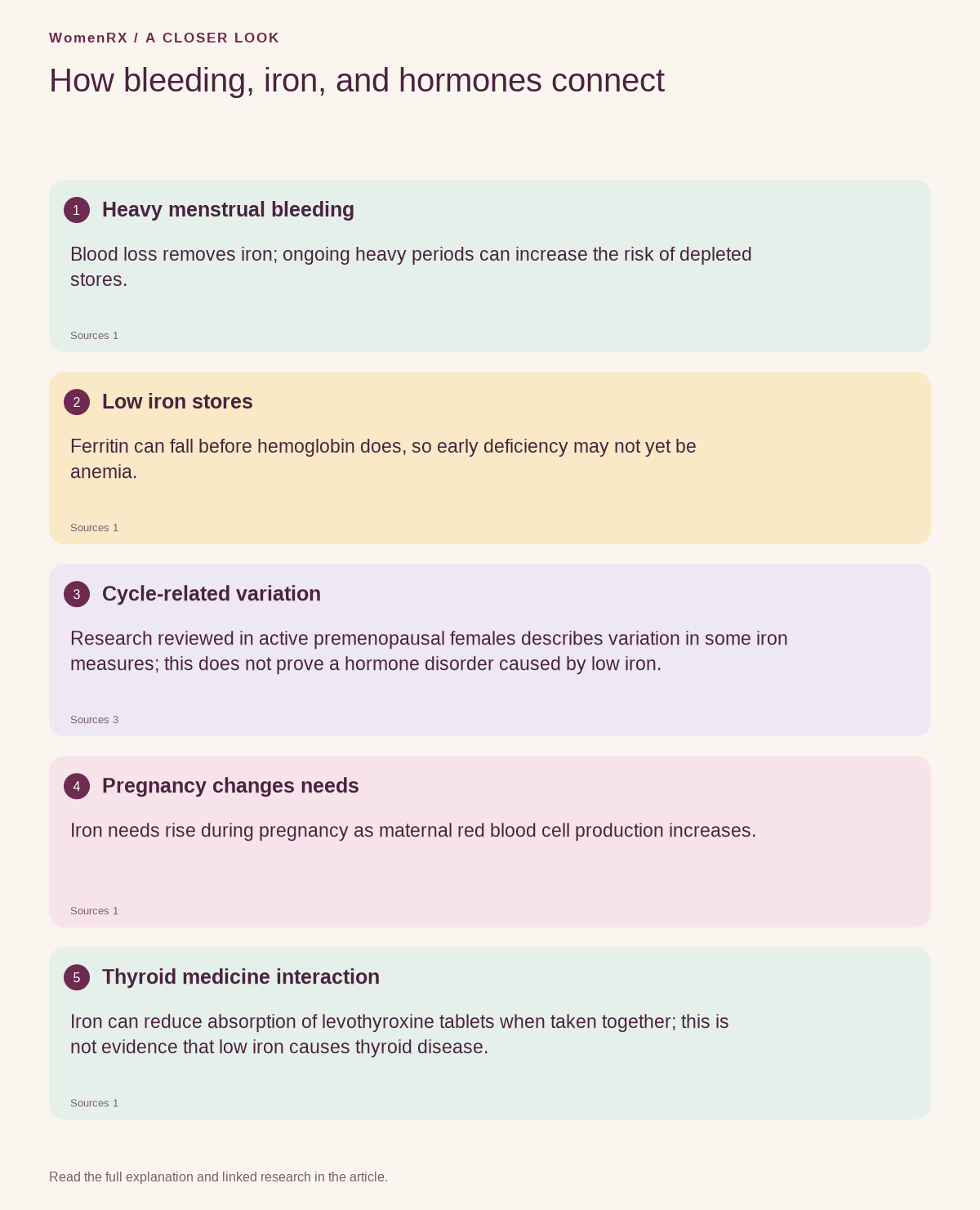
How bleeding, iron, and hormones connect
Heavy menstrual bleeding: Blood loss removes iron; ongoing heavy periods can increase the risk of depleted stores.1
Low iron stores: Ferritin can fall before hemoglobin does, so early deficiency may not yet be anemia.1
Cycle-related variation: Research reviewed in active premenopausal females describes variation in some iron measures; this does not prove a hormone disorder caused by low iron.3
Pregnancy changes needs: Iron needs rise during pregnancy as maternal red blood cell production increases.1
Thyroid medicine interaction: Iron can reduce absorption of levothyroxine tablets when taken together; this is not evidence that low iron causes thyroid disease.1
Read the figure as text
The established route is from blood loss to depleted iron stores. Hormone-related links are more limited, and the thyroid medication interaction is a separate issue.- Heavy menstrual bleeding: Blood loss removes iron; ongoing heavy periods can increase the risk of depleted stores.1
- Low iron stores: Ferritin can fall before hemoglobin does, so early deficiency may not yet be anemia.1
- Cycle-related variation: Research reviewed in active premenopausal females describes variation in some iron measures; this does not prove a hormone disorder caused by low iron.3
- Pregnancy changes needs: Iron needs rise during pregnancy as maternal red blood cell production increases.1
- Thyroid medicine interaction: Iron can reduce absorption of levothyroxine tablets when taken together; this is not evidence that low iron causes thyroid disease.1
More questions, answered
Does low iron mean I have a reproductive hormone imbalance?
No. Iron is needed to make some hormones, and research reviewed in active premenopausal females describes variation in some iron measures across the menstrual cycle. Those facts don’t establish that iron deficiency causes a specific sex-hormone imbalance. A low iron result and a hormone disorder are separate questions. 1 3
Can I take iron with levothyroxine?
Iron can reduce absorption of levothyroxine tablets when taken at the same time. NIH notes that some product labels advise against taking them within four hours of each other. Confirm the timing for your specific formulation with a pharmacist or prescriber. 1
Sources you can check
- Iron - Health Professional Fact SheetAccessed 2026-09-25Return to first citation
- Iron: MedlinePlusAccessed 2026-09-25Return to first citation
- A contemporary understanding of iron metabolism in active premenopausal females.Badenhorst CE, Forsyth AK, Govus AD. · Frontiers in sports and active living · 2022Return to first citation