Hypothyroidism: What TSH Tests and Follow-Up Tell You
TSH is usually the first thyroid test; free T4 adds context when the result is high.
Symptoms such as tiredness or low mood can raise the question of hypothyroidism, including during the menopause transition, but they can’t confirm it. TSH is usually the first blood test. If TSH is high, free T4 helps interpret the result. When levothyroxine is needed, follow-up tests help assess the dose. Persistent symptoms deserve another look, not an automatic dose increase. 1267
Why symptoms start the conversation, not the diagnosis
You may wonder about your thyroid because you’re tired. Thyroid hormones affect how your body uses energy, along with functions including heart rate, digestion, weight, and mood. Tiredness can be a symptom of an underactive thyroid, but it doesn’t tell you on its own whether thyroid hormone is low. Blood tests answer that narrower question. 16
Perimenopause can make the question less clear. For example, low mood can occur around the menopause transition and with hypothyroidism; sleep problems are also common around menopause. Feeling cold more than usual, constipation, or heavy periods may add to a thyroid concern, but no symptom pattern can confirm it. Thyroid blood tests help establish whether thyroid dysfunction is present, while leaving room to consider another cause of how you feel. 567
What TSH and thyroid hormone results mean together
TSH, or thyroid-stimulating hormone, is usually the first blood test ordered to check thyroid function. Tests for T4 measure thyroid hormone itself. Thyroid antibody tests may also help identify an autoimmune thyroid disorder when finding the cause matters. 1
When TSH is elevated but free T4 remains in the normal range, the result is called subclinical hypothyroidism. That describes a blood-test pattern, not how severe your symptoms feel. If free T4 is outside the normal range, the subclinical label does not fit; the results need to be interpreted together. Even when TSH is high, the tests do not establish that every symptom is caused by the thyroid or that treatment will necessarily help. 146
There’s an important exception to the usual TSH-first picture. Hypothyroidism can sometimes result from a pituitary or hypothalamic problem rather than a problem in the thyroid gland. In that situation, TSH isn’t a reliable measure of treatment adequacy, so free T4 and the wider clinical picture matter. 26
Treatment is adjusted by results and how you’re doing
Levothyroxine replaces thyroid hormone for people who need treatment for hypothyroidism. The dose is individualized rather than chosen from symptoms alone. For adults with primary hypothyroidism, US prescribing information describes follow-up using both clinical response and blood tests, with TSH used to guide treatment toward normal thyroid function. 2
A blood test is typically done about 6 to 8 weeks after starting levothyroxine and repeated after dose adjustments. Once a working dose is established, testing becomes less frequent: NIDDK describes another test at about 6 months, then yearly testing. This follow-up checks whether the treatment is doing what it’s meant to do, rather than using a day-to-day change in symptoms to set the dose. 26
Regular testing matters because the amount your body needs can change, and an unsuitable dose can cause problems of its own, including sleep difficulties. How you take levothyroxine can affect the result: US tablet prescribing information recommends taking it on an empty stomach, 30 to 60 minutes before breakfast, and keeping iron or calcium supplements and antacids at least 4 hours apart from it because they can reduce absorption. If follow-up results aren’t where expected, review your routine, other medicines, and possible absorption issues before assuming the thyroid condition has worsened. Biotin supplements can also distort thyroid test results; mention them before testing so you can follow the testing instructions you’re given. 2
A mildly elevated TSH with normal free T4 calls for a more individual decision than clearly low thyroid hormone. In a systematic review of subclinical hypothyroidism, larger placebo-controlled trials in older adults with mild disease did not find a clinically meaningful improvement in symptoms despite lowering TSH. That finding doesn’t settle treatment decisions for every age or circumstance, but it explains why a blood-test change and feeling better are not always the same thing. 4
When you still don’t feel well
If symptoms persist after thyroid results have reached the intended range, both parts of the picture deserve attention. Follow-up can check whether thyroid levels remain appropriate and whether anything is interfering with treatment. It can also look beyond the thyroid, including at symptoms occurring around perimenopause, rather than treating a higher levothyroxine dose as the answer to every symptom. 267
Weight is one example of where expectations can get ahead of treatment. A systematic review of 23 studies involving 763 adults found that reaching normal thyroid function with levothyroxine was associated with modest average weight changes. The studies did not establish a weight-loss effect specifically for women, and the finding isn’t a reason to use levothyroxine solely for weight loss. 3
If you’re planning pregnancy or become pregnant
If you already take levothyroxine and are planning a pregnancy, bring your thyroid treatment into that conversation. Pregnancy can change the amount needed. US prescribing information calls for TSH and free T4 testing as soon as pregnancy is confirmed in people with pre-existing hypothyroidism, with testing at least once each trimester and TSH assessed against trimester-specific ranges in primary hypothyroidism. It also describes TSH testing after delivery as part of the postpartum treatment plan. Don’t assume a pre-pregnancy dose or testing schedule will remain the right one throughout pregnancy and afterward. 2
If you aren’t already being treated and are having trouble getting pregnant, thyroid testing may be part of looking for a cause. TSH is usually the first test used to assess thyroid function, with thyroid hormone testing adding context when needed. A pregnancy plan alone doesn’t establish hypothyroidism or mean everyone needs the same testing plan. If you become pregnant while taking levothyroxine, let your care team know promptly so thyroid levels and treatment can be assessed. 126
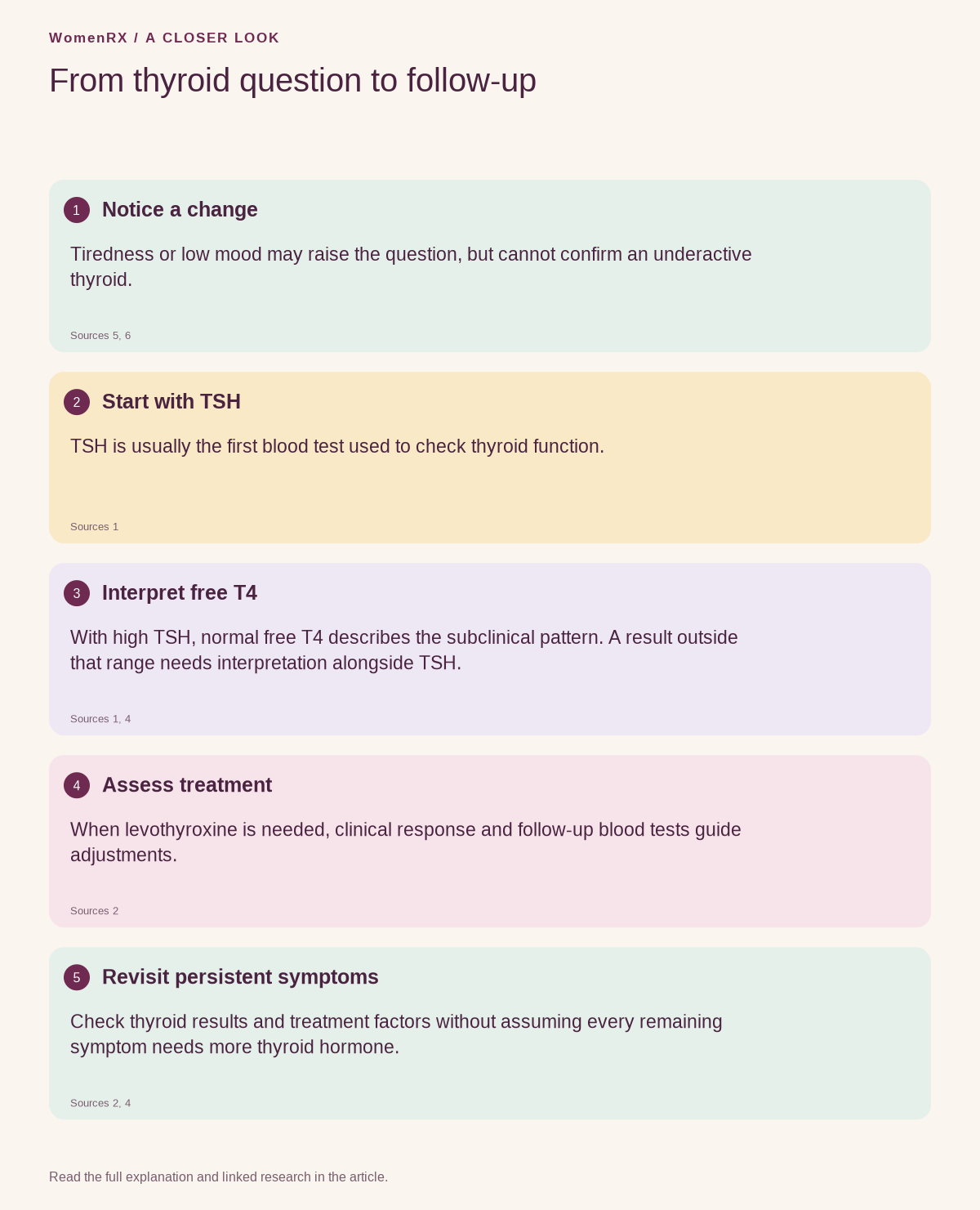
From thyroid question to follow-up
Notice a change: Tiredness or low mood may raise the question, but cannot confirm an underactive thyroid.56
Start with TSH: TSH is usually the first blood test used to check thyroid function.1
Interpret free T4: With high TSH, normal free T4 describes the subclinical pattern. A result outside that range needs interpretation alongside TSH.14
Assess treatment: When levothyroxine is needed, clinical response and follow-up blood tests guide adjustments.2
Revisit persistent symptoms: Check thyroid results and treatment factors without assuming every remaining symptom needs more thyroid hormone.24
Read the figure as text
Each step answers a different question; symptoms and blood results are useful for different reasons.- Notice a change: Tiredness or low mood may raise the question, but cannot confirm an underactive thyroid.56
- Start with TSH: TSH is usually the first blood test used to check thyroid function.1
- Interpret free T4: With high TSH, normal free T4 describes the subclinical pattern. A result outside that range needs interpretation alongside TSH.14
- Assess treatment: When levothyroxine is needed, clinical response and follow-up blood tests guide adjustments.2
- Revisit persistent symptoms: Check thyroid results and treatment factors without assuming every remaining symptom needs more thyroid hormone.24
More questions, answered
Does a high TSH always mean I need levothyroxine?
No. A high TSH with normal free T4 is the subclinical pattern, and the result needs interpretation in context rather than an automatic prescription. Larger placebo-controlled trials in older adults with mild subclinical hypothyroidism found no clinically meaningful symptom improvement despite lowering TSH. That finding does not settle treatment decisions for other ages or circumstances. 4
Why might my thyroid tests look unexpected while I’m taking levothyroxine?
Dose needs can vary, and food, iron or calcium supplements, antacids, other medicines, or absorption problems can affect treatment. Biotin supplements can interfere with thyroid tests themselves. Reviewing those factors alongside the results can help make sense of an unexpected reading. 2
Sources you can check
- Thyroid Tests: MedlinePlusAccessed 2026-09-25Return to first citation
- LEVOTHYROXINE SODIUM TABLET [CARDINAL HEALTH 107, LLC] | US prescribing information and patient instructionsAccessed 2026-09-25Return to first citation
- Levothyroxine therapy for euthyroidism restoration results in clinically insignificant weight and anthropometric changes: a systematic review and meta-analysis.Wolde Sellasie S, Ossola N, Piticchio T, Uccioli L, Trimboli P. · International journal of obesity (2005) · 2026Return to first citation
- Cardiometabolic Outcomes and Levothyroxine Treatment Effects in Subclinical Hypothyroidism: A Systematic Review.Hag Elagib MA, Alamin MA, Omer Amin Ahmed Y, Musa IE, Khaleifa MA, Elsamani EA, Najar H, Ahmed A. · Cureus · 2026Return to first citation
- Underactive thyroid (hypothyroidism) - NHSAccessed 2026-09-25Return to first citation
- Hypothyroidism (Underactive Thyroid) - NIDDKAccessed 2026-09-25Return to first citation
- Things you can do to help menopause and perimenopause symptoms - NHSAccessed 2026-09-25Return to first citation