How to Support a Friend Who Has Depression
Listen without trying to fix everything, offer one practical next step, and know what to do if you’re worried about her safety.
Start by listening and taking your friend seriously. Ask what kind of support would help today, and offer something specific you can follow through on. If she’s open to care, you can help her connect with a health or mental health provider. If you’re worried she may be thinking about suicide, ask directly and help her reach 988; call 911 in an emergency. 1 2

Begin with listening, not a solution
Depression can make everyday activities, including sleeping, eating, and working, difficult. Your friend doesn’t need you to diagnose what’s happening or find the perfect words. She may need someone to stay with the conversation without minimizing it or rushing to advice. 1
You might say, “I’m glad you told me,” or, “Would you rather talk, have some company, or think through one next step?” These are examples, not lines you need to deliver exactly. If she isn’t sure what she needs, give her time. You can let her know you care without insisting she explain everything.
Try to avoid quick fixes such as “Just get out more” or “It’ll all be fine.” Instead, reflect what you heard: “It sounds like even getting through the day has been taking a lot.” You don’t have to agree with every thought she shares to take her feelings seriously.
Make help concrete and manageable
A broad offer like “Let me know if you need anything” can be hard to act on. Try one specific, realistic offer: “Would it help if I brought dinner Thursday?” or, “Want company while you look for someone to talk to?” Ask rather than assume, and follow through if she says yes.
If she’s open to professional support, you could ask, “Would you like help finding someone to talk with?” or, “Would it help if I sat with you while you made a call?” Depression treatment may include psychotherapy, medication, or both; a health or mental health provider can discuss what might suit her situation. 1
If your friend is pregnant or recently gave birth, depression can happen during pregnancy and postpartum, too. You don’t need to assume that this explains her symptoms. You can ask how she’s doing and offer to help her raise the concern with a care provider. 1
If she says no to help
A refusal doesn’t mean you have to argue, withdraw, or pretend you aren’t concerned. You might say, “Okay. I won’t push right now. I care about you, and I’m here if you want to talk again.” If it feels welcome, ask what makes getting help feel difficult, then listen. Leave room to revisit the idea rather than turning it into a debate.
You can also keep offering ordinary company or practical help, without making every conversation about treatment. If you’re worried her safety may be at risk, though, respond to that concern rather than relying on a promise to talk about it later.
Be a friend, not her whole support system
You can care about her and still have limits. For example: “I can talk tonight, and I also want us to find more support than I can provide by myself.” Offer what you can genuinely do, not what you feel pressured to promise. If you need to step back or bring another trusted person into the conversation, that doesn’t mean you’ve stopped caring.
Your friend’s recovery isn’t yours to manage alone. A useful role is to listen, follow through on the help you offer, and help connect her with more support when she wants it. If the concern becomes urgent, focus on getting help rather than trying to handle it privately.
When to ask about suicide
Take suicide warning signs seriously, particularly when there’s a change in behavior. Signs can include withdrawing from family or friends, talking about suicide, saying goodbye, putting affairs in order, rage, or extreme mood swings. These signs don’t tell you exactly what will happen, but MedlinePlus advises getting help right away when someone shows warning signs. 2
Ask plainly: “Are you thinking about killing yourself?” MedlinePlus recommends asking directly, listening, being there with the person, and helping connect them with support. You can call or text 988 together, or use the 988 Suicide & Crisis Lifeline’s online chat. If there’s an emergency, call 911. 2
You don’t have to judge the seriousness of the situation on your own. If you’re worried about immediate safety, bring in urgent help. Don’t promise to keep a safety concern secret; focus on connecting your friend with help.
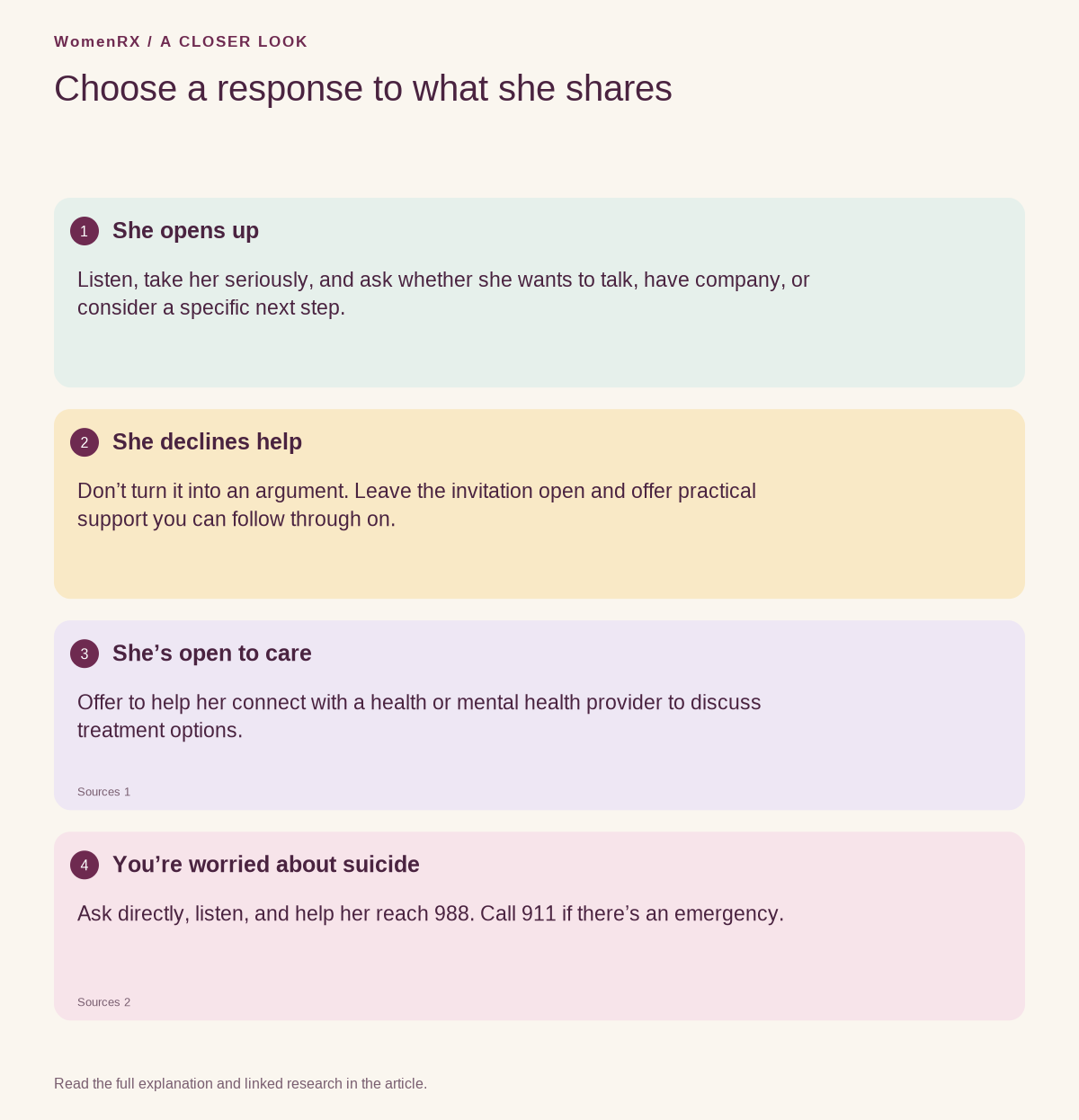
Choose a response to what she shares
She opens up: Listen, take her seriously, and ask whether she wants to talk, have company, or consider a specific next step.
She declines help: Don’t turn it into an argument. Leave the invitation open and offer practical support you can follow through on.
She’s open to care: Offer to help her connect with a health or mental health provider to discuss treatment options.1
You’re worried about suicide: Ask directly, listen, and help her reach 988. Call 911 if there’s an emergency.2
Read the figure as text
Start with what your friend needs, then shift to urgent action if you’re worried about suicide or immediate danger.- She opens up: Listen, take her seriously, and ask whether she wants to talk, have company, or consider a specific next step.
- She declines help: Don’t turn it into an argument. Leave the invitation open and offer practical support you can follow through on.
- She’s open to care: Offer to help her connect with a health or mental health provider to discuss treatment options.1
- You’re worried about suicide: Ask directly, listen, and help her reach 988. Call 911 if there’s an emergency.2
Sources you can check
- Depression: MedlinePlusAccessed 2026-09-25Return to first citation
- Suicide: MedlinePlusAccessed 2026-09-25Return to first citation