How to Read Your Tirzepatide Dose Schedule
Zepbound’s weight-loss schedule starts with four weeks at a starter dose, but later increases depend on how treatment is going.
For Zepbound weight treatment, the labeled starting dose is 2.5 mg once weekly for four weeks, followed by 5 mg once weekly. Later increases are optional 2.5 mg steps, each after at least four weeks at the current dose; the maintenance dose depends on response and tolerability. Mounjaro also contains tirzepatide, but its dosing is written for glycemic control. Check the product on your prescription before using either schedule. 12
Start with the product name
“Tirzepatide” names the medicine, not the full dosing plan. The Zepbound label gives a schedule for weight reduction and long-term weight maintenance. The Mounjaro label describes increases when additional glycemic control is needed. That distinction matters if you’ve found a dosing chart online that says only “tirzepatide.” Match any chart to the name on your prescription rather than treating the two labels as interchangeable. 12
What the Zepbound schedule actually says
For weight treatment, Zepbound starts at 2.5 mg injected once weekly for four weeks. That dose is for starting treatment, not an approved maintenance dose. After those four weeks, the labeled schedule increases to 5 mg once weekly. The gradual start is intended to reduce gastrointestinal side effects. 1
After that, the label allows increases in 2.5 mg steps only after at least four weeks at the current dose. “At least” is the key phrase: it sets a minimum time before another increase, not an appointment with the next dose. The recommended maintenance doses for weight reduction and long-term maintenance are 5 mg, 10 mg, or 15 mg once weekly, and 15 mg once weekly is the maximum recommended dose. The label says to consider both treatment response and tolerability when choosing a maintenance dose; if a maintenance dose isn’t tolerated, it says to consider a lower one. 1
For example, a chart might show someone moving through 7.5 mg and 12.5 mg on the way to a higher dose. Those are possible 2.5 mg steps, not a promise that everyone will reach 15 mg or move up every four weeks. The useful question is whether the next change is part of your prescribed plan, especially if nausea or other stomach symptoms are making the current dose difficult. Gastrointestinal side effects are common during dose escalation; in a 72-week trial of adults with obesity but without type 2 diabetes, they were the most common adverse events in both the tirzepatide and semaglutide groups and occurred primarily during escalation. 13
Why a Mounjaro chart may look different
Mounjaro’s labeled starting dose is also 2.5 mg injected once weekly. Its label says that if additional glycemic control is needed, the dose can increase in 2.5 mg steps after at least four weeks at the current dose. It sets a maximum of 15 mg once weekly for adults. Unlike Zepbound’s weight-treatment instructions, that wording does not make every four-week increase automatic. 2
So if your prescription says Mounjaro, don’t substitute a Zepbound weight-loss timeline for the plan you were given. And if your prescription or dispensed device changes, confirm both the dose and how to use that presentation. The product labels call for training specific to the vial, single-dose pen, or KwikPen a person receives. 12
A missed dose is a separate decision
An escalation chart doesn’t tell you what to do when an injection is late. Both product labels say a missed dose may be taken within four days (96 hours) of the missed dose. If more than four days have passed, skip it and take the next dose on the regularly scheduled day. The usual once-weekly schedule can then resume. The labels also allow a change in weekly injection day if there are at least three days (72 hours) between doses. These missed-dose rules are not instructions to increase your dose after a gap in treatment; if you’re unsure which dose your prescription now calls for, confirm the plan before injecting. 12
Two considerations if pregnancy is possible
Tirzepatide delays stomach emptying and may reduce the effectiveness of oral hormonal contraceptives. Both labels advise switching to a non-oral contraceptive method or adding a barrier method for four weeks after starting and four weeks after each dose increase. Hormonal methods that aren’t taken by mouth should not be affected by this interaction. That makes contraception worth discussing before an increase, not after it. 12
The pregnancy instructions also depend on the product and reason for treatment. Zepbound’s label says weight loss is not recommended during pregnancy and to discontinue Zepbound when pregnancy is recognized. Mounjaro’s label notes both insufficient human pregnancy data on tirzepatide and the risks of poorly controlled diabetes in pregnancy; it says use during pregnancy only if the potential benefit justifies the potential risk. If pregnancy is possible or recognized, make sure the clinician managing your prescription knows which product you take and why, rather than applying weight-treatment advice to diabetes care. 12
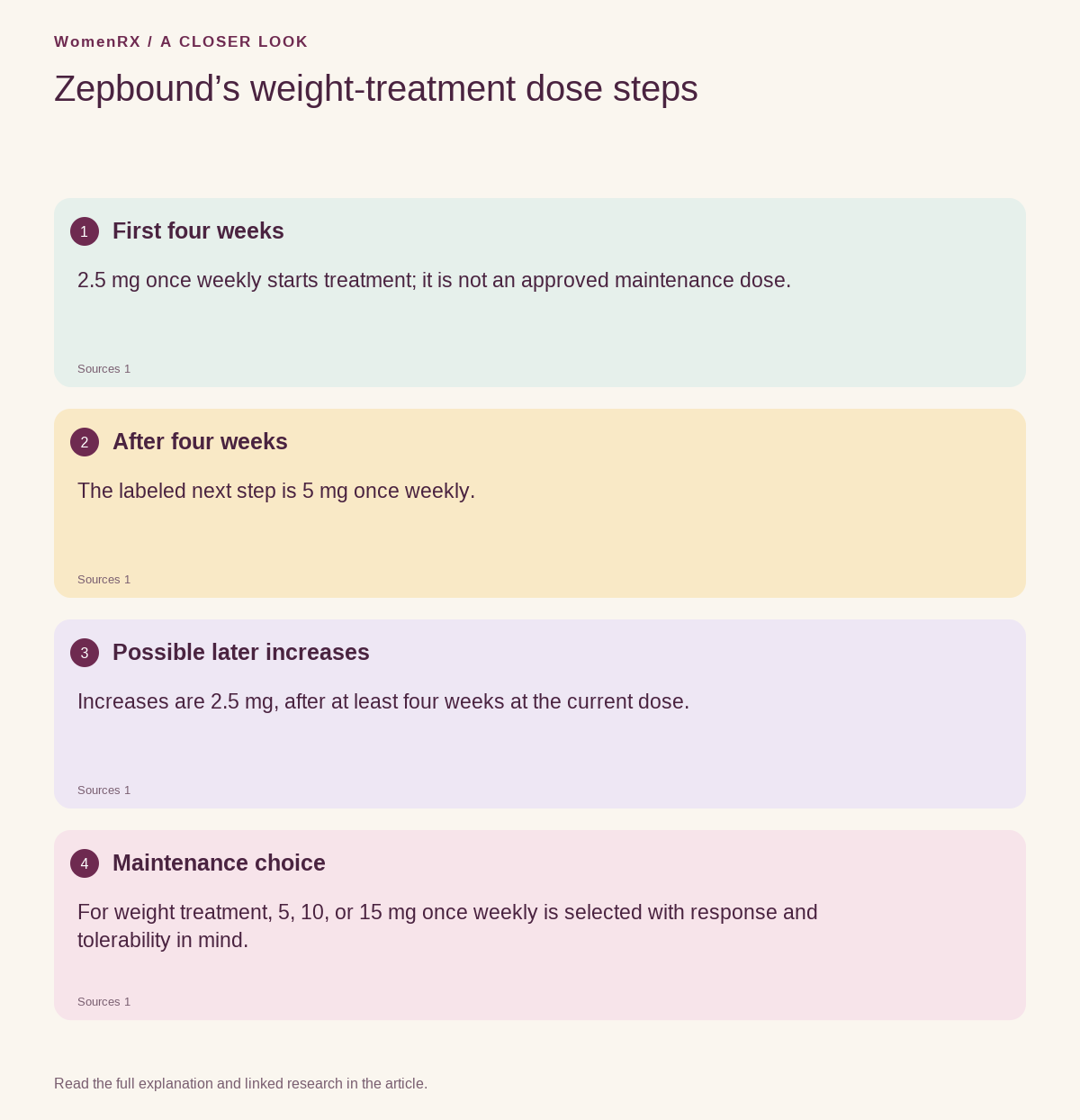
Zepbound’s weight-treatment dose steps
First four weeks: 2.5 mg once weekly starts treatment; it is not an approved maintenance dose.1
After four weeks: The labeled next step is 5 mg once weekly.1
Possible later increases: Increases are 2.5 mg, after at least four weeks at the current dose.1
Maintenance choice: For weight treatment, 5, 10, or 15 mg once weekly is selected with response and tolerability in mind.1
Read the figure as text
The labeled sequence shows when an increase can occur, not a required date for every later dose.- First four weeks: 2.5 mg once weekly starts treatment; it is not an approved maintenance dose.1
- After four weeks: The labeled next step is 5 mg once weekly.1
- Possible later increases: Increases are 2.5 mg, after at least four weeks at the current dose.1
- Maintenance choice: For weight treatment, 5, 10, or 15 mg once weekly is selected with response and tolerability in mind.1
More questions, answered
Does four weeks at a dose mean I have to move up?
No. For later Zepbound increases, four weeks is the minimum time at the current dose. The label says to consider response and tolerability when selecting a maintenance dose. Mounjaro’s label likewise frames later increases around whether more glycemic control is needed. Follow the dose plan on your prescription, not a chart’s next box. 12
Sources you can check
- ZEPBOUND (TIRZEPATIDE) INJECTION, SOLUTION ZEPBOUND (TIRZEPATIDE) INJECTION, SOLUTION ZEPBOUND KWIKPEN (TIRZEPATIDE) INJECTION, SOLUTION [ELI LILLY AND COMPANY] | US prescribing information and patient instructionsAccessed 2026-09-25Return to first citation
- MOUNJARO (TIRZEPATIDE) INJECTION, SOLUTION MOUNJARO KWIKPEN (TIRZEPATIDE) INJECTION, SOLUTION [ELI LILLY AND COMPANY] | US prescribing information and patient instructionsAccessed 2026-09-25Return to first citation
- Tirzepatide as Compared with Semaglutide for the Treatment of Obesity.Aronne LJ, Horn DB, le Roux CW, Ho W, Falcon BL, Gomez Valderas E, Das S, Lee CJ, Glass LC, Senyucel C, Dunn JP, SURMOUNT-5 Trial Investigators. · The New England journal of medicine · 2025Return to first citation