How Tirzepatide Doses Are Usually Increased
Zepbound starts with four weeks at a low dose, but later increases depend on how you’re responding and feeling.
For weight management, Zepbound usually starts at 2.5 mg once weekly for four weeks, then increases to 5 mg once weekly. Later increases, if appropriate, are 2.5 mg at a time after at least four weeks on the current dose. The spacing helps reduce stomach-related side effects. It isn’t a deadline to keep increasing: your prescriber weighs your response and tolerability when choosing a maintenance dose. 1
The schedule is a starting point, not a race
Zepbound is a tirzepatide injection given once weekly. Its labeled starting dose is 2.5 mg for four weeks; that dose is for starting treatment, not for maintenance. The next step is 5 mg weekly. From there, the dose may rise by 2.5 mg after at least four weeks at each current dose, up to a maximum of 15 mg weekly. For weight reduction and long-term maintenance, the labeled maintenance doses are 5 mg, 10 mg and 15 mg. Your prescriber considers both your response and how well you tolerate treatment. 1
That means the first four weeks at 5 mg don’t automatically put a 7.5 mg dose on your calendar. If you’re doing well at a maintenance dose, a higher number isn’t a requirement. If a maintenance dose isn’t tolerable, the prescribing information says a lower maintenance dose can be considered. Don’t make that change on your own; bring the problem to your prescriber before the planned increase. 1
Why wait between increases?
The gradual schedule is intended to reduce gastrointestinal side effects. Nausea, diarrhea, vomiting and constipation are among the common effects reported in Zepbound’s weight-reduction trials. Most nausea, vomiting and diarrhea events occurred during dose escalation and decreased over time. 1
A post hoc analysis of four tirzepatide trials in adults with obesity or overweight, with or without type 2 diabetes, likewise found that gastrointestinal effects were mostly mild to moderate and concentrated during escalation. That describes a group pattern, not a promise that your symptoms will fade by a particular week. The analysis did not report a women-specific titration schedule. 2
If the next step feels difficult
There’s a useful distinction between symptoms that make an increase worth discussing and symptoms that shouldn’t wait for the next dose decision. For example, if nausea makes meals uncomfortable but you can eat and drink, tell your prescriber what’s happening before moving up. In the SURMOUNT trials, people with troublesome gastrointestinal symptoms were first counseled on changes such as smaller meals and stopping when full; investigators could consider other measures if symptoms continued. Those trial measures aren’t instructions to interrupt or reduce your own dose. 2
Contact your prescriber promptly if stomach problems are severe or won’t go away, or if nausea, vomiting or diarrhea persists. Fluid loss from these symptoms can lead to dehydration and kidney problems. Stop using Zepbound and call your prescriber right away for severe abdominal pain that won’t go away, whether or not you’re vomiting; pain may reach through to your back. Stop using it and get medical help right away for signs of a serious allergic reaction, such as swelling of the face or throat or trouble breathing or swallowing. 1
You can make the dose discussion specific: “I’m due to increase, but nausea is making it hard to eat. Should we reassess the timing or maintenance dose?” That’s a more useful decision than assuming you must push through or quietly change the injection yourself. 1
Two questions to raise during a dose change
If you use oral hormonal contraception, mention it before starting Zepbound and again before an increase. Zepbound can reduce its effectiveness because it delays stomach emptying. Its US prescribing information advises switching to a non-oral contraceptive method or adding a barrier method for four weeks after starting and for four weeks after each dose increase. This is a contraception consideration, not a different dose-escalation schedule for women. 1
If you’re planning a pregnancy, discuss that plan with your prescriber rather than choosing a stopping date yourself. Weight loss is not recommended during pregnancy, and the Zepbound prescribing information says to discontinue it when a pregnancy is recognized. Human pregnancy data are insufficient to establish its risks. 1
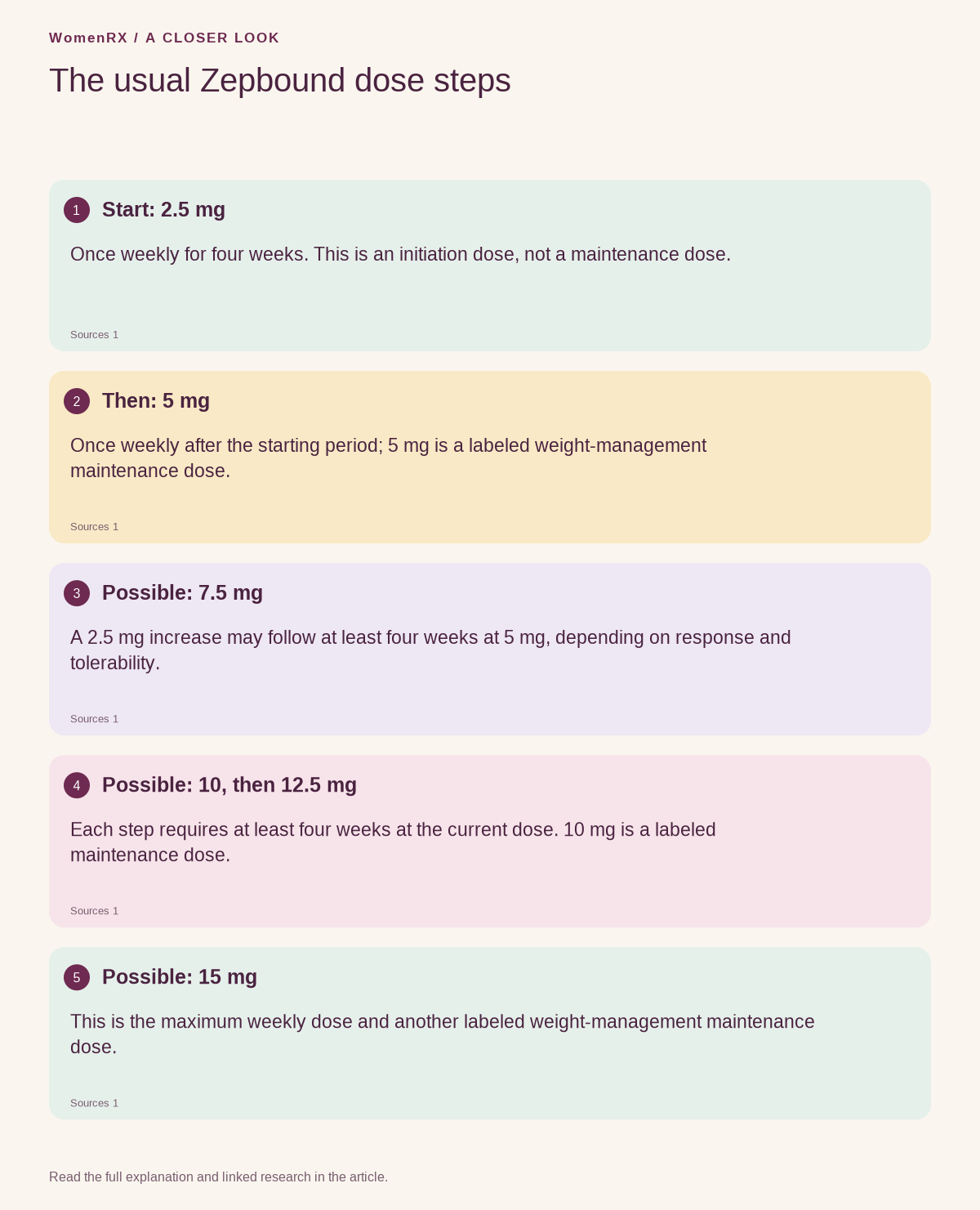
The usual Zepbound dose steps
Start: 2.5 mg: Once weekly for four weeks. This is an initiation dose, not a maintenance dose.1
Then: 5 mg: Once weekly after the starting period; 5 mg is a labeled weight-management maintenance dose.1
Possible: 7.5 mg: A 2.5 mg increase may follow at least four weeks at 5 mg, depending on response and tolerability.1
Possible: 10, then 12.5 mg: Each step requires at least four weeks at the current dose. 10 mg is a labeled maintenance dose.1
Possible: 15 mg: This is the maximum weekly dose and another labeled weight-management maintenance dose.1
Read the figure as text
Each increase beyond 5 mg is a possibility to discuss, not an automatic appointment with the next dose.- Start: 2.5 mg: Once weekly for four weeks. This is an initiation dose, not a maintenance dose.1
- Then: 5 mg: Once weekly after the starting period; 5 mg is a labeled weight-management maintenance dose.1
- Possible: 7.5 mg: A 2.5 mg increase may follow at least four weeks at 5 mg, depending on response and tolerability.1
- Possible: 10, then 12.5 mg: Each step requires at least four weeks at the current dose. 10 mg is a labeled maintenance dose.1
- Possible: 15 mg: This is the maximum weekly dose and another labeled weight-management maintenance dose.1
More questions, answered
Does nausea mean tirzepatide is working better?
No. In a post hoc analysis of four trials involving adults with obesity or overweight, weight reduction was similar among participants who reported no nausea, nausea alone, or nausea, vomiting or diarrhea. You don’t need to treat feeling sick as a goal. 2
Sources you can check
- ZEPBOUND (TIRZEPATIDE) INJECTION, SOLUTION ZEPBOUND (TIRZEPATIDE) INJECTION, SOLUTION ZEPBOUND KWIKPEN (TIRZEPATIDE) INJECTION, SOLUTION [ELI LILLY AND COMPANY] | US prescribing information and patient instructionsAccessed 2026-09-25Return to first citation
- Gastrointestinal tolerability and weight reduction associated with tirzepatide in adults with obesity or overweight with and without type 2 diabetes in the SURMOUNT-1 to -4 trials.Rubino DM, Pedersen SD, Connery L, Cao D, Chigutsa F, Stefanski A, Fraseur Brumm J, Griffin R, Gerber C. · Diabetes, obesity & metabolism · 2025Return to first citation