How to Choose a Protein Bar by Its Label
Compare the serving you’ll actually eat, then check protein, fiber, added sugar, allergens, and cost against another snack.
A protein bar can be a handy snack, but it isn’t a requirement or automatically more filling than other options. Compare the amount you’ll eat, protein and fiber, added sugars, and price per serving. Check the package for ingredients you need to avoid, too: the protein number cannot tell you whether a bar fits a food allergy. 1 2 3
Start with the serving you’ll actually eat
The numbers on a Nutrition Facts label apply to its stated serving size. Check whether that serving matches the amount you plan to eat; if a package contains more than one serving and you eat the whole thing, the nutrients add up accordingly. The label can help you compare calories, protein, fiber, total sugars, and added sugars per serving. 1
This first check prevents a common mismatch: comparing one bar with a different snack portion, or treating a package as one serving when the label says otherwise. Compare like with like, based on the snack you want, rather than the product’s front-of-package claims.
Look at protein and fiber together
Protein is one reason a bar may suit a particular snack occasion. Your body needs protein, but how much you need depends on factors including age, sex, health, and activity level. MedlinePlus notes that most Americans get enough protein from their diets, so a bar isn’t automatically necessary just because it advertises a high-protein content. 3
Fiber is another useful label number. Dietary fiber adds bulk and can help you feel full faster; it also supports digestion. But that general role doesn’t prove that a particular protein bar will keep you full longer than another snack. Compare the bar’s fiber with other options, and remember that whole grains, fruits, and vegetables are fiber sources too. 2
If you increase fiber substantially, do it gradually if you can. A quick jump can bring gas, bloating, or cramps. 2
Check added sugar, not just the sweet taste
Look at the line for added sugars, rather than relying on a bar’s name, flavor, or “high protein” message. The Nutrition Facts label lists both total sugars and added sugars, which are different measures. A bar can have a useful amount of protein and still be sweeter than you want for an everyday snack. 1
There’s no single bar-level number here that defines a “good” choice for everyone. Instead, compare the added sugars per serving across the products you’re considering and think about how the bar fits into the rest of your day. A healthy eating pattern can include favorite foods while limiting added sugars overall. 4
Keep nutrition and personal fit separate
The Nutrition Facts panel helps compare listed nutrients, but those numbers alone don’t tell you whether a bar fits a food allergy. Check the package’s ingredient and allergy information for the food you need to avoid. Milk and nuts, for example, are protein sources, so a high protein number is no substitute for checking what’s in the bar. If you can’t establish whether it fits your needs from the package, choose a snack whose ingredients you can check. 1 3
Compare the cost of the snack you’ll eat
Price per bar is a quick starting point, but compare the cost per serving you’ll actually use. If you’re choosing a bar mainly for protein, you can also divide the price by the grams of protein per serving to compare cost per gram. That calculation doesn’t tell you which food is better overall; it just makes the price comparison clearer.
Then compare the bar with another realistic snack. For example, dairy products, nuts, beans, and some grains provide protein, while fruit, vegetables, and whole grains can add fiber. A bar may win on portability or convenience; another snack may suit your budget, preferences, or needs better. 2 3
A quick way to decide
Ask what job you want the snack to do: be easy to carry, add protein, contribute fiber, or simply tide you over between meals. Use the label to see whether the bar fits that job, then consider personal fit and price. You don’t need a bar with the biggest protein number if a different snack better fits the occasion.
There isn’t a universal protein-bar formula for women. Protein needs vary by individual, and the label comparison works the same way: focus on your portion, what you want from the snack, and what fits your diet and budget. 3 4
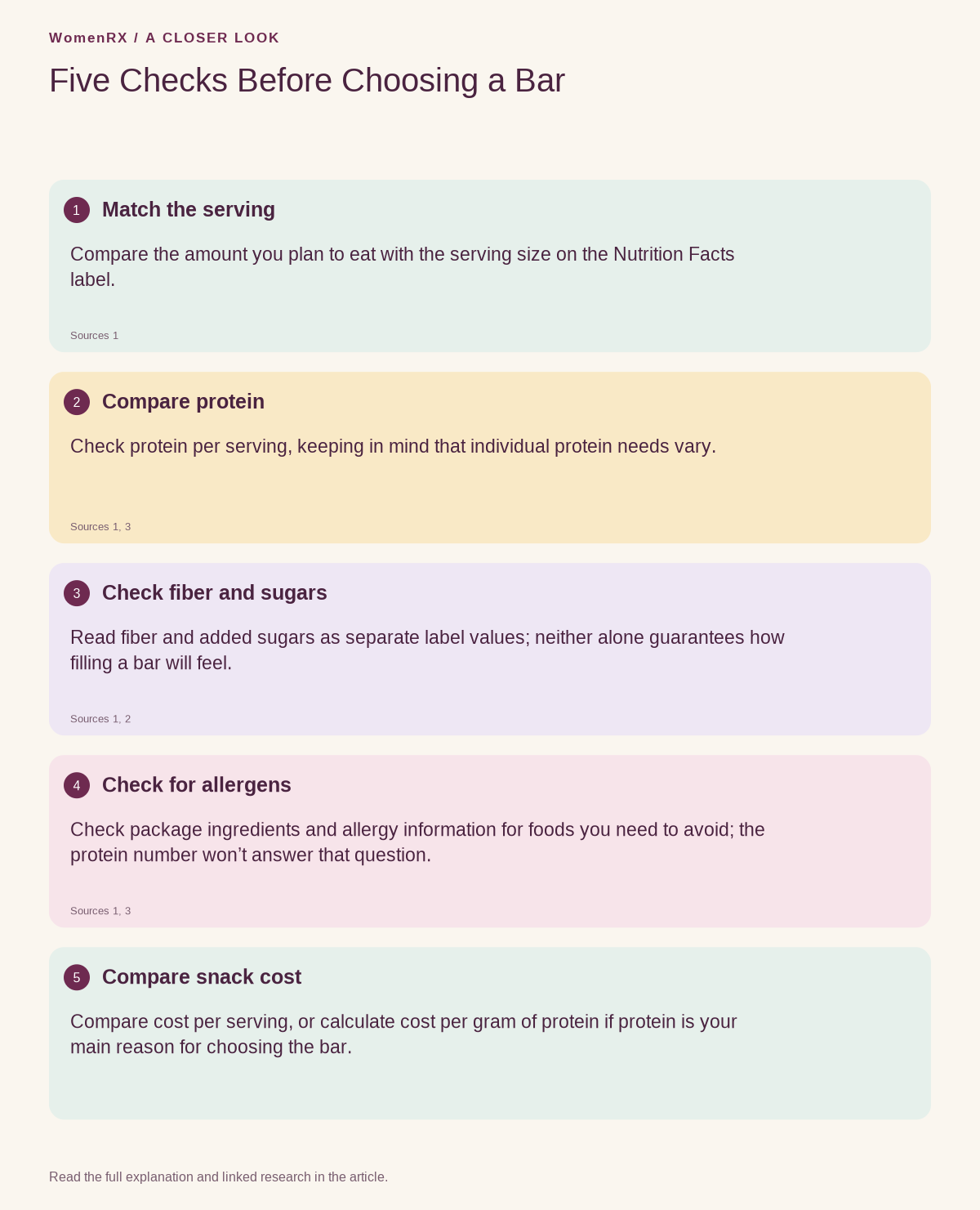
Five Checks Before Choosing a Bar
Match the serving: Compare the amount you plan to eat with the serving size on the Nutrition Facts label.1
Compare protein: Check protein per serving, keeping in mind that individual protein needs vary.13
Check fiber and sugars: Read fiber and added sugars as separate label values; neither alone guarantees how filling a bar will feel.12
Check for allergens: Check package ingredients and allergy information for foods you need to avoid; the protein number won’t answer that question.13
Compare snack cost: Compare cost per serving, or calculate cost per gram of protein if protein is your main reason for choosing the bar.
Read the figure as text
Use the package and shelf price to compare a bar with a snack you’d otherwise eat.- Match the serving: Compare the amount you plan to eat with the serving size on the Nutrition Facts label.1
- Compare protein: Check protein per serving, keeping in mind that individual protein needs vary.13
- Check fiber and sugars: Read fiber and added sugars as separate label values; neither alone guarantees how filling a bar will feel.12
- Check for allergens: Check package ingredients and allergy information for foods you need to avoid; the protein number won’t answer that question.13
- Compare snack cost: Compare cost per serving, or calculate cost per gram of protein if protein is your main reason for choosing the bar.
More questions, answered
Do women need a special kind of protein bar?
There isn’t one protein target that applies to every woman: protein needs vary with factors such as age, health, and activity level. Compare bars based on your needs and preferences rather than assuming a product marketed to women is necessary. 3
Sources you can check
- Food Labeling: MedlinePlusAccessed 2026-09-25Return to first citation
- Dietary Fiber: MedlinePlusAccessed 2026-09-25Return to first citation
- Dietary Proteins: MedlinePlusAccessed 2026-09-25Return to first citation
- Nutrition: MedlinePlusAccessed 2026-09-25Return to first citation