How to Choose Cottage Cheese for a Weight-Management Snack
Compare the serving, fat, and sodium on the label, then choose toppings that make the snack work for you.
Cottage cheese can fit into a weight-management eating pattern, but there isn’t one fat level you need to choose. Compare products using the same serving size, check sodium and fat, and decide how much you want to eat before adding toppings. For weight management, the overall eating pattern and calorie intake matter more than choosing any particular snack. 1
Start with the serving, not the front of the tub
Cottage cheese can be a convenient snack or part of a small meal. But the label is more useful than a front-of-package phrase like “light” or “low fat.” First check the serving size. Then compare the nutrition information for that same amount across products. If the serving sizes differ, the numbers won’t be a fair comparison.
A simple way to choose is to ask: Does this serving fit the kind of snack I want, and do I like the taste enough to enjoy it? You don’t need to treat one food as a weight-loss shortcut. Long-term weight loss is tied to an overall eating pattern and reduced calorie intake. 1
Compare fat and sodium separately
Reduced-fat and full-fat options are choices, not a ranking. Read the listed fat and calories for the serving you expect to eat, then choose based on your preferences and how the snack fits into the rest of your day. Comparing equal amounts shows what each option would add to your snack. It doesn’t tell you which one you’ll enjoy more or how much you’ll want to eat.
Check sodium as its own line on the label. Compare the amounts per equal serving rather than relying on a product’s name. Most adults are advised to stay below 2,300 milligrams of sodium a day, and reading food labels can help you see how much prepared foods contribute. 2
Make the portion match the occasion
For a snack, decide on a portion before you start eating rather than assuming the container is one serving. Compare that amount with the serving size on the label. If you spoon out twice the listed serving, double the listed calories, fat, and sodium to understand what’s in your bowl. For a small meal, think about the cottage cheese as one part of what you’ll eat, not automatically the whole meal. The right amount depends on your appetite, schedule, and what else is on your plate.
A practical example: if you want something savory between meals, spoon a portion into a bowl and add cucumber, tomato, pepper, or herbs. If you want a sweeter snack, try fruit. These are pairing ideas, not proven weight-loss combinations. If you prefer toppings such as nuts, granola, honey, or jam, include them in the portion you’re planning rather than treating them as invisible extras.
What the women’s research can, and can’t, tell you
One year-long dietary-counseling study included 30 women and 30 men. Women reported eating cottage cheese more often after making broader changes to their diets, while the group also lost weight on average. Because cottage cheese was not tested on its own, the study can’t tell us that it caused the weight loss or that it has a special effect in women. The women ranged in age from 31 to 72, and the study didn’t report results by life stage. 3
So choose based on the label, your taste, and the role you want the snack to play. You don’t need to pick a particular fat level or add a prescribed topping to make cottage cheese fit your day.
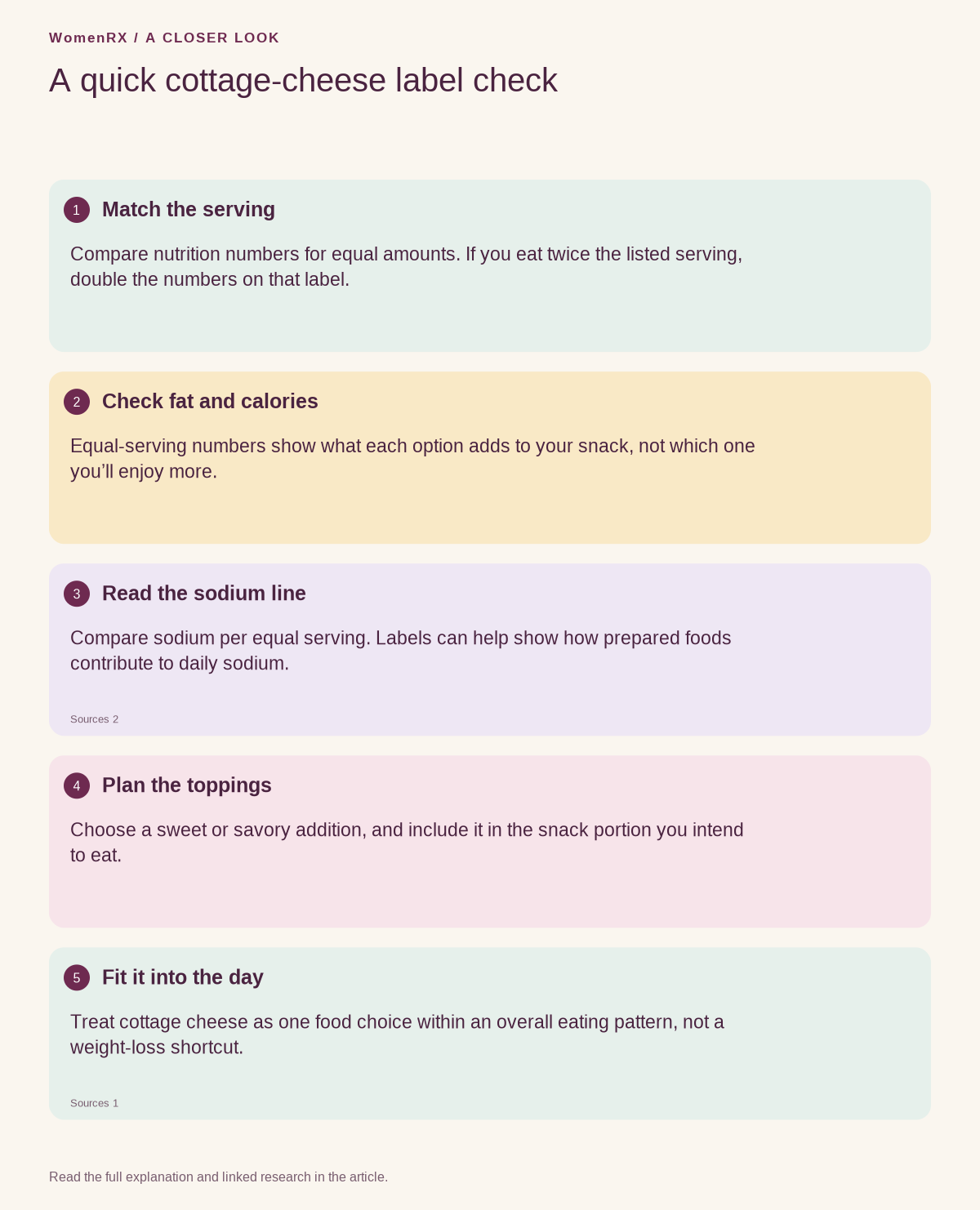
A quick cottage-cheese label check
Match the serving: Compare nutrition numbers for equal amounts. If you eat twice the listed serving, double the numbers on that label.
Check fat and calories: Equal-serving numbers show what each option adds to your snack, not which one you’ll enjoy more.
Read the sodium line: Compare sodium per equal serving. Labels can help show how prepared foods contribute to daily sodium.2
Plan the toppings: Choose a sweet or savory addition, and include it in the snack portion you intend to eat.
Fit it into the day: Treat cottage cheese as one food choice within an overall eating pattern, not a weight-loss shortcut.1
Read the figure as text
Use these steps to compare products fairly and plan how the snack fits your day.- Match the serving: Compare nutrition numbers for equal amounts. If you eat twice the listed serving, double the numbers on that label.
- Check fat and calories: Equal-serving numbers show what each option adds to your snack, not which one you’ll enjoy more.
- Read the sodium line: Compare sodium per equal serving. Labels can help show how prepared foods contribute to daily sodium.2
- Plan the toppings: Choose a sweet or savory addition, and include it in the snack portion you intend to eat.
- Fit it into the day: Treat cottage cheese as one food choice within an overall eating pattern, not a weight-loss shortcut.1
Sources you can check
- Dietary Supplements for Weight Loss - Health Professional Fact SheetAccessed 2026-09-25Return to first citation
- Sodium: MedlinePlusAccessed 2026-09-25Return to first citation
- [Effects of dietary habits modifications on selected metabolic parameters during weight loss in obese persons].Ostrowska L, Stefańska E, Jastrzebska M, Adamska E, Wujek A, Waszczeniuk M. · Roczniki Panstwowego Zakladu Higieny · 2012Return to first citation