How to Build Satisfying, Protein-Rich Meals
Protein can be one useful part of a satisfying meal, without becoming the focus of every meal.
If a meal leaves you hungry sooner than you’d like, you could try including a protein food you enjoy alongside grains, vegetables, or fruit. In a small trial in women, spreading protein more evenly across three meals was associated with less energy-dense snack-food intake after lunch. The study didn’t establish a universal protein target or show that protein alone causes weight loss. 1 3
Protein can be a useful part of a weight-management meal, but it isn’t a shortcut that works independently of the rest of your eating pattern. You don’t need to build every meal around it or follow a single high-protein target. Instead, think of protein as one flexible meal component, alongside other foods that make meals satisfying and workable for you.
What protein may add
Your body uses protein to build and maintain tissues, including muscle. How much protein a person needs varies with factors such as age, sex, health, and physical activity. 1
One small randomized study offers a useful, specific example. Researchers assigned healthy women aged 20 to 44 with overweight or obesity to consume their daily protein more evenly across three meals or to eat most of it at dinner. During the study’s initial weight-loss phase, meals were provided; participants were then asked to follow their assigned pattern while choosing their own food. Among the 44 women whose data were analyzed, the evenly distributed group ate less energy-dense snack food after lunch than the dinner-heavy group, with reported averages of 44.3 versus 62.0 grams. 3
That result is about snack intake in a particular study, not proof that spreading protein this way causes more weight loss or that adding protein makes any given meal more satisfying. The trial was small and limited to a specific group of women, and it doesn’t establish that one distribution works best for everyone. Consider it a practical option to try if you tend to feel hungry between meals, not a rule you need to follow.
Build a meal, not a protein quota
A simple approach is to choose a protein food you like, then add other foods that make the meal enjoyable and satisfying. Examples include:
- Oatmeal with milk or yogurt, plus fruit.
- Beans with a grain, vegetables, and a sauce or seasoning you like.
- Meat with vegetables and a grain or potato.
- Yogurt or nuts alongside fruit or whole-grain toast for a snack.
These are flexible examples, not prescribed portions or a required menu. Protein comes from foods such as meat, dairy, nuts, and some grains and beans. 1 If a meal already keeps you comfortably satisfied, there’s no need to add a protein product simply because it is labeled “high protein.”
You can also look across the day instead of judging one meal. If breakfast is mostly grain or fruit and you often want a snack soon after, you might try adding yogurt or milk. If dinner is the meal where you usually get most of your protein, you could experiment with including beans, dairy, or meat earlier in the day. The point is to find a pattern that fits your appetite and routine, not to make each meal identical.
Keep the whole eating pattern in view
Protein is only one part of a meal and of weight management. The women’s trial compared patterns within an energy-restricted program; it didn’t isolate protein as the only difference that could affect eating or weight. 3 That’s why it’s more useful to ask whether your meals are satisfying and sustainable than to assume that adding protein alone will lead to weight loss.
For older adults, preserving muscle and strength is a key part of health; body weight by itself doesn’t tell the whole story. 2 The general food examples here also aren’t a personalized plan for pregnancy, breastfeeding, or kidney disease. Protein needs can vary with health and other individual factors, so those situations call for advice tailored to you rather than a generic weight-loss target. 1
A reasonable next step is modest: choose one meal that leaves you hungry sooner than you’d like and try a protein-containing food you enjoy alongside the rest of the meal. Keep the option if it helps; change it if it doesn’t.
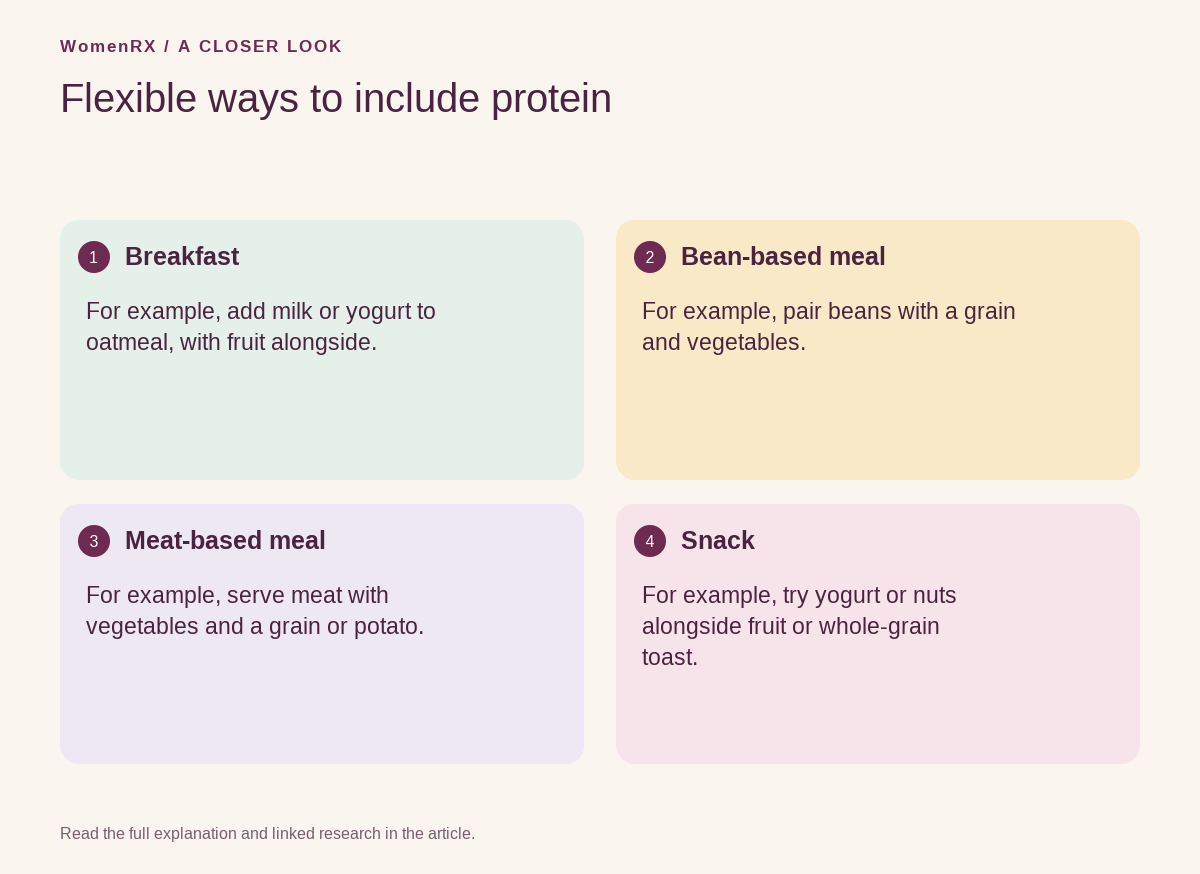
Flexible ways to include protein
Breakfast: For example, add milk or yogurt to oatmeal, with fruit alongside.
Bean-based meal: For example, pair beans with a grain and vegetables.
Meat-based meal: For example, serve meat with vegetables and a grain or potato.
Snack: For example, try yogurt or nuts alongside fruit or whole-grain toast.
Read the figure as text
These are meal-building examples, not portion prescriptions or daily protein targets.- Breakfast: For example, add milk or yogurt to oatmeal, with fruit alongside.
- Bean-based meal: For example, pair beans with a grain and vegetables.
- Meat-based meal: For example, serve meat with vegetables and a grain or potato.
- Snack: For example, try yogurt or nuts alongside fruit or whole-grain toast.
More questions, answered
Do I need to eat protein at every meal?
Not necessarily. A small trial in women found less snack-food intake after lunch when protein was spread more evenly across meals, but it doesn’t establish a rule for everyone. You can use meal timing as an experiment rather than a requirement. 3
Do women need a special high-protein plan?
Protein needs vary with factors such as age, sex, health, and activity, so one fixed target won’t fit everyone. These meal examples aren’t a condition-specific target. 1
Sources you can check
- Dietary Proteins: MedlinePlusAccessed 2026-09-25Return to first citation
- Body Weight: MedlinePlusAccessed 2026-09-25Return to first citation
- Evenly Distributing Daily Dietary Protein Across Three Meals Reduces Women's Snack Food Reinforcement and Intake of Energy-Dense Snack Foods During Weight Loss: A Randomized Controlled Trial.De Leon A, Roemmich JN, Casperson SL. · Journal of the Academy of Nutrition and Dietetics · 2026Return to first citation