How Nutritious Is Tuna, and How Can You Choose It Safely?
Tuna offers protein, but the species on the label matters more than whether it comes from a can or a fish counter.
Tuna can be a useful source of protein, whether you buy it canned or fresh. For mercury, look at the type: FDA/EPA guidance places canned light tuna among its Best Choices, albacore and yellowfin among Good Choices, and bigeye in Choices to Avoid for people who might become or are pregnant or are breastfeeding. Fresh doesn’t automatically mean lower in mercury.345
Compare the fish, not just the package
Canned and fresh tuna can both make a protein-centered meal. As a reference, USDA data list about 16.5 grams of protein in 3 ounces of canned light tuna in water, drained. Fresh yellowfin, raw, has about 20.7 grams in 3 ounces. Those figures describe two particular foods in different states, not a rule that fresh tuna always has more protein than canned tuna. A cooked portion, an oil-packed can, or another species may differ.34
The same distinction matters even more for mercury. “Tuna” covers several species, and a can’s packing liquid tells you nothing about which mercury category the fish belongs in. FDA/EPA guidance puts canned light tuna, which is often made with skipjack, in its Best Choices category. Albacore, also called white tuna, and yellowfin are Good Choices. Bigeye is a Choice to Avoid for people who might become or are pregnant or are breastfeeding. Some larger or longer-lived tuna tend to contain more mercury, which helps explain why the categories differ.5
At the store, read the species or product name before deciding how the tuna fits your week. “White” means albacore in this guidance; it isn’t another name for canned light. A fresh yellowfin steak belongs to the yellowfin category, not the canned-light category just because both are tuna. If a menu says only “tuna,” ask what kind it is when the pregnancy guidance applies to you.5
What changes when pregnancy is possible
For someone who might become pregnant, is pregnant, or is breastfeeding, FDA/EPA advice is to eat a variety of lower-mercury fish. Its target is two to three adult servings a week from the Best Choices category. An adult serving in this guidance is 4 ounces, measured before cooking, for a weekly total of about 8 to 12 ounces.5 Canned light tuna can be one of those choices, alongside other fish in the category. Variety is useful here: you don’t need tuna at every fish meal.5
If you choose albacore or yellowfin instead, the advice changes: have one serving from the Good Choices category and no other fish that week. Avoid bigeye under this pregnancy-focused guidance.5 These are fish-category recommendations, not a single limit that applies to every tuna product. The USDA’s 3-ounce drained-can nutrition example also isn’t the 4-ounce adult serving used in the FDA/EPA advice.35
The guidance applies while planning pregnancy, too. FDA/EPA encourages people who might become pregnant in the next year to start following it now because mercury from fish can accumulate in the body and takes months to leave naturally. Mercury can pass from a pregnant woman to her baby.51 The aim isn’t to avoid fish altogether: seafood provides protein and fatty acids, and pregnancy guidance recommends lower-mercury choices as part of a varied diet.25
If you aren’t planning pregnancy
The pregnancy-specific categories and serving schedule answer a particular question about mercury exposure during fetal development; they aren’t a personal tuna prescription for every adult. For adults generally, the Dietary Guidelines recommendation cited by FDA/EPA is at least 8 ounces of fish per week based on a 2,000-calorie diet. FDA/EPA says lower-mercury fish are a good choice for everyone, and anyone can use its fish chart to choose among species.5
For an everyday meal, choose the tuna type first, then check the product label for what else matters to you, such as sodium or packing liquid. The USDA nutrition figures above describe only canned light tuna in water, drained; check the nutrition label for the product you buy.3
The useful shortcut is simple: canned light, albacore, yellowfin, and bigeye are not interchangeable names on a weekly fish plan. Identify the type, then use the guidance for your situation.5
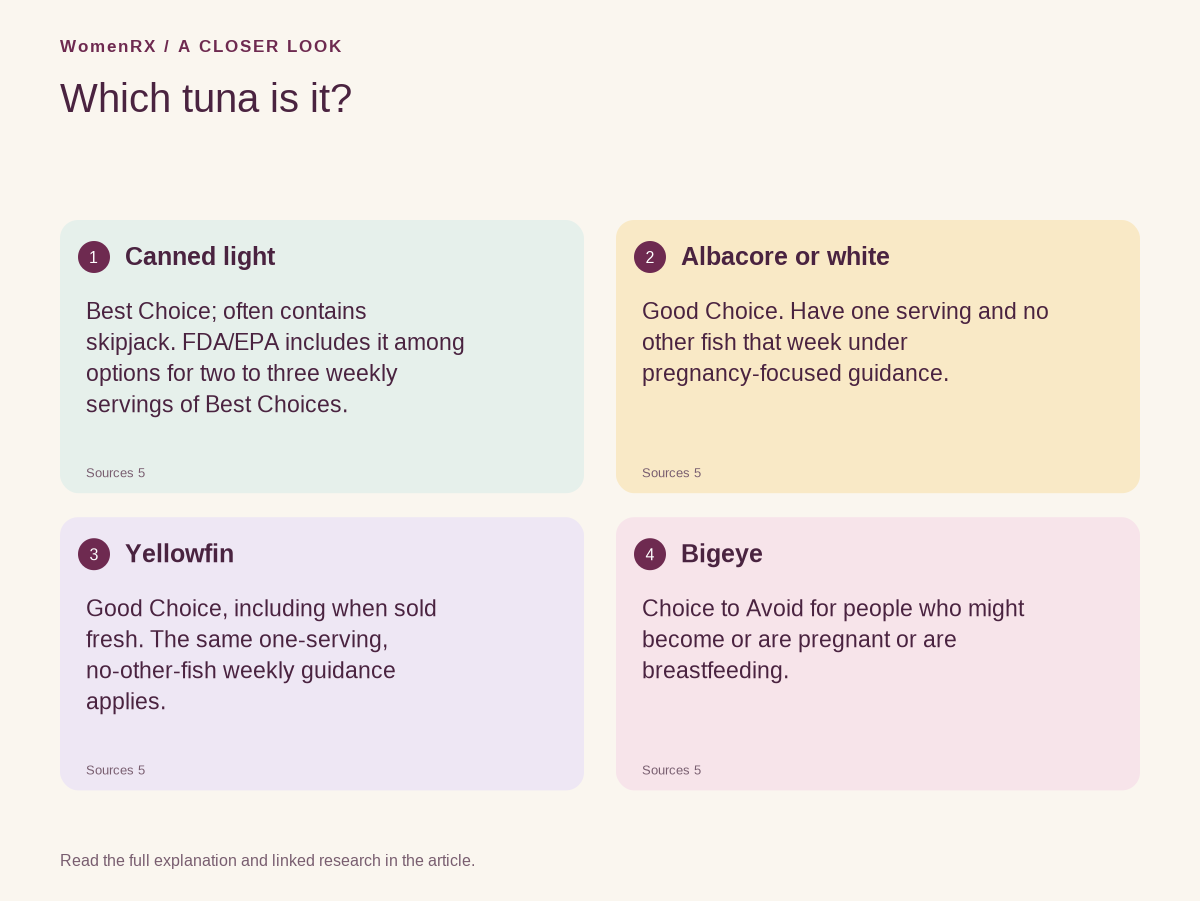
Which tuna is it?
Canned light: Best Choice; often contains skipjack. FDA/EPA includes it among options for two to three weekly servings of Best Choices.5
Albacore or white: Good Choice. Have one serving and no other fish that week under pregnancy-focused guidance.5
Yellowfin: Good Choice, including when sold fresh. The same one-serving, no-other-fish weekly guidance applies.5
Bigeye: Choice to Avoid for people who might become or are pregnant or are breastfeeding.5
Read the figure as text
For pregnancy planning, pregnancy, or breastfeeding, identify the tuna type before applying the FDA/EPA fish categories.- Canned light: Best Choice; often contains skipjack. FDA/EPA includes it among options for two to three weekly servings of Best Choices.5
- Albacore or white: Good Choice. Have one serving and no other fish that week under pregnancy-focused guidance.5
- Yellowfin: Good Choice, including when sold fresh. The same one-serving, no-other-fish weekly guidance applies.5
- Bigeye: Choice to Avoid for people who might become or are pregnant or are breastfeeding.5
More questions, answered
Does packing tuna in water make it lower in mercury?
Packing liquid isn’t a mercury category. The USDA nutrition figures above describe only canned light tuna in water, drained; check the nutrition label for the product you buy.35 For mercury decisions, identify whether the fish is canned light, albacore, yellowfin, or another type and check the FDA/EPA fish chart.5
Sources you can check
- Mercury: MedlinePlusAccessed 2026-09-25Return to first citation
- Dietary Supplements and Life Stages: Pregnancy - Health Professional Fact SheetAccessed 2026-09-25Return to first citation
- USDA SR Legacy: Fish, tuna, light, canned in water, drained solids (Includes foods for USDA's Food Distribution Program) (FDC 173709)Accessed 2026-09-25Return to first citation
- USDA SR Legacy reference composition: tunaAccessed 2026-09-25Return to first citation
- Questions & Answers from the FDA/EPA Advice about Eating Fish for Those Who Might Become or Are Pregnant or Breastfeeding and Children Ages 1 to 11 Years | FDAAccessed 2026-09-25Return to first citation