Choosing Tuna for Meals, Weight Goals, and Mercury Safety
Tuna can provide protein in a meal, but the species matters more than whether it comes from a can or the fish counter when you're checking mercury guidance.
Tuna can fit a weight-management eating pattern as a protein food, but eating it doesn't cause weight loss on its own. As a meal-planning example, a 3-ounce portion of raw yellowfin provides about 21 grams of protein; use the label for a canned product's nutrition. If pregnancy is possible, use the FDA/EPA's species-specific fish guidance rather than treating all tuna alike. 234
Start with the meal, not a promise about tuna
Tuna gives you a way to add protein to a meal without making the whole meal about weight loss. For example, you might put it on a grain-and-vegetable bowl, or make a sandwich with fruit on the side. What else goes into that meal matters, too. Healthy eating includes a variety of foods that provide the energy and nutrients you need; it doesn't depend on eating one particular food. 2
For a concrete portion example, USDA reference data list 3 ounces (85 grams) of raw yellowfin tuna. At that weight, its listed values work out to about 21 grams of protein and 93 calories. You could use that amount in the grain-and-vegetable bowl above, then consider the whole meal rather than the tuna alone. This is a food-composition example, not a recommended portion for everyone or a prediction of how your weight will change. It also isn't a nutrition figure for a cooked steak or canned product. 3
Read the can for the meal; read the species for mercury
When you're choosing between canned tuna and fresh tuna, make two separate checks. First, look at the canned product's serving size and nutrition information to see how much tuna you'll eat and what that product contributes. The USDA yellowfin example gives you a reference for fresh, raw fish, but it can't substitute for the numbers on a can. A canned tuna salad with dressing and a simply cooked tuna steak are different dishes, even before you add sides. Preparation can change the calorie picture: FDA/EPA advice notes that broiled fish typically has fewer calories than fried fish. 34
Second, find out which tuna you're buying. “Canned” and “fresh” don't tell you enough about mercury. Canned light tuna is generally made from smaller tuna species, most often skipjack. Canned white tuna is albacore. Yellowfin and bigeye fall into different mercury categories in FDA/EPA advice. 4
If a package or fish-counter sign doesn't identify the type, ask rather than assuming all tuna has the same guidance. This distinction is especially useful if tuna is a regular lunch for you, not just an occasional meal.
The fish advice changes if pregnancy is possible
FDA/EPA fish advice is specifically written for people who might become pregnant, are pregnant, or are breastfeeding, as well as for children. For an adult in those groups, it recommends 2 to 3 servings a week of varied fish from its “Best Choices” category. Its typical adult serving is 4 ounces of fish measured before cooking. That is fish advice for this life stage, not a universal tuna portion for weight management or a reason to treat every can as one serving. 4
Here is how the tuna choices differ under that advice:
- Canned light tuna: A “Best Choice.” FDA/EPA says 2 to 3 servings a week can fit its advice, though it encourages a variety of fish. 4
- Albacore, also called white tuna, and yellowfin: “Good Choices.” If you eat a serving from this category, FDA/EPA advises having just one serving and no other fish that week. 4
- Bigeye: A “Choice to Avoid” for these groups. 4
These categories aren't a judgment on tuna's protein or whether it's canned. They address mercury exposure. Mercury can build up through the aquatic food chain, and a pregnant woman can pass mercury in her body to her baby. FDA/EPA notes that albacore typically has three times more mercury than canned light tuna, which helps explain why the two canned choices have different guidance. 14
If you might become pregnant in the next year, FDA/EPA encourages following this fish advice now, rather than waiting for a positive pregnancy test. Mercury is removed from the body over time, but that process can take several months. This is a planning-pregnancy consideration, not a rule to apply indiscriminately to every woman choosing lunch. 4
A useful way to decide at the store
Choose the tuna type first if mercury guidance applies to you. Then check the amount of fish you'll actually eat against the serving guidance, rather than counting cans, sandwiches, or restaurant plates as if they were identical. The 3-ounce raw yellowfin example can help you picture an amount for a meal, but don't confuse it with the FDA/EPA's 4-ounce, before-cooking serving for pregnancy-related fish advice. For canned tuna, use that product's serving size and nutrition information; for fresh tuna, consider how you'll cook it and what you'll serve alongside it. A varied fish rotation can also keep tuna from becoming your only seafood choice. 34
If pregnancy isn't possible and you're not breastfeeding, the pregnancy-specific weekly tuna categories aren't a personal weight-loss plan. Fish can still be part of a healthy eating pattern; the FDA/EPA page points to general adult guidance of at least 8 ounces of fish a week based on a 2,000-calorie diet. Your meal choices can be guided by the whole pattern you eat, rather than a promise attached to tuna. 24
Which tuna is on the label?
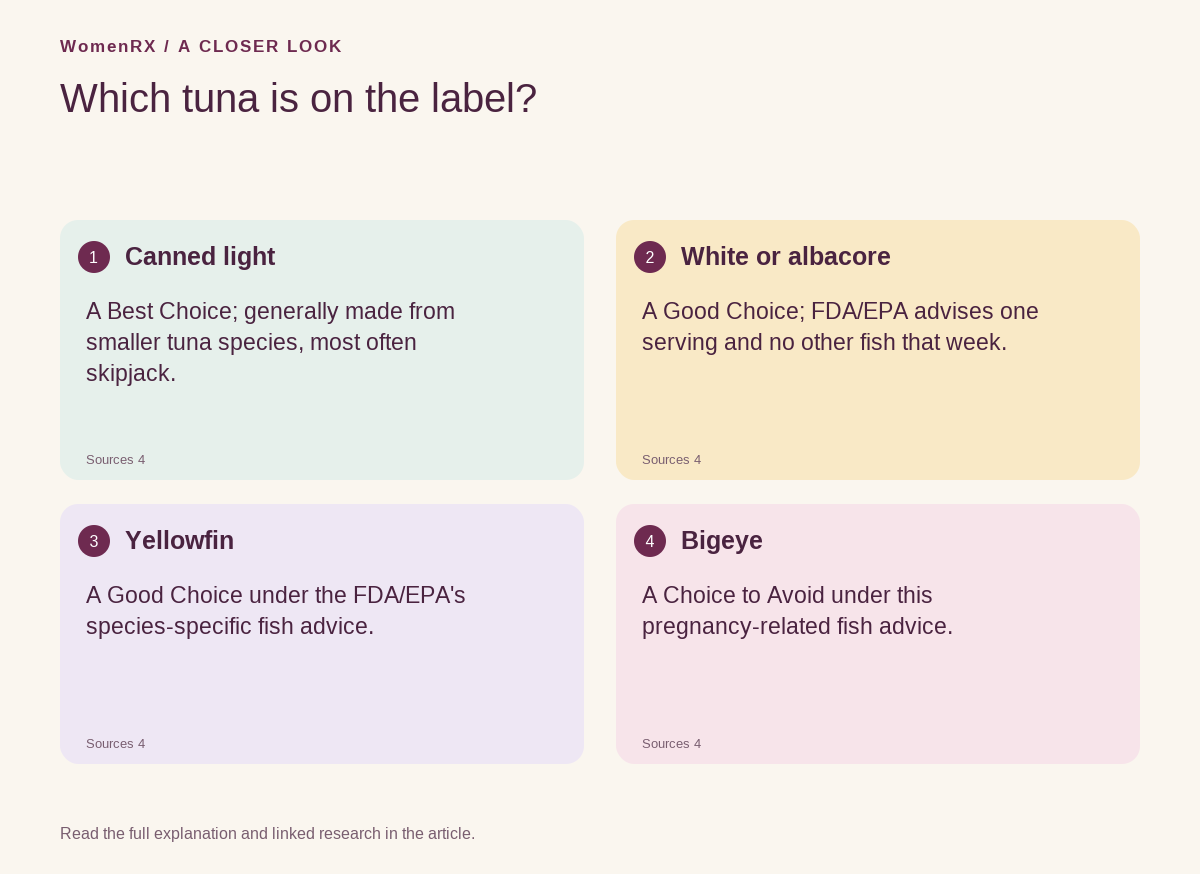
Canned light: A Best Choice; generally made from smaller tuna species, most often skipjack.4
White or albacore: A Good Choice; FDA/EPA advises one serving and no other fish that week.4
Yellowfin: A Good Choice under the FDA/EPA's species-specific fish advice.4
Bigeye: A Choice to Avoid under this pregnancy-related fish advice.4
Read the figure as text
For someone who might become pregnant, is pregnant, or is breastfeeding, FDA/EPA mercury guidance follows tuna type, not simply canned versus fresh.- Canned light: A Best Choice; generally made from smaller tuna species, most often skipjack.4
- White or albacore: A Good Choice; FDA/EPA advises one serving and no other fish that week.4
- Yellowfin: A Good Choice under the FDA/EPA's species-specific fish advice.4
- Bigeye: A Choice to Avoid under this pregnancy-related fish advice.4
More questions, answered
Is canned white tuna the same choice as canned light?
No. White tuna is albacore; canned light is generally made from smaller species, most often skipjack. For people who might become pregnant, are pregnant, or are breastfeeding, FDA/EPA puts albacore in “Good Choices” and canned light in “Best Choices.” 4
Sources you can check
- Mercury: MedlinePlusAccessed 2026-09-25Return to first citation
- Nutrition: MedlinePlusAccessed 2026-09-25Return to first citation
- USDA SR Legacy reference composition: tunaAccessed 2026-09-25Return to first citation
- Questions & Answers from the FDA/EPA Advice about Eating Fish for Those Who Might Become or Are Pregnant or Breastfeeding and Children Ages 1 to 11 Years | FDAAccessed 2026-09-25Return to first citation