Shrimp: Protein, Labels, Allergies, and Safe Handling
Cooked shrimp offers protein in a small serving, while safe handling depends on whether the shrimp you buy is raw or ready to eat.
Three ounces of cooked shrimp provides about 20 grams of protein in USDA reference data, not a guarantee for every product. 4 Check packaged shrimp for serving size, sodium, and whether it’s raw or cooked. Keep raw shrimp separate from ready-to-eat food, thaw frozen shrimp in the refrigerator, and cook it thoroughly. If you’re pregnant, cooked shrimp is a lower-mercury seafood choice; avoid raw or undercooked shrimp. 61089
What shrimp contributes to a meal
Shrimp is a straightforward way to add protein to a meal. USDA reference data lists 20.4 grams of protein in three ounces (85 grams) of cooked shrimp, along with about 84 calories and 0.2 grams of fat. Those are food-composition estimates for cooked shrimp, not measurements of the particular bag, restaurant dish, or portion on your plate. Protein helps the body build and maintain muscle, skin, and bone. These figures and general protein guidance don’t establish a shrimp-specific protein benefit for women. 43
That reference serving also lists about 94 milligrams of sodium. It’s a useful baseline, but not a number to assign to breaded, seasoned, sauced, or other packaged shrimp. For those products, compare the sodium and serving size on their own Nutrition Facts labels. A label’s numbers are generally given per serving, which may not match the amount you plan to eat. 46
Fresh, frozen, and prepared: ask a different question of each
“Fresh” and “frozen” tell you something about how shrimp is sold, not whether it’s ready to eat. When shopping, first find out whether the shrimp is raw or cooked. Then check what else comes with it. A plain frozen bag and a prepared shrimp dish call for different label checks: the bag’s cooking directions matter if the shrimp is raw, while the prepared product’s sodium and serving size help you understand what you’re buying. Nutrition Facts are especially useful when comparing two packaged options side by side. 6
For fresh or thawed raw shrimp, keep it away from foods you won’t cook, including a salad you’re assembling for the same meal. Wash your hands and clean utensils and surfaces after they touch raw seafood. Refrigerate fresh food promptly. If you’re buying unpackaged cooked shrimp, look for a display that keeps it separate from raw seafood. 105
Frozen shrimp needs the same raw-or-cooked check. Thaw it in the refrigerator, or use the FDA’s quicker cold-water method with the shrimp sealed in a bag. If using a microwave to defrost seafood, cook it immediately afterward. 10 Cook raw shrimp thoroughly: CDC describes cooked shellfish flesh as pearly or white and opaque, while FDA gives 145°F as the internal temperature for most seafood. Follow the package directions for the product you have. 910 Once cooked, refrigerate leftovers promptly rather than leaving them out after the meal. 7
Shellfish allergy changes the decision
Shrimp is a crustacean shellfish and a common food-allergy trigger. An allergy is different from simply disliking a food: the immune system reacts to it, and reactions can sometimes be serious. Food-allergy symptoms often begin within minutes to two hours of eating the food. If you know you’re allergic to shrimp, avoiding it is the way to prevent a reaction. 1
For a packaged meal, check the ingredients rather than relying on the picture or product name. At a restaurant, tell staff about the allergy and ask about the dish. If you suspect shrimp caused a reaction but haven’t been evaluated, an allergy assessment can help clarify what to avoid. Seek emergency help for a severe or rapidly worsening reaction. 12
If you’re pregnant
Shrimp is on the FDA and EPA Best Choices list for seafood lower in mercury. Their advice for pregnancy is to eat 8 to 12 ounces a week of a variety of lower-mercury seafood, not 8 to 12 ounces of shrimp specifically. 8 Preparation is a separate safety question: CDC recommends choosing cooked shellfish and avoiding raw or undercooked shellfish during pregnancy, including shrimp in raw seafood dishes. It lists canned seafood as a safer option, too. 9
So you don’t need to rule out shrimp simply because you’re pregnant. For example, a thoroughly cooked shrimp meal fits this guidance; raw shrimp in a dish does not. Keep raw shrimp separate from ready-to-eat ingredients and chill fresh food promptly, just as you would for other meals. 89105
Five checks for a shrimp meal
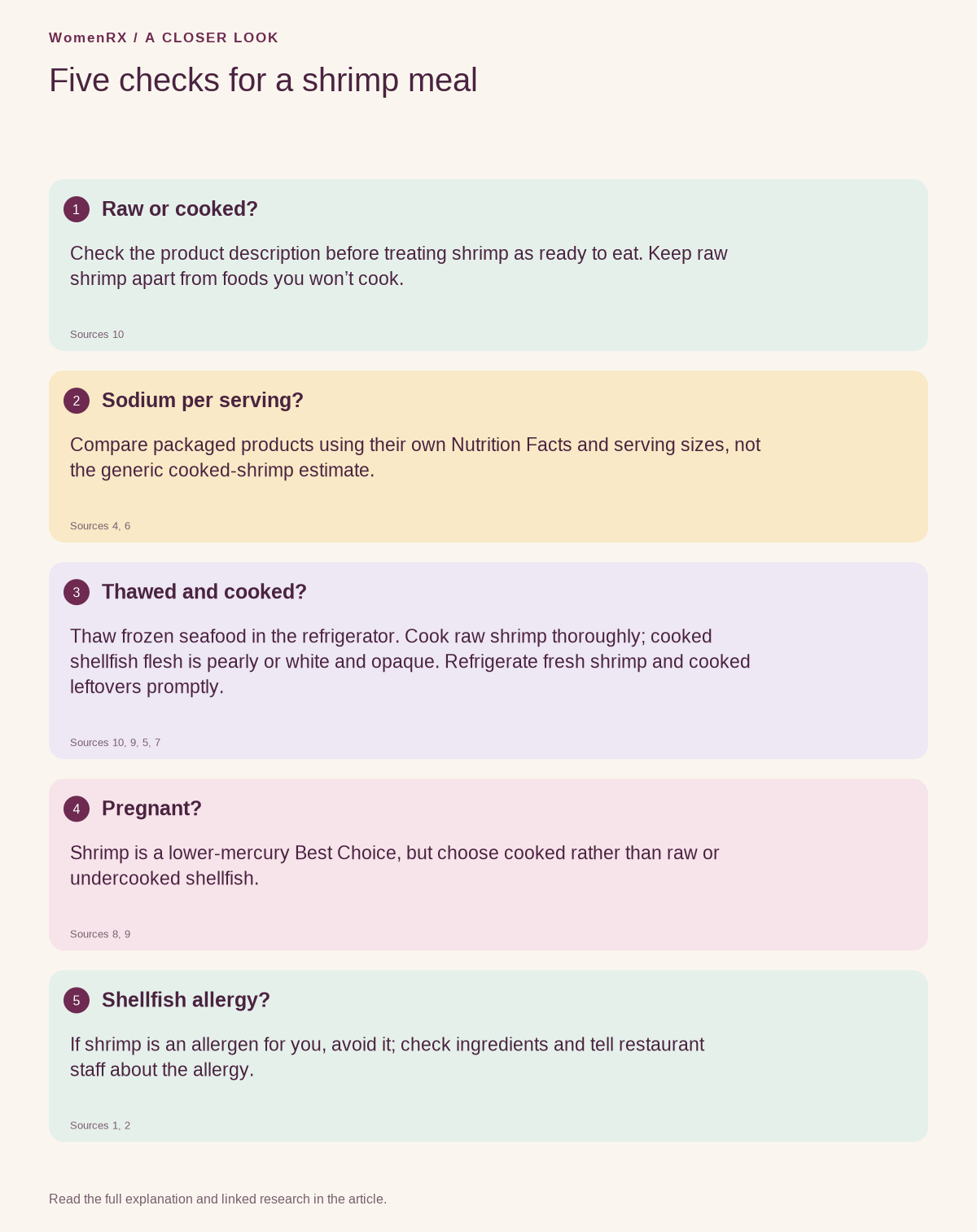
Raw or cooked?: Check the product description before treating shrimp as ready to eat. Keep raw shrimp apart from foods you won’t cook.10
Sodium per serving?: Compare packaged products using their own Nutrition Facts and serving sizes, not the generic cooked-shrimp estimate.46
Thawed and cooked?: Thaw frozen seafood in the refrigerator. Cook raw shrimp thoroughly; cooked shellfish flesh is pearly or white and opaque. Refrigerate fresh shrimp and cooked leftovers promptly.10957
Pregnant?: Shrimp is a lower-mercury Best Choice, but choose cooked rather than raw or undercooked shellfish.89
Shellfish allergy?: If shrimp is an allergen for you, avoid it; check ingredients and tell restaurant staff about the allergy.12
Read the figure as text
A quick way to separate nutrition questions from raw-food handling, pregnancy preparation, and allergy.- Raw or cooked?: Check the product description before treating shrimp as ready to eat. Keep raw shrimp apart from foods you won’t cook.10
- Sodium per serving?: Compare packaged products using their own Nutrition Facts and serving sizes, not the generic cooked-shrimp estimate.46
- Thawed and cooked?: Thaw frozen seafood in the refrigerator. Cook raw shrimp thoroughly; cooked shellfish flesh is pearly or white and opaque. Refrigerate fresh shrimp and cooked leftovers promptly.10957
- Pregnant?: Shrimp is a lower-mercury Best Choice, but choose cooked rather than raw or undercooked shellfish.89
- Shellfish allergy?: If shrimp is an allergen for you, avoid it; check ingredients and tell restaurant staff about the allergy.12
More questions, answered
Does the USDA protein figure apply to raw shrimp?
No. The 20.4-gram figure is for three ounces of cooked shrimp. Use the label on a packaged product for its stated serving and nutrition information rather than applying the cooked reference figure to a raw portion. 46
Sources you can check
- Food Allergy | Anaphylaxis | Food Allergies | MedlinePlusAccessed 2026-09-25Return to first citation
- Food allergy - NHSAccessed 2026-09-25Return to first citation
- Dietary Proteins: MedlinePlusAccessed 2026-09-25Return to first citation
- USDA SR Legacy: Crustaceans, shrimp, cooked (FDC 175180)Accessed 2026-09-25Return to first citation
- Food Safety: MedlinePlusAccessed 2026-09-25Return to first citation
- Food Labeling: MedlinePlusAccessed 2026-09-25Return to first citation
- Leftovers and Food Safety | Food Safety and Inspection ServiceAccessed 2026-09-25Return to first citation
- Advice about Eating Fish | FDAAccessed 2026-09-25Return to first citation
- Safer Food Choices for Pregnant Women | Food Safety | CDCAccessed 2026-09-25Return to first citation
- Selecting and Serving Fresh and Frozen Seafood Safely | FDAAccessed 2026-09-25Return to first citation