Home Care for Sore Gums Around Menopause: What Each Step Can Do
Build a simple gum-care routine, separate dry-mouth relief from plaque removal, and know what to ask your dentist to demonstrate.
Separate cleaning from comfort
When your mouth feels sore, it is tempting to buy one rinse and hope it covers everything. It helps to split the task in two: remove plaque from the teeth and make a dry mouth more comfortable. A product that makes your mouth feel fresher does not tell you whether the gums are improving.
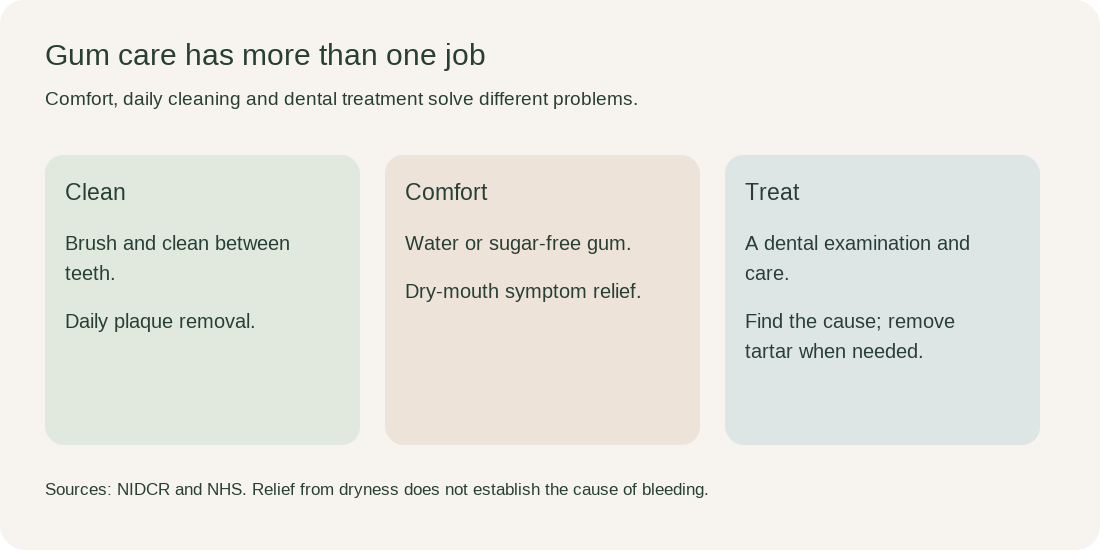
| Job | Useful action | Its limit |
|---|---|---|
| Remove daily plaque | Brush with fluoride toothpaste and clean between teeth. 1 | Hardened tartar needs professional removal. 2 |
| Ease dryness | Try water or sugar-free gum. 4 | Relief does not identify why the mouth is dry. |
| Find the cause of bleeding | Book a dental examination. 1 | A home routine cannot measure damage beneath the gumline. |
Open the full diagram
Make the cleaning routine easy to repeat
Brush at least twice daily with fluoride toothpaste, spit afterward rather than rinsing, and clean between your teeth each day with floss or interdental brushes. If bleeding makes you hesitate, book the dental assessment and ask the dentist to show you how to clean the affected area. 1
Put the between-teeth cleaner beside your toothbrush instead of in a drawer. Choose a point in the day when you can slow down rather than adding another task to the busiest minute of the morning. These are ways to make the routine easier to keep, not a promise that a particular schedule will heal your gums.
At the appointment, ask for a demonstration in your own mouth: “Which spaces am I missing? Which cleaner fits here? Can you watch me use it once?” Leave knowing how to do the step, not just that you should do it.
If dryness is making eating uncomfortable
Saliva helps protect teeth as well as making chewing and swallowing comfortable. Persistent dryness can increase tooth-decay risk. Water, sugar-free gum and saliva substitutes may help with symptoms; a dentist or clinician can investigate the cause. Some medicines reduce saliva, so bring their names to the visit. 4
Describe the moment that bothers you most: needing water with every bite, waking with a sticky mouth, or struggling through a long conversation. That is more informative than simply saying your mouth “feels older.” For a fuller explanation of bleeding versus dryness, see what to check when gum symptoms begin around menopause.
Before adding a medicated mouthwash
Ask what the product is meant to treat and when to stop it. Chlorhexidine dental treatments are generally for short-term use; prolonged use can stain teeth. Follow the directions for the actual product and the plan from your dentist or pharmacist. A large bottle is not a reason to keep using it indefinitely. 5
If you already have several rinses or gels, take a photograph of their ingredient labels to the appointment. Ask which one has a role in your plan. This makes the conversation about a named product and a named problem, rather than whether “mouthwash” is good or bad.
Changes that should move the appointment forward
Very sore, swollen gums or a newly loose tooth need prompt dental attention. Intense pain with facial or jaw swelling, a bad taste or fever can signal an abscess, which needs urgent dental treatment. If swelling interferes with breathing, speaking or swallowing, seek emergency care. 13
For the routine visit, note where bleeding occurs, whether dryness is present, and which cleaning steps are difficult. Those three observations give the dentist a clear place to start and help you leave with a routine tailored to your mouth.
Sources you can check
- NHS: gum disease, cleaning and when to seek dental care
Accessed October 31, 2026
Return to first citation - NIDCR: periodontal disease, plaque and tartar
Accessed October 31, 2026
Return to first citation - NHS: dental abscess
Accessed October 31, 2026
Return to first citation - NIDCR: dry mouth
Accessed October 31, 2026
Return to first citation - NHS: using chlorhexidine
Accessed October 31, 2026
Return to first citation