Bleeding or Sore Gums After Menopause: What to Check and What Helps
Menopause may coincide with mouth changes, but bleeding gums still deserve a dental check, especially when swelling, pain or loose teeth appear.
If your gums have started bleeding or hurting after menopause, book a dental visit rather than assuming hormones are the cause. Bleeding, redness and swelling can signal gum disease; dryness may cause a different kind of discomfort and can have several causes, including medicines. Severe swelling, a loose tooth or signs of an abscess need prompt dental care. 167
Start with what you’re noticing
A little blood on your toothbrush can be easy to explain away, especially if your mouth has felt different since menopause. But bleeding when you brush, clean between your teeth or bite into firm food is a reason to see a dentist. Red, swollen or sore gums also warrant a check. Plaque buildup can irritate the gums, and a dental exam can establish what’s happening rather than leaving you to guess from symptoms alone. 6
Menopause may be part of the picture, but it isn’t a diagnosis for bleeding gums. Painful gums and other mouth problems can occur around menopause. Research also links menopause with changes in saliva and periodontal health, though findings about measured saliva flow are inconsistent. Those associations can’t tell you why your gums bleed or whether you have gum disease. 45
Bleeding gums and a dry mouth aren’t the same problem
Here’s a useful distinction to bring to your appointment: Where is the discomfort, and is there blood? Gum disease commonly shows up as bleeding along the gums, often with redness, swelling or soreness. More concerning changes can include gums that seem to be shrinking or teeth that feel loose. A dentist can check your teeth and gums and decide whether you need cleaning, treatment beneath the gums or further evaluation. Home care helps prevent plaque buildup, but it can’t establish how far gum disease has progressed. 6
Dry mouth may feel more like stickiness, burning, a rough tongue or difficulty chewing, swallowing or speaking. Saliva helps clear food from teeth and gums; when your mouth stays dry, the risk of tooth decay and mouth infections rises. You can have dryness alongside gum symptoms, so noticing one doesn’t rule out the other. 1
Medicines are one possible reason for persistent dryness, including some used for high blood pressure, depression or bladder-control problems. Mouth breathing and conditions such as diabetes or Sjögren’s syndrome are other possibilities. Tell your dentist which medicines you take and whether you wake with a dry mouth, need water to eat, or have dry eyes or frequent urination. If a prescribed medicine seems responsible, don’t stop it on your own; the clinician who prescribes it can review your options. 12
What helps while you arrange the dental check
Keep cleaning your teeth even if seeing blood makes you want to avoid the area. Brush twice a day with fluoride toothpaste and clean between your teeth every day with floss or another between-the-teeth cleaner. These steps remove plaque that can irritate gums, but they aren’t a substitute for having new bleeding or swelling assessed. Don’t smoke. 36
If dryness is part of the problem, try regular sips of water or sugar-free gum to stimulate saliva. A mouthwash made for dry mouth may be more comfortable than one that leaves your mouth feeling drier. If dryness persists, mention it at the dental visit: a dentist can examine your mouth, review possible causes and consider whether further assessment or a saliva-relief product would help. 12
Treatment depends on what the dentist finds. Early gum disease may call for cleaning and advice on reaching between your teeth; more serious disease may require cleaning beneath the gums or other dental treatment. Don’t choose a gum treatment based only on whether symptoms appeared after menopause. 6
When not to wait for a routine visit
Arrange a dental check if your gums bleed when you brush or eat, or are painful and swollen. Ask for a prompt dental appointment if swelling or pain is severe, a tooth becomes loose, or you notice an ulcer, red patch or lump in your mouth. Intense tooth or gum pain with facial or jaw swelling, a bad taste, or fever could indicate a dental abscess, which needs urgent dental treatment and won’t resolve on its own. 67
If swelling makes it hard to breathe, speak or swallow, seek emergency care immediately. 7
For the visit, it may help to note whether bleeding happens during brushing, between-teeth cleaning or eating; whether the soreness is along the gums or throughout a dry mouth; and whether any tooth feels loose. You can then ask: Do you see gum disease, another source of irritation, or both? Do I need cleaning beneath the gums? Could dry mouth be adding to my discomfort or tooth-decay risk? Those questions keep the focus on a finding you can act on, not an assumption that menopause explains everything. 16
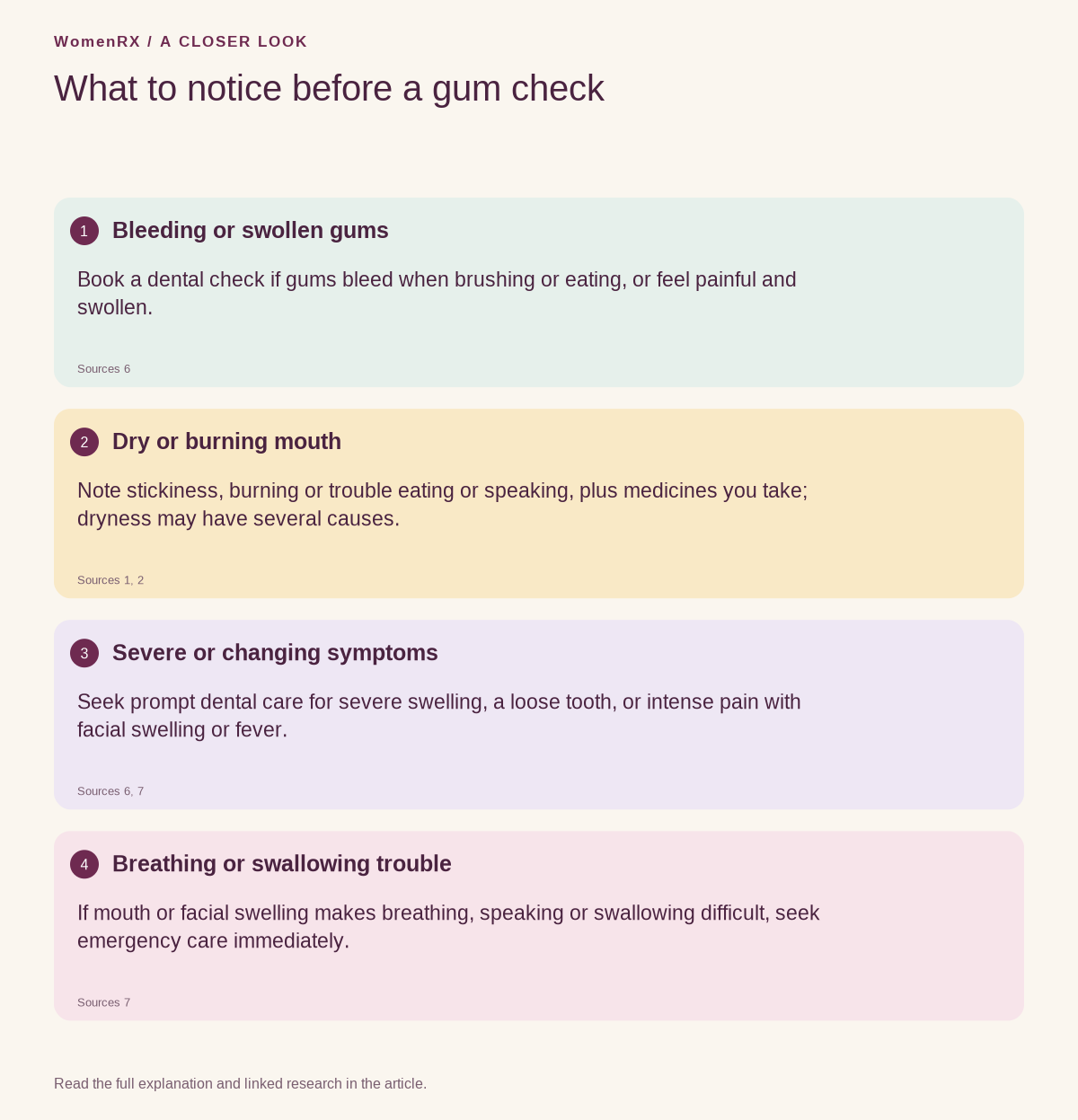
What to notice before a gum check
Bleeding or swollen gums: Book a dental check if gums bleed when brushing or eating, or feel painful and swollen.6
Dry or burning mouth: Note stickiness, burning or trouble eating or speaking, plus medicines you take; dryness may have several causes.12
Severe or changing symptoms: Seek prompt dental care for severe swelling, a loose tooth, or intense pain with facial swelling or fever.67
Breathing or swallowing trouble: If mouth or facial swelling makes breathing, speaking or swallowing difficult, seek emergency care immediately.7
Read the figure as text
Use these distinctions to describe your symptoms and choose the right level of care. They aren’t a way to diagnose gum disease yourself.- Bleeding or swollen gums: Book a dental check if gums bleed when brushing or eating, or feel painful and swollen.6
- Dry or burning mouth: Note stickiness, burning or trouble eating or speaking, plus medicines you take; dryness may have several causes.12
- Severe or changing symptoms: Seek prompt dental care for severe swelling, a loose tooth, or intense pain with facial swelling or fever.67
- Breathing or swallowing trouble: If mouth or facial swelling makes breathing, speaking or swallowing difficult, seek emergency care immediately.7
Sources you can check
- Dry Mouth: MedlinePlusAccessed 2026-09-25Return to first citation
- Dry mouth - NHSAccessed 2026-09-25Return to first citation
- Dental Health: MedlinePlusAccessed 2026-09-25Return to first citation
- Symptoms of menopause and perimenopause - NHSAccessed 2026-09-25Return to first citation
- The Silent Shift of Menopause: The Intersection between Salivary Glands, Oral Cavity Status, and Cardiovascular Health.Lourenço SV, Florezi GP, Pelissari C, Hojaij FC, Otoch JP, Ramires JAF. · Arquivos brasileiros de cardiologia · 2026Return to first citation
- Gum disease - NHSAccessed 2026-09-25Return to first citation
- Dental abscess - NHSAccessed 2026-09-25Return to first citation